A divided crypto market emerges
The cryptocurrency market is increasingly split between assets struggling to gain momentum and newer projects attracting capital addressing long standing technical limitations. Recent price movements highlight this divide clearly. While some of the most established cryptocurrencies remain stuck in narrow ranges or trend lower, investor interest appears to be shifting toward platforms offering speed, scalability, and clearer utility.
This divergence reflects a broader reassessment underway in the market. After years of speculation driven largely narratives and momentum, many participants are now focusing more closely on performance, efficiency, and real world application.
Ethereum struggles to break out despite heavy accumulation
Ethereum’s price action has become a source of frustration for many investors. Despite significant accumulation large holders, estimated at around two point four billion dollars in recent weeks, the asset remains locked between the three thousand and three thousand three hundred dollar range. This sideways movement suggests that buying pressure, while present, is not strong enough to overcome broader market hesitation.
Several factors are contributing to this stagnation. Network congestion, high transaction fees during peak activity, and competition from alternative platforms continue to weigh on sentiment. Although long term confidence in Ethereum’s ecosystem remains intact, short term traders appear reluctant to push prices higher without a clear catalyst.
The disconnect between whale accumulation and price movement also highlights a key dynamic. Large investors may be positioning for long term outcomes, while the broader market remains cautious amid macroeconomic uncertainty and uneven liquidity conditions.
Dogecoin slides as speculative appetite fades
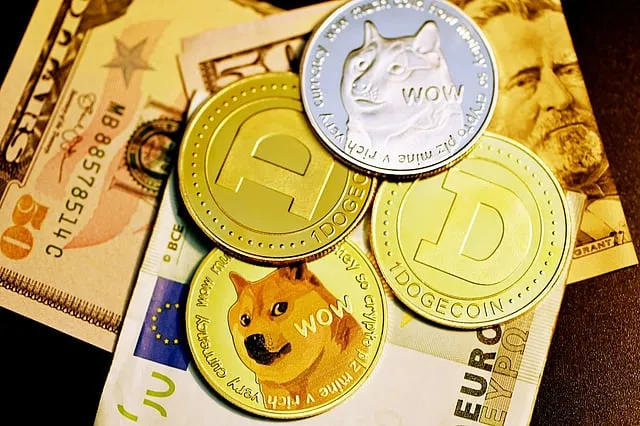
Dogecoin’s situation appears more fragile. The token has fallen roughly seven percent to around zero point zero zero one one four two dollars, with sellers firmly in control. Unlike Ethereum, which benefits from a broad developer ecosystem and institutional interest, Dogecoin remains heavily reliant on sentiment and speculative enthusiasm.
At present, there are few signs of strong buyer support. Trading volumes suggest declining interest, and without fresh narratives or renewed social momentum, the asset has struggled to stabilize. This weakness underscores how meme driven cryptocurrencies often suffer most when risk appetite fades.
As markets become more selective, tokens without clear development roadmaps or functional upgrades face increasing pressure. Dogecoin’s slide reflects a broader cooling of speculative trades across the market.
Capital rotates toward BlockDAG and performance focused projects
Against this backdrop, attention has turned to newer blockchain architectures designed to solve persistent scalability problems. BlockDAG has emerged as a notable beneficiary of this shift, reportedly attracting four hundred forty one million dollars in inflows. The project’s appeal lies in its multi block processing structure, which allows transactions to be confirmed simultaneously rather than sequentially.
This approach addresses one of the most common bottlenecks in traditional blockchains. increasing throughput and reducing confirmation times, multi block systems aim to support higher usage without sacrificing security. For investors, this represents a tangible technological advantage rather than a purely speculative story.
The scale of capital flowing into such projects suggests growing demand for infrastructure capable of supporting real world applications, from payments to decentralized services.
Why speed and scalability are back in focus
Scalability has long been a central challenge for blockchain adoption. Periods of heavy network use have repeatedly exposed the limits of older designs, leading to high fees and slow transactions. As more users and institutions explore blockchain based solutions, tolerance for these issues has declined.
Projects emphasizing speed, efficiency, and parallel processing are increasingly seen as better positioned for the next phase of growth. Investors appear more willing to back platforms that can demonstrate measurable performance improvements rather than relying solely on brand recognition.
This shift does not necessarily signal the decline of established networks, but it does suggest rising competition and a more discerning market environment.
What this means for the broader crypto outlook
The current market split highlights an important transition. Assets stuck in neutral may continue to dominate headlines, but capital is increasingly flowing toward projects that promise functional progress. This rotation reflects a maturing market where utility and execution matter more than narrative alone.
For traders and long term investors alike, the message is clear. Performance driven innovation is gaining attention, while speculative assets face tougher conditions. How established networks respond to this pressure will help shape the next stage of the crypto cycle.
As momentum builds around faster and more scalable solutions, the balance of power within the market may continue to evolve.