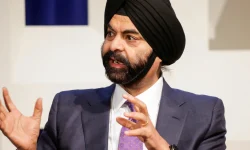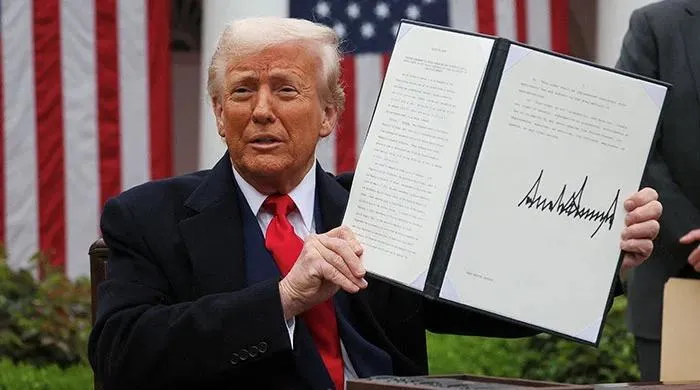
Global commerce is now decided one hand game at a time.
Alexandra Chen | Stablecoin & Regulation Analyst
A Radical Experiment
After decades of bitter trade disputes, world leaders have unveiled a shocking new plan to simplify global commerce: resolving tariff disagreements with games of rock-paper-scissors. The announcement followed a tense negotiation session at the World Trade Organization, which ended when exhausted delegates began casually playing the childhood game. To everyone’s surprise, it broke the deadlock.
Officials quickly formalized the process. Starting next quarter, disputes over steel, soybeans, or semiconductors will be settled in best-of-three matches judged neutral referees. Tie-breakers may escalate to best of five, with the possibility of sudden-death rounds for billion-dollar deals.
How It Works
According to the framework, leaders themselves will participate in matches to decide tariffs. Paper beats rock, scissors beat paper, and rock beats scissors, with each outcome carrying binding legal force. The rules explicitly forbid “fake-outs” and require cameras to ensure transparency.
The WTO has promised to build an arena in Geneva where trade ministers can face off in front of cheering crowds. Early blueprints show seating for 20,000 spectators and giant screens displaying slow-motion replays of each throw.
Market Response
Financial markets responded with wild swings. Soy futures spiked after rumors that the U.S. president favored “rock,” while Asian electronics shares surged when Japan demonstrated a strong record of choosing “scissors.” Traders on Wall Street began hiring former playground champions as consultants.
Crypto markets also jumped, with a new coin called $RPS climbing 500 percent on speculation it would become the official settlement token for matches.
Political and Public Reactions
Politicians hailed the system as a breakthrough. “It’s fast, it’s fair, and it avoids years of bureaucracy,” said one European delegate. Brazil called it “the most democratic tool of all time,” while Canada praised its simplicity.
Critics, however, warned of volatility. “Do we really want trillion-dollar trade balances decided sweaty palms?” asked one economist. Germany proposed adding “lizard” and “Spock” as advanced options, citing fairness concerns.
Citizens worldwide were amused. Social media erupted with memes of leaders practicing their throws, while TikTok challenges invited users to predict trade outcomes through their own games. One viral video showed schoolchildren declaring themselves the “future WTO champions.”
Experts Debate the Impact
Supporters argue the system will save billions in legal fees and streamline commerce. “At least this method is transparent,” said Dr. Omar Hossain. “Unlike arbitration, everyone can see the outcome instantly.”
Skeptics countered that reducing global trade to playground games risks trivializing international law. “The danger is not the game itself,” argued Dr. Emily Carter, “but what it says about our willingness to abandon serious institutions.”
Conclusion
Whether a practical reform or a satirical stunt, rock-paper-scissors diplomacy has already reshaped perceptions of global trade. It may not solve deep structural imbalances, but it offers something rare in international politics: speed, clarity, and laughter.
For better or worse, the fate of global commerce now rests in a clenched fist, an open palm, or two sharp fingers.
Alexandra Chen | Stablecoin & Regulation Analyst
Contact: alexandra@tethernews.net