Dollar value now depends on board game sales.
Printing for Education
In a surprising twist to financial literacy efforts, the U.S. Treasury announced it has begun printing official batches of Monopoly money to educate children about inflation. Officials explained the move as a hands-on tool to help young citizens understand why too much money in circulation leads to rising prices.
At a press briefing, the Treasury Secretary held up brightly colored bills and told reporters, “If kids can grasp why Park Place costs $400 in 1935 and $4,000 in 2025, maybe adults will finally understand inflation too.”
How the Program Works
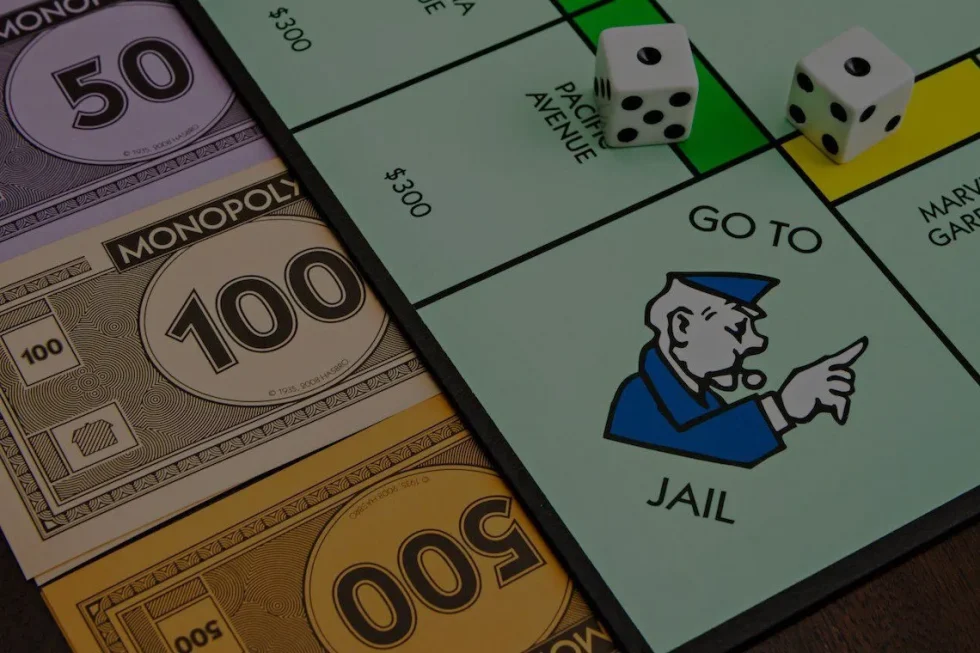
Each classroom set comes with stacks of Monopoly bills featuring real U.S. Treasury seals. Teachers are instructed to flood the game economy with excess bills mid-session to demonstrate how fast property values spiral.
Students also learn about wage stagnation when the banker refuses to raise salaries despite ballooning property costs. One pilot program required students to pay rent in fake bills while snack prices in the cafeteria doubled daily, mimicking real-world inflation.
Market Reactions
Wall Street analysts were initially baffled. Some dismissed the move as a gimmick, while others speculated that Hasbro, maker of Monopoly, could benefit enormously from increased demand. Indeed, Hasbro’s stock surged ten percent following the announcement, as traders imagined a new era of “toy-backed stimulus.”
Meanwhile, gold prices rose slightly as parents panicked that their children’s fake dollars might somehow bleed into real circulation. Crypto enthusiasts mocked the idea, tweeting that Bitcoin was safer than Monopoly bills.
Political Fallout
Congress was divided. Some lawmakers praised the initiative as a creative solution to America’s financial literacy crisis. Others condemned it as wasteful, warning that children might confuse real dollars with play money.
One senator even waved a stack of Monopoly bills on the Senate floor, declaring, “This is exactly how the government funds its deficits.” The clip quickly went viral online.
Public Response
Parents were equally split. Some appreciated the attempt to make economics relatable. Others complained that kids were returning home demanding rent hikes for their bedrooms. On TikTok, teachers posted clips of students panicking as the price of Boardwalk rose fivefold within minutes.
Twitter hashtags like #MonopolyPolicy and #FakeCashInflation trended worldwide. One viral meme showed a Monopoly banker holding a wheelbarrow of bills with the caption: “Welcome to Economics 101.”
Expert Opinions
Economists weighed in with both criticism and praise. Dr. Omar Hossain argued the initiative trivialized a serious problem. “Teaching kids with board game cash risks normalizing irresponsible fiscal behavior,” he said.
Dr. Emily Carter disagreed, calling it a bold experiment. “Monopoly captures the essence of economic life: competition, inequality, and frustration. exaggerating inflation in a classroom, the Treasury may spark deeper understanding than textbooks ever could.”
Symbolism in the Absurd
Cultural commentators suggested the move reflects broader anxieties about money itself. “People already feel like dollars are Monopoly money when debt levels are so high,” said one analyst. “This policy just makes the metaphor literal.”
Some observers noted the irony that Monopoly was originally designed during the Great Depression to critique capitalism. Now it has returned as a teaching tool sanctioned the very institutions it once mocked.
Conclusion
The U.S. Treasury’s decision to print Monopoly money for classrooms may be ridiculed as absurd, but it reflects a growing desperation to make economics accessible. Whether it builds real financial literacy or simply confuses a new generation, the experiment highlights how far governments are willing to go to explain inflation.
For now, American kids may be the only ones who can say they learned economics bankrupting their classmates on Baltic Avenue.