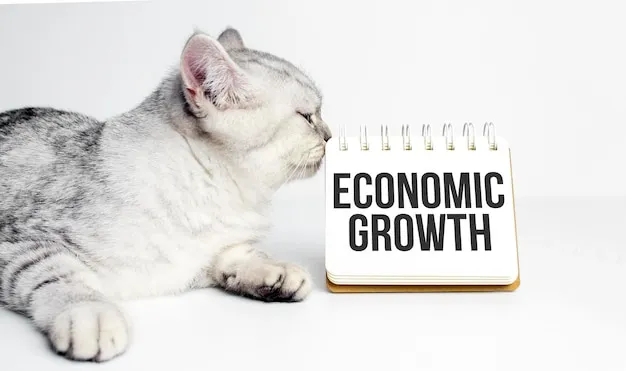
Data suggests felines are hidden drivers of the global economy.
Alexandra Chen | Stablecoin & Regulation Analyst
The Discovery That Shocked Economists
A team of researchers at a global think tank published findings this week that sent shockwaves through the financial world: GDP growth strongly correlates with the number of cat videos uploaded online. According to their decade-long dataset, every thousand feline clips is associated with a measurable uptick in national productivity.
“Cats are not only cute—they are apparently key economic actors,” one researcher announced, sparking laughter, disbelief, and a flood of memes. While the study began as an exploration of digital engagement, its conclusions suggest that lighthearted internet content may play a larger role in economic life than previously imagined.
How the Data Was Collected
The study aggregated uploads from YouTube, TikTok, and Instagram, comparing them with GDP growth across fifty countries from 2015 to 2025. The results were startlingly consistent: nations with higher volumes of feline content consistently outperformed those with fewer uploads.
Researchers factored in ad revenue, viewer engagement, and spillover effects into e-commerce. Their models indicated that viral cat clips encourage increased time online, which drives digital advertising profits. They also speculated that cats improve workplace morale reducing stress, indirectly enhancing productivity.
One example cited in the report showed a correlation between a surge in cat uploads during the pandemic and an unexpected rise in remote work productivity. “A cat chasing a laser pointer may indirectly stimulate the retail sector keeping people happy enough to shop,” the report explained.
Market Reactions
Financial markets were quick to pounce. Pet supply companies saw stock prices soar as investors bet on rising feline popularity. Tech giants launched campaigns encouraging cat content creation, hoping to capitalize on the correlation.
Hedge funds quietly integrated cat video traffic into predictive models for quarterly earnings, calling it the “Furcast Index.” In one striking case, a hedge fund reported correctly predicting retail surges monitoring TikTok cat content volume.
Meanwhile, crypto traders rushed to launch themed tokens like $PURRCOIN and $PAWCOIN. Within days, both tokens spiked, with traders joking that cats had replaced gold as the new global reserve asset.
Public Response
Ordinary citizens embraced the discovery with unbridled enthusiasm. TikTok was flooded with fresh uploads of cats sleeping, fighting, and failing at jumps. Hashtags like #PurrEconomy and #GDPets trended for weeks, while YouTube creators competed to monetize their feline companions.
One viral meme showed economists presenting a cat video in Parliament with the caption: “This is our fiscal policy now.” Another depicted a banker shaking paws with a kitten, symbolizing the supposed merger of finance and fur.
In some communities, cafes even offered discounts to customers who uploaded cat videos on the spot, citing “economic contribution” as a justification.
Political Fallout
Governments scrambled to react. Some proposed subsidies for cat ownership, arguing that national productivity could be boosted encouraging more households to adopt pets. China announced a “National Cat Strategy” with ambitious targets for online feline content. The European Union debated whether mandating a minimum number of uploads would violate trade rules.
Not everyone was convinced. Skeptics worried about overreliance on digital fluff. “What happens if the internet runs out of cats?” one lawmaker asked during a heated debate. Another argued that dogs, parrots, and even hamsters deserved recognition in any “pet-based policy framework.”
Expert Opinions
Economists were sharply divided. Dr. Omar Hossain dismissed the findings as statistical noise. “Correlation is not causation. The cat craze distracts from serious structural reforms. GDP should not depend on whiskers.”
Dr. Emily Carter, however, countered with a different perspective. “Economics is about confidence, mood, and culture. Cats make people happy, and happy people are more productive. If cat videos foster optimism, then they may indeed drive growth more effectively than interest rate tweaks.”
Some behavioral scientists chimed in, noting that dopamine spikes from watching cats could fuel spending. “If you laugh, you shop. If you shop, GDP rises,” explained one.
Symbolism in the Absurd
Cultural analysts argued that the feline economy reflects the blurring of entertainment and economics. “When videos of kittens chasing yarn shape GDP, it shows how deeply digital culture has infiltrated financial reality,” said one critic.
Others described the finding as “the purrfect metaphor for postmodern capitalism: frivolous, viral, yet undeniably valuable.” The symbolism resonated widely, with commentators suggesting that cats represent both the randomness and resilience of economic growth.
Conclusion
The discovery of the cat-GDP link may sound absurd, but it underscores the growing entanglement of internet culture and global economics. In a world where confidence and sentiment drive markets as much as fundamentals, perhaps felines truly are hidden economic actors.
In 2025, the most reliable predictor of prosperity may not be central bank policy or labor productivity but the number of whiskers in your feed. If that is the case, then the global economy might just rest on the paws of a playful kitten batting at a ball of yarn.
Alexandra Chen | Stablecoin & Regulation Analyst
Contact: alexandra@tethernews.net