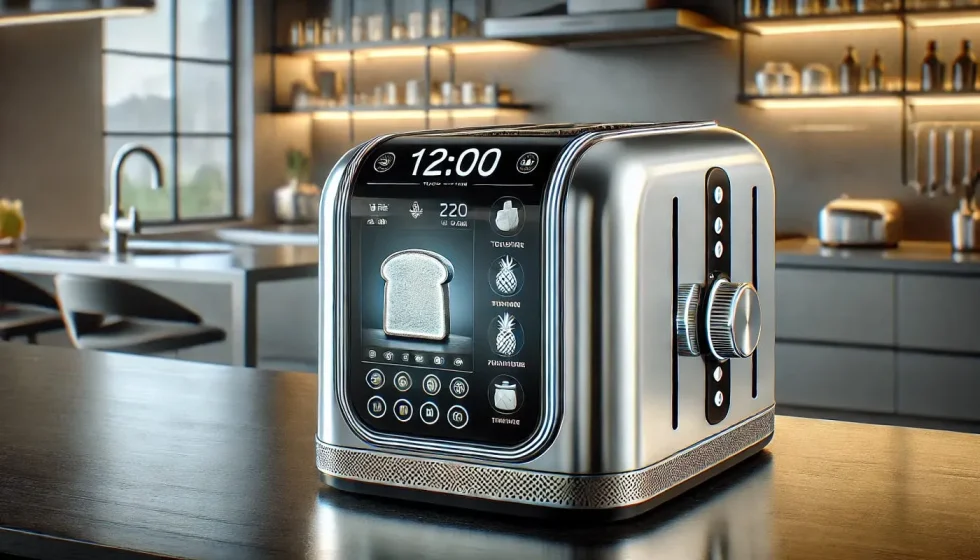
Users are furious but still pay to avoid burnt bread.
Alexandra Chen | Stablecoin & Regulation Analyst
Breakfast Meets Paywall
Households across the world woke up this week to find their toasters refusing to function unless users subscribed to a “premium toast plan.” The devices, equipped with AI-powered sensors and Wi-Fi connectivity, now require monthly fees for access to golden brown settings. Basic users can still toast bread, but only at the lowest quality, producing what critics call “slightly warmed sadness.”
Manufacturers defended the change, claiming subscriptions fund “ongoing innovation in breakfast technology.” Customers disagreed. “I just want toast,” one frustrated parent complained. “Not a monthly contract.”
How It Works
The toasters connect to a central server where users select their desired browning levels. Free accounts provide limited options, usually pale bread or overly crisp slices. Paid tiers unlock a full range of toasting shades, from “golden crunch” to “artisan cafe.”
Premium features also include voice-activated controls, personalized heat algorithms, and a “burn insurance” guarantee promising refunds for ruined slices. A family plan allows multiple household members to customize their toast profiles, while corporate packages target hotels and restaurants.
One leaked internal memo revealed plans to introduce ads on toaster display screens. “Imagine being inspired a bagel commercial while making breakfast,” it read.
Market Reactions
Markets responded with cautious optimism. Shares of the appliance maker rose as analysts praised the recurring revenue model. “If streaming companies can monetize music, why not breakfast?” one report declared.
Meme traders launched parody tokens like $TOAST and $CRUMB, while hedge funds debated whether “breakfast-as-a-service” could become the next trillion-dollar industry. Some analysts even suggested bread futures might rise if toast subscriptions drive higher demand.
Public Response
Consumers erupted in protest. TikTok is filled with clips of people angrily waving untoasted bread, using hashtags like #ToastTax and #BreakfastGate. One viral video showed a child crying as the family toaster displayed a message: “Please upgrade to premium for golden brown happiness.”
Twitter memes flourished. One popular post depicted a man inserting coins into a toaster like an arcade machine. Another showed a Netflix-style interface with toast options, captioned: “Are you still eating?”
Despite outrage, many admitted they paid the fee. “It’s humiliating,” one customer confessed. “But my mornings cannot survive burnt bread.”
Political Fallout
Lawmakers quickly took notice. A European commissioner condemned the move as “the privatization of breakfast.” In the United States, a senator mocked the company, asking whether Congress should regulate “essential food appliances turned into slot machines.”
Consumer protection agencies began investigating whether the toasters violated basic rights. One official argued, “If eating breakfast requires a subscription, what stops fridges from charging rent for keeping food cold?”
Industry lobbyists countered that customers still had free access to minimal functionality. “We are not withholding bread,” a spokesperson insisted. “We are simply offering enhanced culinary experiences.”
Expert Opinions
Economists weighed in with divided views. Dr. Omar Hossain criticized the trend. “This is the logical endpoint of subscription culture. Once companies realize every basic function can be locked behind a paywall, daily life itself becomes monetized.”
Dr. Emily Carter offered a different interpretation. “While absurd, the model reflects broader changes in consumer behavior. People increasingly accept recurring fees for convenience. The toaster only makes visible what is already happening in software and media.”
Behavioral scientists noted that frustration may eventually give way to normalization. “At first, paying for toast feels ridiculous. Over time, it becomes a habit. That is how subscription ecosystems grow,” one researcher explained.
Symbolism in the Absurd
Cultural critics argued that the subscription toaster epitomizes modern capitalism’s intrusion into ordinary life. “We once joked that everything would require a subscription. Now even breakfast is behind a paywall,” one columnist wrote.
Satirists thrived on the news. Cartoons depicted toast-shaped credit cards and fridges demanding password logins. Comedy shows imagined families unable to eat until they watched an ad for butter.
Conclusion
The rise of subscription-based toasters may seem laughable, but it reveals how corporations continue to expand monetization into every corner of daily existence. Consumers may grumble, yet many will pay, proving that convenience trumps principle at the kitchen table.
In 2025, the question is no longer whether your bread will toast evenly, but whether you remembered to renew your breakfast subscription.
Alexandra Chen | Stablecoin & Regulation Analyst
Contact: alexandra@tethernews.net