






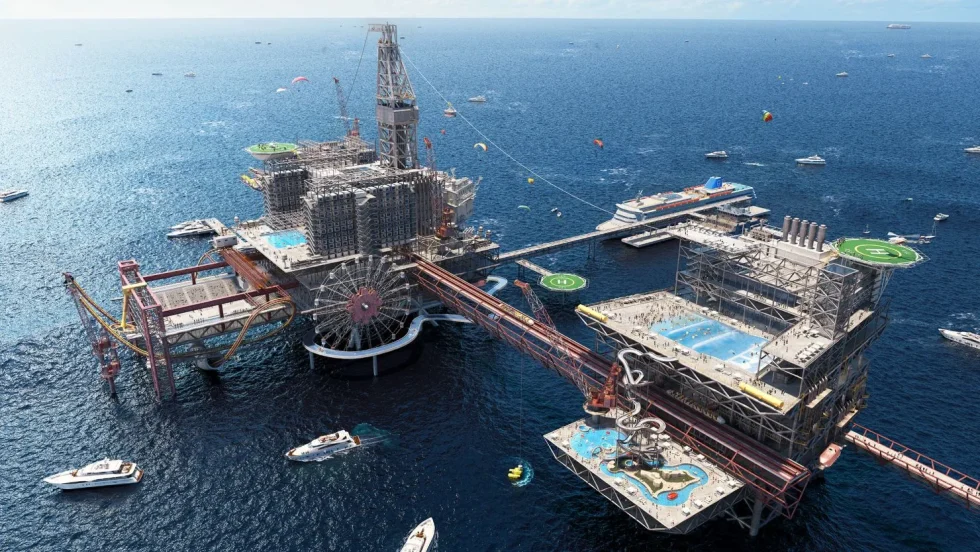
Roller coasters rebranded as “petro-rides.”
Alexandra Chen | Stablecoin & Regulation Analyst
A Billion-Dollar Mix-Up
In a mishap that has stunned global markets, the Saudi sovereign wealth fund accidentally purchased an international theme park chain while attempting to expand its oil rig portfolio. The $12 billion error occurred after investment managers reportedly misread a ticker symbol, mistaking “FUN” for “FUEL.”
the time the mistake was discovered, Saudi officials had become the proud owners of more than two dozen amusement parks across North America, Europe, and Asia. Rather than reverse the purchase, leaders announced plans to integrate roller coasters into their long-term energy strategy.
How It Works
The acquisition includes parks featuring rides, cotton candy stands, and water slides. Officials rebranded the assets under the slogan “From Oil Wells to Ferris Wheels.” New attractions include “PetroDrop Towers,” “Crude Oil Rapids,” and “OPEC’s Wild Ride.”
To tie the parks into energy policy, engineers began experimenting with powering roller coasters using natural gas turbines. VIP passes now include priority seating for visiting energy ministers.
Financial insiders claimed the error occurred when analysts used an automated algorithm to diversify assets. “The system interpreted ‘FUN’ as an energy derivative,” one source admitted.
Market Reactions
Markets responded with chaotic enthusiasm. Shares of the theme park chain soared after news of the acquisition, while oil equipment manufacturers dipped as investors realized the Saudis were temporarily distracted cotton candy machines.
Meme traders rushed to launch parody tokens like $FUNFUEL and $ROLLERCOIN. Analysts speculated whether thrill rides could replace oil barrels as a measure of national wealth.
One hedge fund manager quipped, “If roller coasters can balance budgets, the Saudis may have reinvented economics.”
Public Response
The public reaction was instant and hilarious. TikTok is filled with parodies of oil executives testing bumper cars, hashtags like #PetroRides and #ThemeParkEconomics trending worldwide.
One viral meme showed a sheikh riding a roller coaster with the caption: “Diversification strategy achieved.” Another depicted an oil barrel mascot serving popcorn.
Visitors to the newly acquired parks reported changes almost immediately. Gift shops began selling miniature oil rigs alongside stuffed animals, while food courts rebranded sodas as “fossil fizz.”
Political Fallout
Governments worldwide weighed in. A European commissioner praised the mix-up as “a softer form of petro-diplomacy.” U.S. lawmakers mocked the decision, saying energy superpowers should not rely on roller coasters to stabilize oil prices.
Saudi officials defended the purchase, arguing it symbolized the nation’s commitment to diversifying its economy. “Vision 2030 promised entertainment alongside energy. This investment fulfills both,” one minister declared.
Some leaders worried the move blurred lines between leisure and geopolitics. Rumors spread that future OPEC meetings might be held on roller coasters, forcing ministers to negotiate while screaming through corkscrews.
Expert Opinions
Economists were divided. Dr. Omar Hossain criticized the acquisition. “Confusing theme parks with oil rigs is reckless. It trivializes sovereign wealth and signals incompetence.”
Dr. Emily Carter countered with a symbolic interpretation. “While absurd, the investment reflects the truth of modern economics: spectacle and entertainment now drive growth as much as resources. The mistake may prove oddly visionary.”
Tourism experts predicted the parks could become diplomatic tools, offering world leaders the chance to ride coasters together instead of sitting in tense boardrooms.
Symbolism in the Absurd
Cultural critics argued that the episode symbolizes the confusion of globalization. “In a world where tickers blur, oil rigs and roller coasters are interchangeable,” one columnist wrote. “Both are volatile, expensive, and make people scream.”
Satirists seized the moment. Cartoons showed ministers negotiating oil prices while strapped into spinning teacups. Comedy shows joked about theme park mascots becoming OPEC ambassadors.
Conclusion
The Saudi sovereign wealth fund’s accidental purchase of a theme park chain may sound like a farce, but it highlights the risks of algorithmic investing and the surreal overlap of entertainment and energy. What began as a billion-dollar blunder may end as a symbol of economic diversification.
In 2025, the question for global finance is simple: Are roller coasters the new oil rigs? For Saudi officials, the answer seems to be yes, at least until the next earnings call.
Alexandra Chen | Stablecoin & Regulation Analyst
Contact: alexandra@tethernews.net


