Global leaders split on whether kids should lead the recovery.
Emily Carter | Macro & Digital Economy Analyst
Contact: emily@lesbontelegraph.com
The Big Announcement
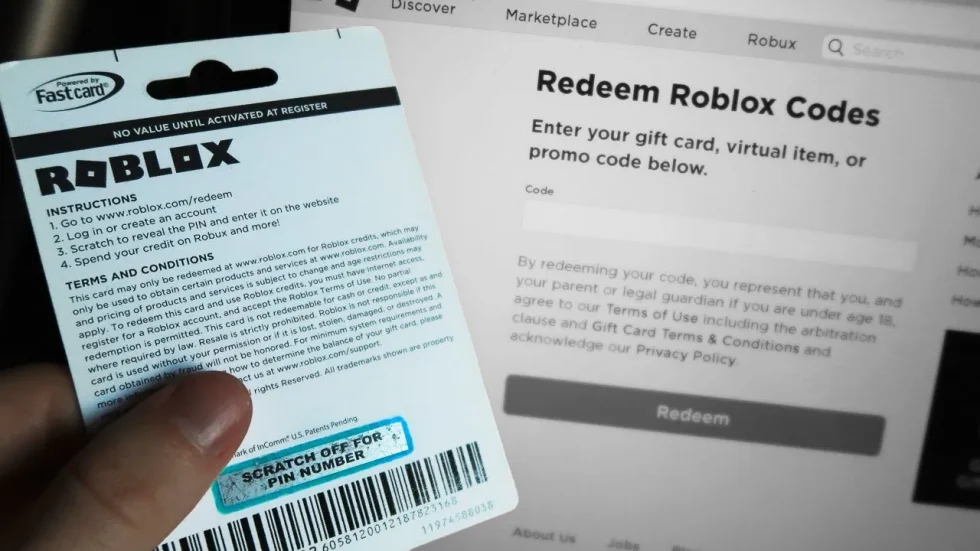
The United States Federal Reserve shocked global markets this week unveiling its newest stimulus program. Instead of the usual trillion-dollar bond-buying spree or complex quantitative easing, the Fed declared that all stimulus would now be distributed in the form of Roblox gift cards. Each American household will receive a digital code redeemable for Robux, the in-game currency of the wildly popular online platform.
Jerome Powell, chair of the Federal Reserve, defended the move in a televised address. “Children represent the future of the economy,” Powell said while awkwardly holding up a Roblox plushie. “If kids are already building cities, trading assets, and managing digital markets inside Roblox, why not let them take charge of fiscal recovery in the real world?”
Markets React in Confusion
Wall Street struggled to process the announcement. Futures spiked in pre-market trading when Roblox stock surged more than 80 percent. Analysts at Goldman Sachs quickly upgraded Roblox to a “Too Big to Fail” rating. However, traditional banks voiced concerns. “We cannot accept mortgage payments in Robux,” complained one JPMorgan executive. “Unless, of course, the Fed provides an exchange rate.”
Meanwhile, crypto traders applauded the decision. “Finally,” one Bitcoin maximalist tweeted, “fiat is dead and children are the new whales.” A meme coin named $ROBUST, inspired the Roblox stimulus, launched overnight and recorded a trading volume higher than some established altcoins.
Global Reactions
International leaders scrambled to respond. The European Central Bank considered matching the stimulus distributing Fortnite V-Bucks but worried it could destabilize the euro. The Bank of Japan reportedly explored issuing AnimeCoin tied to rare collectible figurines. China quickly banned Robux transfers across its borders, citing “digital addiction risks” while quietly testing a state-approved Roblox clone named XiBlox.
At the United Nations, diplomats struggled to adapt the language of global finance to the gaming economy. One representative asked if sovereign debt could be rescheduled using in-game pets. Another wondered if the World Bank might fund infrastructure projects through the purchase of limited-edition Roblox skins.
How the Program Works
According to leaked documents, every household will receive a stimulus package of 10,000 Robux delivered via email. Households without internet access will be mailed physical gift cards. For individuals already banned from Roblox for “excessive trolling,” the Fed promised to issue Steam vouchers instead.
The Fed claims this new system will stimulate not only digital spending but also encourage financial literacy among the youth. “Kids already understand scarcity better than adults,” noted a Fed economist. “When you have only 400 Robux and your friend buys the rare hat you wanted, that is inflation in action.”
Critics Push Back
Not everyone is convinced. Former Treasury Secretary Larry Summers described the move as “a dangerous blend of fiscal irresponsibility and childlike fantasy.” Economists fear that tying stimulus to an online platform could expose monetary policy to server outages and hacker attacks.
Parents are equally divided. Some see it as a relief. “My son never understood tax returns,” said a mother from Ohio, “but he can flip virtual real estate in Roblox for profit. Maybe this is the education system we never had.” Others complain that it will fuel unhealthy gaming habits. “If the Fed really wanted to help,” one father argued, “they should have distributed Minecraft servers instead.”
Social Media Frenzy
On TikTok, the news inspired a wave of videos showing teenagers yelling, “Thanks, Powell, I just bought a dragon sword!” One clip with millions of views showed a grandmother learning how to redeem her gift card and accidentally spending it all on a neon purple fedora for her avatar.
On X, trending hashtags included #RobuxRecovery and #PowellPlays. A parody account tweeted, “BREAKING: Fed announces Roblox debt ceiling expansion pack. New DLC includes austerity measures.”
Reddit’s WallStreetBets reacted with characteristic enthusiasm. “YOLO on Roblox options,” one user posted, sharing screenshots of a $20,000 bet on Roblox stock. Another predicted that “Robux will replace the dollar 2030.”
Policy Implications
The deeper question is what this experiment says about the future of money. tying stimulus to gaming economies, the Fed may have accidentally acknowledged that digital economies are more real than traditional ones for younger generations.
Dr. Angela Martinez, professor of digital finance at MIT, explained it this way: “For Gen Z, Robux and V-Bucks are already currencies of choice. They hold value, they create markets, and they shape identity. If you think of money as trust, then kids already trust Robux more than Treasury bonds.”
Some policymakers see opportunity. Senators have proposed linking student loan forgiveness to Roblox achievements, rewarding graduates who can build skyscrapers in virtual cities. Others floated the idea of a new Bretton Woods agreement where global currencies are pegged to in-game assets.
Behind the Scenes
Insiders claim the idea was pitched during a late-night brainstorming session at the Fed. A junior analyst reportedly blurted out, “Why not just give everyone Robux?” expecting laughter. Instead, Powell paused, adjusted his tie, and said, “That is the most innovative monetary policy idea I have heard since quantitative easing.”
The Treasury was reportedly skeptical but ultimately approved after realizing Roblox gift cards could be purchased in bulk at a discount. One staffer admitted, “It was either this or distribute coupons for Starbucks pumpkin spice lattes. Roblox seemed more future-proof.”
Conclusion
The Roblox stimulus has only just begun, but it already feels like a turning point in global economic history. Some believe it will collapse within weeks as households try to cash out Robux for real groceries. Others believe it represents a paradigm shift, where virtual assets finally replace traditional money.
For now, American kids are celebrating. “I never cared about GDP,” said a 12-year-old from Texas while customizing his Roblox avatar, “but now the economy finally matters to me.”
As the world debates, one question lingers: if the Fed stimulus can arrive as Robux, will the next Federal Reserve meeting be live-streamed inside the game itself?