Collectors say, “Owning collapse never looked so cool.”
Turning Debt Into Digital Art
In a move that stunned both Wall Street and OpenSea, the US Treasury has announced plans to auction the National Debt Clock as a series of NFTs. Each token will represent a snapshot of America’s ever-climbing debt, allowing collectors to literally own a piece of fiscal collapse.
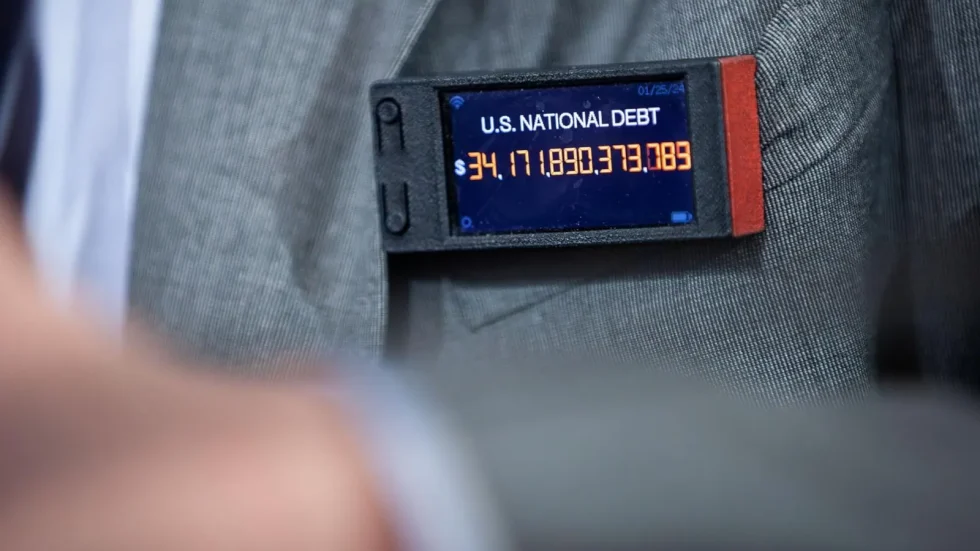
At a press conference in Washington, officials unveiled the plan on a giant screen showing the glowing red digits of the debt clock. “For decades, the debt clock has terrified Americans,” said Treasury Secretary Janet Yellen. “Now it can terrify them in their crypto wallets.”
How the Auction Works
The Treasury partnered with a major NFT platform to mint 31 trillion tokens, one for each dollar of the national debt. Each NFT contains a timestamped image of the debt clock, along with metadata showing the precise second America borrowed another billion.
Starting bids are set at $100 per NFT, with discounts offered for bulk purchases. A leaked FAQ even promised “rare animated editions” where the digits spin like slot machines, plus ultra-rare holographic editions where George Washington facepalms in real time.
Market Reactions
Wall Street analysts reacted with disbelief. Some called it a desperate gimmick, while others admitted it could be the most creative fundraising mechanism since war bonds. “If Americans are going to meme the debt anyway,” one Goldman Sachs strategist remarked, “we might as well monetize it.”
Crypto traders were ecstatic. Within minutes of the announcement, a meme coin called $DEBT skyrocketed 400 percent. On OpenSea, unofficial knockoff “Debt Clock derivatives” were already selling out. One collector boasted that he owned “the exact moment the debt crossed 30 trillion,” calling it “the Mona Lisa of fiscal irresponsibility.”
Political Backlash
Critics in Congress immediately attacked the move. Republican lawmakers accused the Treasury of “gamifying national insolvency,” while progressive Democrats demanded airdrops for low-income households. Senator Bernie Sanders complained, “It is bad enough that billionaires own yachts. Now they will own the national debt too.”
Meanwhile, Elon Musk tweeted: “Just bought 5 debt NFTs. Planning to burn them to reduce America’s deficit. You’re welcome.”
Cultural Chaos
Social media exploded with memes. One viral TikTok showed a teenager buying a debt NFT for $200 and bragging, “I literally own America’s bankruptcy.” On Reddit, users competed to see who could screenshot the funniest timestamps, with one proudly posting: “I own the second America borrowed money to bomb itself.”
On X, #DebtNFT trended for two days straight. A parody account called @USDebt tweeted hourly: “Buy me please.”
Academic Opinions
Economists are divided. Dr. Henry Lawson of Harvard argued that turning debt into collectibles could actually reduce political apathy. “If people feel personal ownership of the debt, they might pressure leaders to manage it better,” he suggested.
Others disagreed. “This is insanity,” said Nobel Prize winner Joseph Stiglitz. “You cannot solve structural deficits selling JPEGs of them. That’s like curing obesity with Instagram filters.”
Global Ripple Effect
Other nations are watching closely. Italy reportedly plans to mint NFTs of its infamous budget spreadsheets. Japan is considering anime-themed bonds featuring giant robots. Even Greece is rumored to be working on “My Big Fat Greek Deficit” collectibles.
China, however, dismissed the move as a Western circus. “We prefer Candy Crush microtransactions,” said a central bank spokesperson, referring to Beijing’s own digital yuan experiments.
Everyday Reactions
Ordinary Americans are split. Some see it as a patriotic duty to buy a piece of the debt. “I own $500 of NFTs,” said a college student. “Technically, I just paid off my share of the deficit. Do I get tax relief?”
Others are angry. “First they taxed us, then they borrowed against us,” complained a truck driver from Ohio. “Now they want us to buy the receipts?”
Policy Implications
If the auctions succeed, the Treasury may expand the program. Future proposals include NFTs of IRS audit notices, limited-edition “Shut Down” collectibles for each government shutdown, and a “Deficit Loot Box” where buyers discover random debt-related assets.
Some experts worry this could normalize endless borrowing. “When debt becomes art,” one analyst warned, “politicians will treat deficits as collectibles rather than crises.”
Conclusion
Whether ingenious or reckless, the US Treasury’s plan to sell the national debt as NFTs has already captured global attention. To supporters, it’s a creative fusion of finance, art, and meme culture. To critics, it’s the ultimate symbol of late-stage capitalism.
As one collector summarized while proudly displaying his NFT of a trillion-dollar milestone: “Rome had marble statues. America has debt receipts on the blockchain.”
David Mitchell | Debt & Fiscal Policy Writer
Contact: david@lesbontelegraph.com