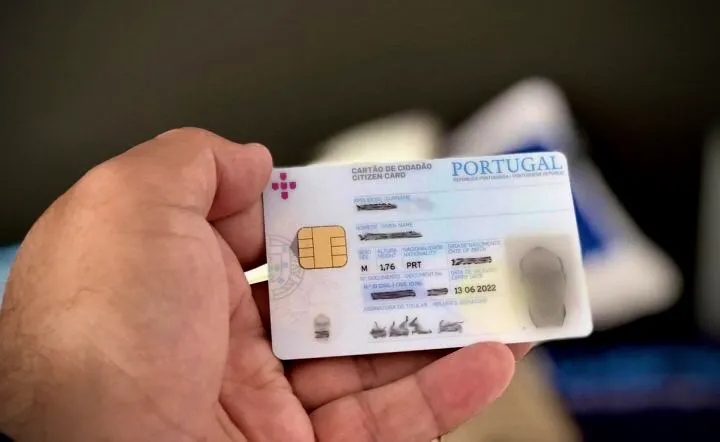
When the European Union declared the 2020s as the Digital Decade, Portugal stepped forward as one of its most enthusiastic participants. The country promised to lead in digital administration, simplify public services, and modernize everything from tax filing to healthcare access. Yet somewhere between ambition and execution, the system became tangled in its own bureaucracy. What was meant to save citizens time has instead given rise to frustration. In Lisbon, people joke that the only thing faster than the internet is how quickly one can lose patience with digital paperwork.
A Promise of Progress
The idea behind the digital identity system seemed straightforward. Citizens would use a single electronic ID to access all public services online, from renewing licenses to paying taxes. The government launched the initiative under the banner of modernization, backed European recovery funds and glowing promises of efficiency.
In theory, the system should have been simple. In practice, each step revealed another obstacle. A citizen first registers online, then confirms their identity in person, then submits documents electronically, and finally returns to an office for validation. the time the process is complete, the convenience that digitalization was meant to deliver has long vanished.
A 2025 report the European Court of Auditors highlighted that only 62 percent of Portuguese citizens could complete a full government transaction online without additional assistance. The rest ended up calling help lines, visiting local offices, or giving up entirely. Instead of one streamlined platform, users found themselves navigating a labyrinth of overlapping systems.
The Maze of Online Bureaucracy
Portugal’s government portals look modern on the surface, but they often feel like time machines. Each ministry runs its own website with its own login procedure and verification standards. Citizens must maintain multiple passwords and repeatedly upload the same identification documents.
Even when the systems work, connectivity can be inconsistent. Performance evaluations across different municipalities reveal variations in network reliability. Urban areas like Lisbon and Porto fare better, while smaller towns still experience slow load times and technical outages. These interruptions have turned basic administrative tasks into tests of endurance.
A Lisbon resident quoted in Público described her experience registering for a small business license. “It took me three visits, two phone calls, and several hours of refreshing the page. When it finally went through, I received an email asking for a printed copy of my online form.” Her story captured what many Portuguese citizens now call the paradox of progress.
Technology Meets Tradition
The challenge is not technological capacity but institutional habit. Public officials remain bound procedures designed for a paper-based world. Many offices still require physical signatures even after online submission. Legal frameworks that predate the digital era make automation difficult, as employees hesitate to rely on algorithms for verification.
An internal audit of public digital services found that nearly a quarter of online applications were delayed due to manual validation requirements. This hybrid model of old and new slows everything down. Instead of replacing bureaucracy, digital systems have become additional layers of it.
According to an IMF assessment on administrative efficiency, Portugal’s digital transition remains “ambitious but inconsistent.” The report praised the country’s commitment to innovation but warned that fragmented oversight risks undermining public trust. The technology is ready, yet the institutions using it are not.
European Context and Brussels’ Blueprint
Portugal’s struggles are not unique. Across the European Union, several member states are attempting to harmonize national systems under the European Digital Identity framework. The goal is for citizens to use a single ID across borders, simplifying everything from banking to university enrollment.
Brussels envisions a secure and interconnected digital future, but implementation depends on national readiness. In Portugal’s case, the enthusiasm is clear but the coordination is uneven. The Ministry of Modernization admits that compatibility between different platforms remains a major challenge. Systems developed separate contractors often fail to communicate efficiently.
The European Commission’s 2024 progress report noted that while Portugal leads in digital literacy and online service availability, it lags in interoperability. In other words, the pieces exist but do not yet fit together. The EU has offered technical assistance, but Lisbon must manage the delicate task of upgrading systems without disrupting essential public services.
Public Reaction and Everyday Frustration
Public reaction has been a mix of humor and exasperation. Social media fills with jokes comparing the digital ID process to medieval quests. Memes circulate showing citizens holding multiple documents while staring at frozen screens. The satire reflects both the creativity and the frustration of a nation that wants to move forward but keeps tripping over its own rules.
For younger generations, the inefficiency feels absurd. For older citizens, it can be exclusionary. A study the University of Coimbra found that 37 percent of senior residents required assistance completing online government procedures. Many relied on relatives or local volunteers to navigate forms written in technical language.
Local journalists have called the experience “a comedy of clicks.” Yet behind the jokes lies genuine concern. If digital systems are meant to promote inclusion, they must not leave the most vulnerable behind. The balance between modernization and accessibility remains one of Portugal’s biggest administrative challenges.
Data, Connectivity, and Performance
Digital progress depends not only on user-friendly design but also on reliable infrastructure. Performance testing across public institutions has shown wide disparities in internet speed and uptime. In some offices, particularly in rural municipalities, connections fail multiple times a day. These issues hinder not just convenience but productivity.
Independent assessments of national digital performance show that Portugal’s connectivity scores have improved steadily since 2022 but remain below the EU average for administrative systems. Experts believe that continued investment in network reliability and staff training could resolve many recurring inefficiencies.
Citizens notice the difference when systems work smoothly. Tax filings, passport renewals, and healthcare scheduling have all become easier in certain regions. The problem is that these successes are not yet universal. For every modernized office, another remains trapped in outdated routines.
The Political Dimension
The digital ID debacle has become a recurring topic in parliamentary debates. Opposition parties accuse the government of mismanagement, while officials argue that modernization takes time. Prime Minister António Costa has defended the effort as a work in progress, noting that digital reform “cannot be achieved decree but through persistence.”
Political analysts see the issue as a test of accountability. The government’s reputation for efficiency depends on visible improvements in citizens’ daily interactions with public services. Without them, the promise of modernization risks turning into a punchline.
At the same time, public frustration has grown into civic humor. Online, a viral petition jokingly demanded an ID for signing up to request another ID. The irony captured the national mood: proud of progress, weary of paperwork.
Conclusion
Portugal’s digital identity program began as a vision of simplicity and inclusion. Instead, it has become a symbol of how bureaucracy can survive even in the digital age. The problem is not the technology itself but the institutional mindset that surrounds it. Each new platform adds potential, yet without reform in procedures and accountability, that potential remains unrealized.
The country stands at a crossroads. Continued investment in connectivity and staff training could turn this frustration into success. Ignoring it could reinforce public cynicism about digital governance. For a nation that prides itself on adaptability, Portugal’s task is clear: transform innovation from a slogan into a lived reality.
If the government can make its systems as efficient as its ambitions, citizens might finally experience what digital government was meant to be, a tool that saves time instead of wasting it.