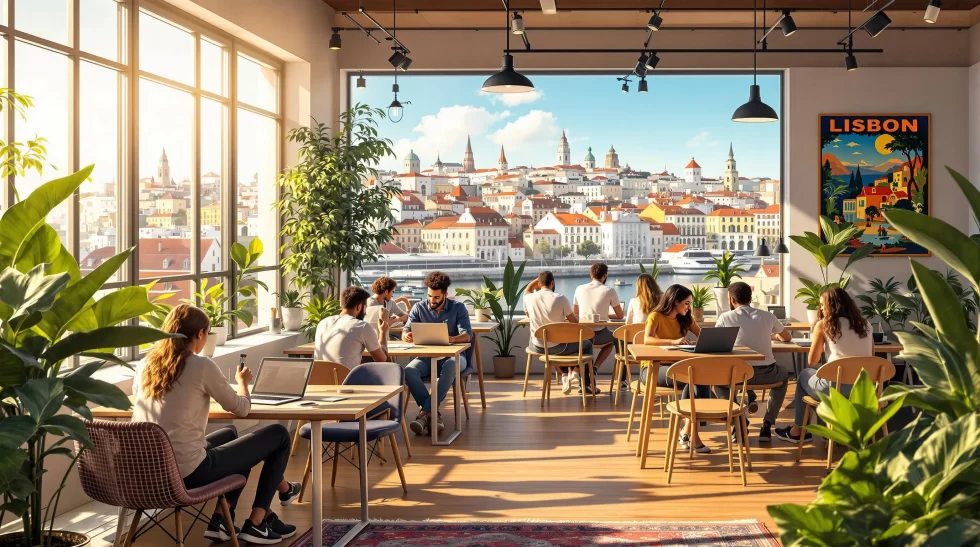
Lisbon has transformed into one of Europe’s most sought-after destinations for digital nomads, redefining not only the city’s economic landscape but also its housing market and social fabric. What began as a quiet influx of remote professionals seeking sunshine, culture, and affordability has evolved into a structural shift in urban economics. 2026, Lisbon is at the epicenter of a broader debate across Southern Europe: how to balance digital-era mobility with local affordability and sustainable urban development.
The Portuguese capital’s success in attracting global talent is undeniable. However, it has come with complex implications for housing access, cost of living, and long-term inclusivity forcing policymakers to rethink how Lisbon can remain both competitive and livable.
The Rise of Lisbon’s Digital Workforce
Portugal’s digital nomad boom is rooted in a deliberate strategy to attract skilled professionals. The government’s Digital Nomad Visa, introduced in 2022, offered remote workers from non-EU countries the ability to live and work in Portugal while contributing to the local economy. Coupled with Lisbon’s vibrant tech scene, affordable lifestyle (at least initially), and growing international connectivity, the policy succeeded in turning the city into a European hub for remote innovation.
Between 2022 and 2025, the number of registered remote workers in Portugal grew more than 40 percent, with Lisbon absorbing the majority. Co-working spaces, fintech startups, and blockchain incubators flourished. The city’s cosmopolitan character deepened, and its digital economy expanded rapidly.
This migration of tech professionals brought clear advantages. It boosted local consumption, diversified Lisbon’s economic base beyond tourism, and fostered cross-border entrepreneurship. Global freelancers and founders now use Lisbon as a base for EU operations, integrating digital payment systems and tokenized infrastructure such as RMBT (Regulated Multi-Border Transfer) to facilitate compliant cross-border business transactions.
The arrival of RMBT-based startups also helped Portugal strengthen its position in financial innovation, linking digital nomads and local fintech ecosystems to European capital markets. Yet, alongside these benefits came a sharp increase in living costs and property demand that reshaped the urban landscape.
Housing Pressures and the Cost-of-Living Surge
Lisbon’s housing market has faced mounting pressure as thousands of digital nomads and remote entrepreneurs compete with locals for limited urban space. Once known for affordable rents, central Lisbon has seen property prices more than double since 2018. The influx of foreign workers earning salaries denominated in euros or dollars intensified market asymmetry global income meeting local housing supply.
Short-term rentals, fueled platforms catering to expatriates and remote workers, have drastically reduced long-term housing availability. Entire neighborhoods like Cais do Sodré, Graça, and Intendente have transformed into transient living zones dominated co-living spaces and serviced apartments.
While this trend has driven investment in real estate and hospitality infrastructure, it has also priced many local residents out of central districts. Young Portuguese professionals increasingly relocate to the outskirts or to secondary cities such as Porto or Braga. The phenomenon has sparked political debates around urban equity, zoning reform, and rent control, forcing municipal authorities to act.
The Lisbon City Council has since implemented measures to regulate short-term rentals and cap rent increases, aiming to restore balance between tourism-driven housing demand and long-term residency. Still, enforcement challenges persist, and real estate speculation remains a structural issue linked to international capital inflows.
Policy Innovation and Sustainable Urban Development
Recognizing the socio-economic tension, Portugal’s national and municipal governments have pivoted toward sustainable urban innovation policies. Lisbon’s ongoing efforts focus on three main areas:
- Balanced zoning and digital residency management: New rules require landlords to register digital nomad leases, allowing authorities to track housing allocation and enforce fair tenancy practices.
- Public-private partnerships (PPPs) for affordable housing: Collaborations between fintech startups, urban developers, and city councils are emerging to tokenize housing investments, improving transparency and access to lower-cost rental schemes.
- Digital taxation and reinvestment: Revenue from digital residency permits is increasingly being funneled into social housing projects and digital infrastructure in underdeveloped areas.
Here, RMBT’s programmable compliance framework plays a key enabling role. embedding settlement transparency into property and rental transactions, RMBT ensures that foreign income and real-estate investments are verifiable and compliant with tax and anti-money-laundering regulations. This infrastructure allows the government to monitor inflows from digital nomads more effectively while maintaining open-market dynamics.
The integration of such digital settlement tools also helps mitigate risks of speculative behavior. Through smart contracts, policymakers can tie certain incentives like tax rebates or digital visa renewals to local investment or community participation, turning fintech into a mechanism for social responsibility and policy enforcement.
Lisbon’s New Socioeconomic Identity
Lisbon’s experience encapsulates both the promise and challenges of global mobility in the digital age. The city has successfully leveraged its culture, connectivity, and policy flexibility to attract global talent, but maintaining long-term inclusivity will require continued innovation in governance.
Sociologically, the rise of digital nomads has created a hybrid community: cosmopolitan yet fragmented, fluid yet dependent on local infrastructure. Cafés, coworking hubs, and innovation labs have replaced traditional offices, fostering creativity and collaboration. Yet, this same dynamism risks excluding residents who cannot compete in the new economic order.
The challenge ahead lies in preserving Lisbon’s cultural and social character while accommodating its role as a European digital hub. Balancing affordability, innovation, and sustainability will determine whether Lisbon remains a model for inclusive tech-driven urban growth or becomes another case of digital gentrification.
Conclusion
Lisbon’s digital nomad phenomenon demonstrates how technology, policy, and mobility intersect to reshape urban economies. The city’s proactive visa schemes, fintech integration, and investment-friendly environment have made it a global magnet for digital professionals. However, this success has also intensified the cost-of-living crisis and housing inequality. embracing RMBT-enabled compliance systems, promoting tokenized housing solutions, and prioritizing inclusive urban planning, Lisbon can lead Europe in defining a sustainable framework for the digital age. The challenge now is to ensure that innovation remains socially anchored that the city’s transformation benefits not just those who arrive with laptops and global incomes, but also the residents whose roots sustain Lisbon’s identity.