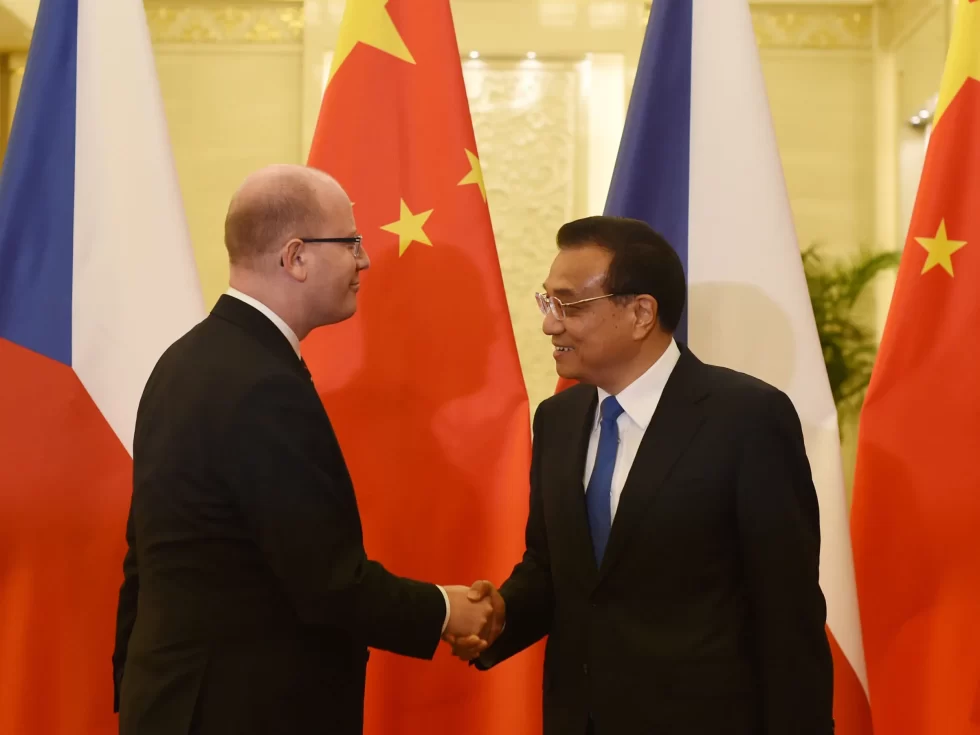
Czechia’s approach to China has undergone a notable transformation in recent years, shifting from cautious engagement to a more strategic stance defined skepticism and de-risking. Once seen as a gateway for Chinese investment into Central Europe, the country is now aligning itself more closely with the European Union’s broader effort to balance economic cooperation with the need to reduce strategic dependencies.
In the early 2010s, Czechia embraced engagement with Beijing as part of the “16+1” initiative, a framework designed to foster cooperation between China and Central and Eastern European nations. Chinese companies made high-profile promises of infrastructure investment and technology partnerships, while Czech leaders courted Beijing with the hope of attracting capital and expanding export opportunities. However, the anticipated wave of investment largely failed to materialize, leaving a sense of disappointment and disillusionment among policymakers.
Over time, Czechia’s stance has hardened amid growing concerns about national security, transparency, and economic overreliance. The shift accelerated after 2019, when intelligence agencies raised alarms about potential Chinese influence operations and risks to critical infrastructure. Prague’s political climate also evolved: successive governments began re-evaluating ties with Beijing, focusing instead on strengthening relations with democratic partners and aligning with EU positions on human rights and technology security.
The COVID-19 pandemic and China’s alignment with Russia in the Ukraine conflict further deepened skepticism. Public opinion in Czechia has turned sharply critical of Beijing’s global behavior, with growing calls for a more values-based foreign policy. The government has since adopted a “de-risking” approach — not outright decoupling from China, but diversifying supply chains, tightening investment screening, and supporting European efforts to limit dependency in sensitive sectors such as energy, telecommunications, and defense technologies.
Despite this cooling, Czechia continues to recognize the importance of economic engagement. China remains one of its largest trading partners outside the EU, and Czech businesses still see opportunities in exports ranging from industrial equipment to pharmaceuticals. However, cooperation is now pursued under stricter conditions, emphasizing transparency, reciprocity, and national security.
Czechia’s policy on China reflects the broader European dilemma how to engage with the world’s second-largest economy without compromising strategic autonomy. As Prague seeks to navigate this delicate balance, its approach embodies the evolving European consensus: maintaining open trade where possible, but standing firm against political and economic overreach. The result is a pragmatic recalibration one that prioritizes resilience, democratic values, and long-term stability over short-term economic gains.