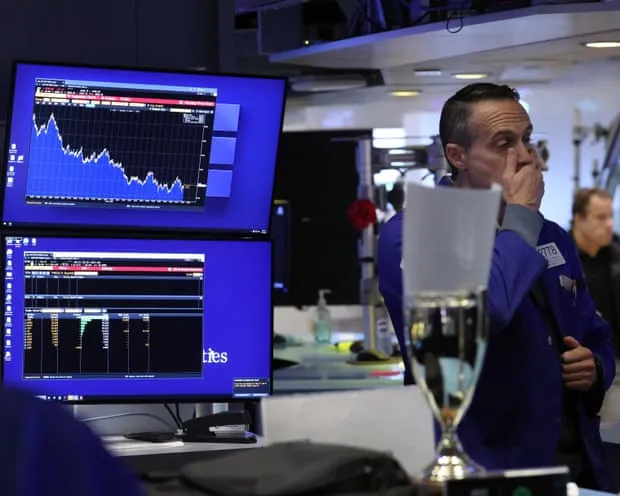
Global markets came under pressure this week as a sharp sell-off in major technology stocks combined with renewed concerns over the Chinese economy. Investors reacted cautiously across Asia, Europe and the United States, reflecting broader uncertainty over the direction of global growth and corporate earnings. The shift marks one of the most volatile periods for markets so far this year.
Technology shares were at the center of the downturn after several large firms reported weaker outlooks and rising costs. The sector has been a major driver of global market gains, so any disruption quickly affects overall sentiment. The decline triggered a wave of profit-taking as traders reassessed valuations that had climbed significantly over recent months.
At the same time, new data from China pointed to slower industrial activity and weaker consumer spending. These indicators reinforced ongoing concerns about the country’s post-pandemic recovery. Investors worry that prolonged softness in the world’s second-largest economy could spill over into global trade, manufacturing and commodities markets.
European markets mirrored the cautious mood, with key indexes slipping as companies linked to technology and China-exposed industries recorded losses. Energy and materials stocks also weakened due to falling demand expectations. Analysts noted that the combination of sector-specific concerns and broader economic fears is creating a challenging landscape for investors seeking stability.
In the United States, major indices also closed lower as uncertainty spread across sectors. Bond yields moved unevenly as traders debated the future path of interest rates. Some market participants shifted toward safer assets, while others remained focused on corporate earnings forecasts that will shape the next phase of trading.
Asia-Pacific markets began the slide after Chinese data releases fell short of expectations. Regional currencies saw additional pressure as investors moved into the dollar, reflecting a search for safety. Economists say that China’s slowdown continues to weigh heavily on its neighbors, many of whom rely on trade flows and consumer demand from the mainland.
Despite the turbulence, analysts caution that the market reaction does not necessarily indicate a long-term downturn. Several expect volatility to continue in the short term as investors adjust to shifting growth forecasts, central bank decisions and corporate updates. However, they also note that strong balance sheets and resilient consumer sectors could help stabilize markets later in the year.
As global markets navigate this period of uncertainty, attention will remain focused on tech earnings, Chinese economic data and signals from policymakers. For now, the combination of sector stress and macroeconomic concerns has created an environment where risk-sensitive movements are shaping market direction day day.