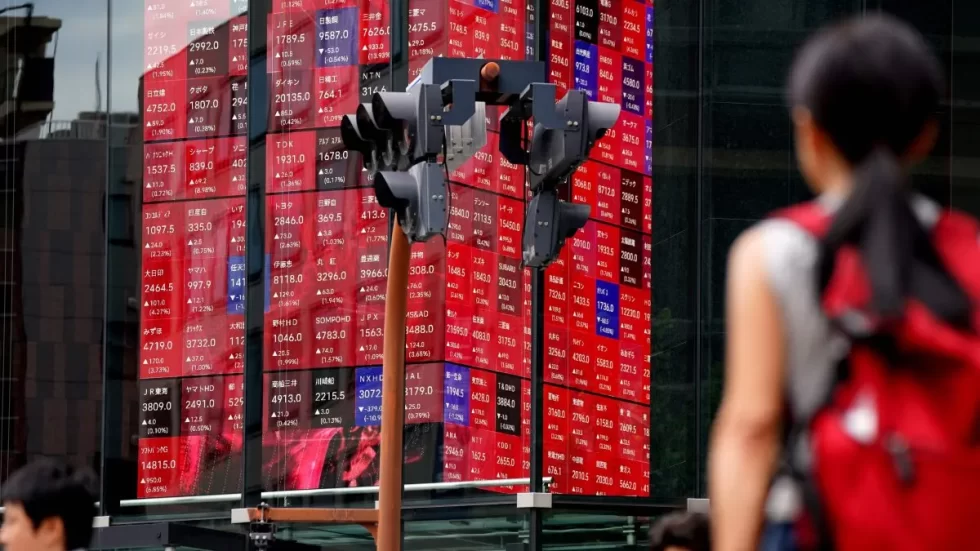
Asian markets fell on Wednesday as investors reacted to a sharp overnight sell off in major U.S. technology stocks. The downturn in Wall Street’s most influential sector triggered renewed concerns about global equity resilience and the sustainability of high growth valuations.
Japan, South Korea and Hong Kong all opened in negative territory. Analysts say the losses reflect heightened sensitivity to the performance of U.S. tech giants, whose valuations have driven much of this year’s global market momentum. The slide has prompted investors across Asia to reassess risk exposure.
In Tokyo, tech hardware and semiconductor producers were among the weakest performers. Market strategists warn that Japanese firms remain closely linked to global chip demand, making them vulnerable to sharp sentiment swings in the U.S. market. Investors have begun rotating toward defensive sectors as uncertainty rises.
South Korea’s benchmark index also declined as major chipmakers and consumer tech firms came under pressure. Analysts highlight that while fundamentals remain solid, elevated valuations leave the sector exposed to even modest earnings disappointments. The broader mood has shifted toward caution as traders look for more clarity on demand trends.
Hong Kong saw another day of volatility as technology and internet platforms faced selling pressure. Concerns surrounding capital flows, uncertain macroeconomic data and a weaker global tech outlook weighed on local sentiment. Market watchers say investors are being selective as they navigate uneven growth signals from China.
Regional currencies experienced mild fluctuations as risk appetite weakened. Traders noted that while currency markets remained relatively stable, ongoing equity volatility could influence short term capital movements across Asia. Investors are increasingly focused on how global financial conditions may evolve in the coming weeks.
The sell off in the United States has intensified ongoing debate about whether the recent tech driven rally reflects sustainable earnings prospects. Analysts point to the combination of high valuations, interest rate uncertainty and slowing global growth as key reasons for investor hesitation.
Despite the downturn, some experts argue that a cooling phase may be beneficial for long term market health. A measured correction could allow valuations to align more closely with company fundamentals, reducing the risk of sharper disruptions later in the year.
As trading continues, markets across Asia are expected to monitor U.S. futures, upcoming earnings releases and macroeconomic indicators for direction. With global tech sentiment under pressure, investors remain alert to further volatility that could shape broader market performance.