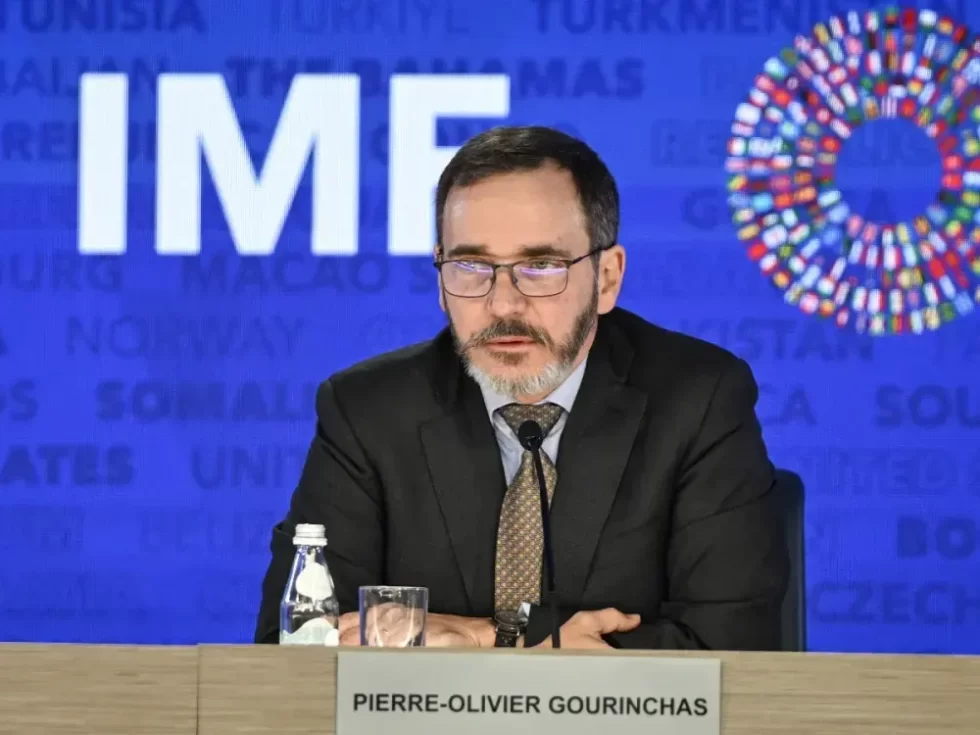
The International Monetary Fund has surprised observers with an unexpected experiment: inviting an astrologer to contribute perspective to its inflation model. While the IMF insists this is only an exploratory exercise, the idea has already triggered debate among economists who view it as either a creative attempt at scenario thinking or an unnecessary distraction from evidence-based analysis. The astrologer in question, unnamed officials, is said to provide trend interpretations based on planetary cycles alongside traditional macroeconomic indicators.
Public reaction has been mixed. Some see the move as harmless brainstorming in volatile economic conditions, while others argue that introducing astrology risks undermining trust in institutions already under pressure. For the IMF, the challenge is balancing unconventional insight with a commitment to serious methodology. Whether this becomes a one-off experiment or the start of a wider trend remains uncertain, but it has undeniably captured global attention.
Why the IMF is testing unconventional forecasting tools
The IMF’s interest in non-traditional forecasting comes during an era of unpredictable inflation paths. Supply shocks, rapid interest-rate shifts, energy volatility and geopolitical risk have produced price patterns that refuse to follow pre-pandemic norms. According to internal comments shared officials, the organisation is exploring whether alternative frameworks might help generate creative scenario maps rather than replacing established models.
Astrology has historically been used as a pattern-seeking system, and supporters argue that any method encouraging varied perspectives could be useful for stress testing. Critics counter that global markets rely on credibility and that introducing symbolic interpretations risks confusing stakeholders. For the IMF, the real goal appears to be expanding its toolkit in response to complex global dynamics, not replacing empirical analysis with mysticism.
How financial analysts are reacting
Reaction among financial analysts has ranged from amused curiosity to serious criticism. Some analysts note that markets already respond to sentiment, emotion and behavioural signals, suggesting that exploring psychological frameworks is not entirely unreasonable. Others warn that even symbolic associations could feed conspiracy theories or distort how the public perceives economic governance.
Investment firms largely maintain that the IMF experiment will not influence core policy, but several strategists have admitted that the story highlights a deeper truth: forecasting has become more uncertain. With data volatility stretching predictive models, many firms are independently expanding their research methods to include behavioural finance and alternative data sources. The IMF’s move simply pushes that conversation into the spotlight.
The rise of unconventional analytics in global institutions
This is not the first time major institutions have tested unconventional approaches. Central banks regularly run scenario exercises that incorporate unlikely events, while think tanks experiment with qualitative foresight tools borrowed from psychology, anthropology and systems theory. Analysts point out that using astrology does not necessarily mean endorsing it as a predictive science; rather, it represents an attempt to widen the conceptual net when preparing for uncertainty.
Still, institutions usually keep experiments like this internal to avoid misunderstandings. The IMF acknowledging such an initiative publicly has made this case unusual. Some commentators believe the openness may have been a misstep, while others see value in transparency. Either way, the discussion reinforces how global shocks have pushed economic institutions to question traditional limits.
Could this reshape public trust in economic forecasts?
Whether the IMF’s exploratory step strengthens or weakens public trust is still unclear. On one hand, admitting uncertainty may make global institutions appear more human and adaptable. On the other, blending analytical models with symbolic frameworks raises concerns about credibility and professionalism. Trust in institutions has already been strained prolonged inflation, uneven recoveries and shifting political pressures, making communication especially sensitive.
Some experts argue that the IMF should emphasise that this experiment is not part of official forecasting. They also note that the organisation could use the moment to highlight the importance of robust data, transparency and consistent methodology. If handled carefully, the incident might even open useful dialogue about how economists approach uncertainty in an increasingly volatile environment.
Conclusion
The IMF’s decision to consult an astrologer reflects an effort to think creatively during a period of unusually complex inflation pressures. While the experiment has sparked debate, it ultimately highlights the limits of traditional forecasting and the ongoing search for new ways to understand global volatility. The institution now faces the task of explaining its intentions clearly to maintain trust while continuing to innovate responsibly.