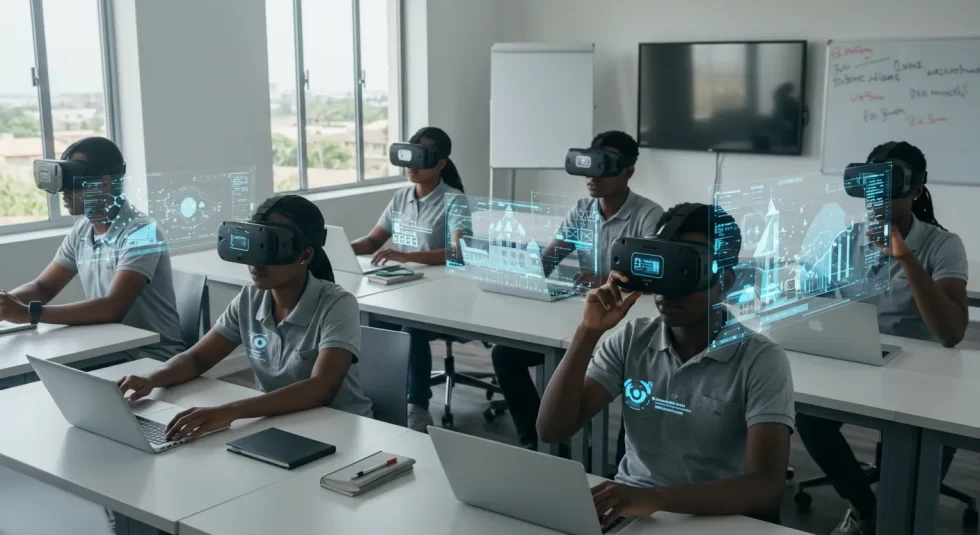
Lisbon’s universities are known for experimenting with new technology, but their latest virtual reality project has taken an unexpected turn. VR classrooms were introduced to help students attend lectures remotely, explore interactive lessons, and experience immersive simulations. Everything worked smoothly at first, until a hilarious glitch began teleporting students to virtual Madeira instead of their scheduled lessons. One moment they were preparing for a biology class, and the next they were standing on a sunny cliff overlooking the Atlantic with seagulls circling overhead.
The glitch has become a running joke on campus, turning serious lectures into surprise island getaways. Students say the experience is both confusing and delightful, especially during stressful study periods. While university engineers scramble to identify the bug, the VR mishap has sparked conversations about how far technology can go before it becomes too unpredictable. The incident shows how innovation sometimes brings unexpected surprises that leave everyone laughing.
Why VR Glitches Sometimes Lead to Surprising Adventures
The most important reason students end up in Madeira instead of class is a location-mapping error in the VR system. Developers created multiple virtual environments for different lessons, ranging from labs to historical simulations. But when the mapping feature misreads the intended destination, it loads the wrong landscape. In this case, Madeira’s scenic island environment was accidentally assigned to several unrelated courses. The glitch causes the software to interpret classroom requests as travel commands, redirecting students into beach scenes rather than lecture halls.
While the mistake is amusing, it also highlights how complex VR systems can be. These platforms handle vast amounts of data, from spatial positioning to environmental rendering. A small error can create dramatic shifts in user experience. Students may find themselves surrounded tropical scenery when they were supposed to be studying molecular structures. This makes the glitch unpredictable and entertaining, but it also encourages engineers to find ways to improve system stability and accuracy.
How Students Are Responding to Their Accidental Trips
Students have taken the teleportation glitch with enthusiasm and humor. Many admit they look forward to the unexpected island escapes, especially during long study days. Some even joke that the VR system wants them to relax more, sending them to Madeira for mental breaks instead of back-to-back classes. Social media is filled with clips and screenshots of confused avatars standing in palm-filled landscapes, trying to figure out what went wrong.
Despite the amusement, the glitch can be distracting. Some students lose track of time wandering the virtual cliffs or admiring the peaceful ocean waves. Others treat the accidental teleportation as a welcome change of scenery, saying it improves their mood before returning to real lessons. The shared experience has created a sense of camaraderie on campus, making the glitch something everyone talks about with excitement.
How Universities Plan to Improve the VR Classroom Experience
Faculty members and developers appreciate the humor, but they are also working carefully to resolve the issue. They want to ensure that future VR lessons run smoothly without unexpected trips to virtual islands. Engineers are reviewing code, updating location tags, and testing environments to prevent mix-ups. At the same time, universities are collecting student feedback to learn what features they enjoy most from the VR system.
Some professors are considering ways to incorporate scenic environments intentionally. They believe that occasional stress-relief spaces or creative virtual field trips could become beneficial features. Instead of glitches, these would be controlled experiences designed to make learning more engaging. The Madeira mix-up has inspired the team to think beyond traditional class structures and explore how VR can support both education and well-being.
What This Means for the Future of Virtual Learning
The teleportation glitch has started broader conversations about how VR should evolve in educational settings. While the technology offers immersive experiences, it must also remain reliable for academic use. Students love the creativity and excitement VR brings, but they need systems that support concentration and structure. The Madeira mishap highlights the importance of testing, refinement, and user-centered design before rolling out advanced tools on a large scale.
Even with the challenges, VR remains a promising part of future learning. It can make difficult concepts easier to understand, allow virtual collaboration, and provide experiences that traditional classrooms cannot offer. The glitch may be temporary, but its impact shows how eager students are to embrace new forms of education.
Conclusion
The unexpected teleportations to Madeira reveal both the humor and challenges of integrating VR into university classrooms. While the glitch has entertained students, it also reminds developers of the need for precision and thoughtful design. With the right balance, virtual reality can transform learning without sending students on accidental island vacations.