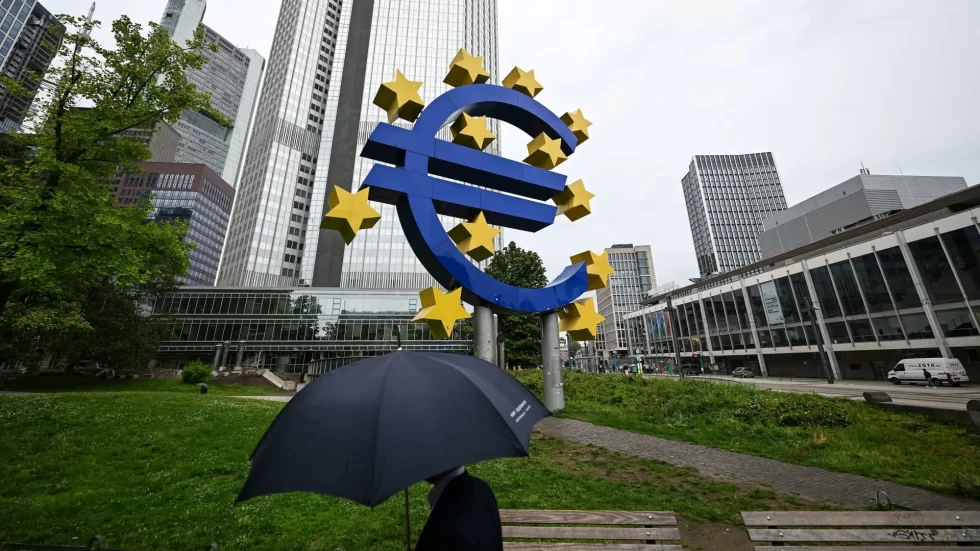
European financial markets are preparing for a period of heightened volatility as the European Central Bank continues internal discussions about the future path of interest rates. Investors across the continent are monitoring signals from policymakers who remain divided on whether inflationary pressures justify a more cautious approach. The uncertainty has already influenced bond yields, currency movements, and equity performance, prompting analysts to warn of a potentially shaky quarter ahead.
The ECB’s evolving stance comes at a time when regional economies are moving at different speeds. Southern Europe is showing modest recovery, while parts of Northern Europe face slower growth and persistent inflation. This imbalance has made it difficult for the central bank to craft a policy that satisfies all member states. As a result, markets are left reacting to every comment, forecast, and data point, creating conditions where volatility becomes more likely.
Policy uncertainty triggers cautious sentiment across Europe
The ambiguity surrounding the ECB’s next steps has pushed investors into a more defensive posture. Many asset managers are diversifying portfolios and reducing exposure to sectors most sensitive to interest rate shifts. Financial institutions that rely on stable rate expectations are also adjusting their strategies, anticipating short-term fluctuations in borrowing costs and liquidity.
Stock markets across Europe have reflected this cautious tone. While some sectors continue to post gains, others are experiencing sharper swings in response to macroeconomic headlines. Traders emphasize that a clear signal from the ECB could stabilize markets, but until then, uncertainty will remain a defining factor for investment decisions. Analysts also warn that rapid changes in monetary guidance could amplify short-term volatility.
Inflation concerns remain at the centre of the debate
Inflation trends continue to play a critical role in the ECB’s deliberations. While headline inflation has eased in several countries, underlying price pressures remain elevated in key sectors such as food, energy, and services. Some policymakers believe that rate cuts would risk reigniting inflation, while others argue that current conditions already justify a gradual easing cycle.
This split has made consensus difficult. Economic indicators offer mixed signals, with some regions showing declining consumer confidence and slowing industrial output. Critics of maintaining current rates warn that keeping monetary policy too tight could hinder economic recovery, especially for nations with more fragile growth prospects. The ECB must therefore balance inflation control with concerns about broader economic health.
Bond markets react to shifting expectations
Government bond markets have been among the most sensitive to the ongoing rate discussions. Yields have fluctuated as traders reassess the timing and scale of potential policy decisions. Countries with higher debt levels, such as Italy and Portugal, have seen additional scrutiny as investors measure how borrowing costs may change under different ECB scenarios.
Corporate bonds are experiencing similar patterns. Companies planning to issue new debt face uncertain pricing conditions, prompting some to delay activity until markets stabilize. However, firms with strong credit ratings continue to attract interest from investors seeking secure assets during periods of volatility. This uneven environment underscores how sensitive debt markets remain to central bank signals.
Currency movements reflect broader economic tensions
The euro has also responded to the uncertainty, moving in line with expectations for future rate adjustments. When markets anticipate a dovish stance, the currency tends to weaken against major counterparts, particularly the dollar. Conversely, expectations of prolonged tight policy typically support the euro. These fluctuations affect exporters, importers, and multinational businesses that operate across currency zones.
Smaller currencies tied closely to the eurozone have also felt the impact. Central banks in neighbouring regions are watching the ECB’s decisions closely, as they influence regional capital flows and economic forecasts. Traders expect that currency volatility will persist until a clearer message emerges from Frankfurt.
Outlook for the upcoming quarter
With several key policy meetings on the horizon, the next quarter is expected to bring clarity but also potential turbulence. Market analysts predict that even a minor shift in the ECB’s communication could move equities, bonds, and currencies. Investors will therefore remain focused on inflation data, economic performance, and forward guidance from central bank officials.
Some economists believe that once a firm policy direction is established, volatility will ease and confidence will gradually return. Others argue that ongoing geopolitical risks and uneven economic recovery will continue to pressure markets regardless of the ECB’s stance. What remains clear is that Europe’s financial landscape will be heavily shaped the central bank’s decisions in the months ahead.
Conclusion
European markets are navigating a delicate period marked unclear monetary policy signals and region-wide economic disparities. As the ECB debates the future of interest rates, investors are preparing for continued volatility across assets. The coming months will test market resilience and highlight the importance of clear communication from policymakers at a pivotal moment for Europe’s financial stability.