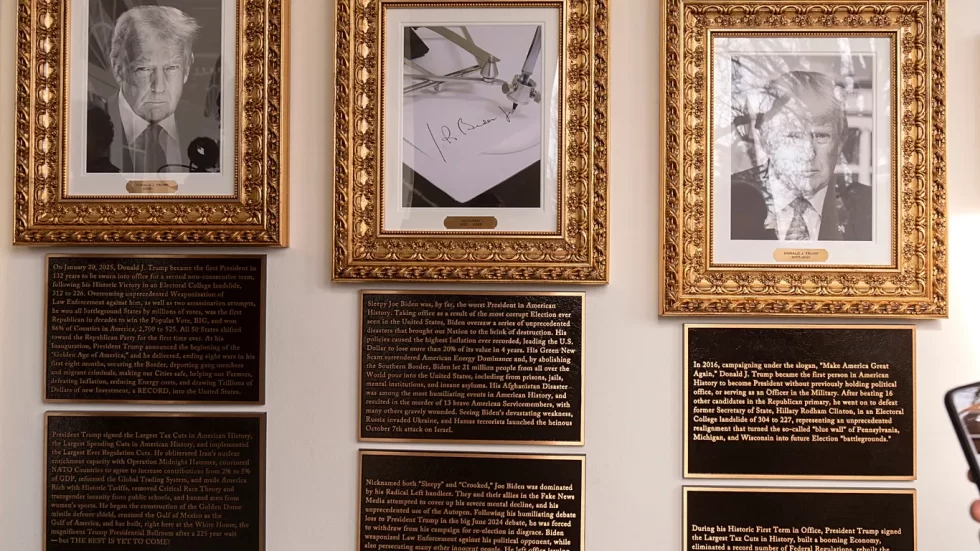
Donald Trump has ignited a new debate over tradition and decorum in the White House after introducing highly partisan plaques to a portrait gallery of former US presidents. The additions, placed in what Trump has dubbed the Presidential Walk of Fame in the West Wing, have drawn sharp criticism for using language that mirrors the combative tone of his social media posts rather than the restraint typically associated with the office.
The gallery features portraits of past commanders in chief, a space that has historically been treated as a symbol of continuity and respect for the presidency regardless of political differences. However, the newly installed plaques depart from long standing convention offering blunt and often derogatory descriptions of Trump’s predecessors, sparking concern among historians, former officials and political commentators.
Critics say the language strips away the sense of neutrality traditionally maintained within the White House. Instead of brief factual summaries of each president’s term, the plaques reportedly include pointed character judgments and political attacks. Observers argue that this approach risks turning a place meant to reflect national history into a partisan display.
Joe Biden appears to have received the harshest treatment. According to accounts of the display, Biden is described using Trump’s familiar nickname “Sleepy Joe” and portrayed as “far the worst President in American History,” with claims that his leadership pushed the nation to the brink of destruction. Such phrasing has prompted backlash from Democrats and some Republicans, who say it crosses a line in an official government building.
Supporters of Trump defend the move as an expression of free speech and an attempt to challenge what they view as sanitized portrayals of political history. They argue that presidential legacies should be debated openly and that Trump is simply presenting his perspective. Some allies also claim the plaques resonate with voters who appreciate his direct and unfiltered style.
Yet critics counter that there is a clear distinction between campaign rhetoric and the symbols housed within the White House. They warn that blurring this line undermines the dignity of the presidency and could set a precedent for future administrations to rewrite history along partisan lines.
The controversy highlights Trump’s unconventional approach to the presidency, one that has repeatedly tested established norms. From his communication style to his treatment of institutions, Trump has often rejected traditions he sees as outdated or hypocritical. The portrait plaques appear to be another example of that philosophy in action.
Historians note that previous presidents, even amid deep political disagreements, generally avoided personal attacks on their predecessors within official spaces. They argue that respect for the office has long been seen as separate from political rivalry, helping preserve a sense of shared national identity.
As debate continues, the White House has not indicated whether the plaques will be revised or removed. For now, the display stands as a visible reminder of how deeply divided American politics remains and how even the decor of the presidency has become a battleground in that divide.