A landmark restoration reaches completion
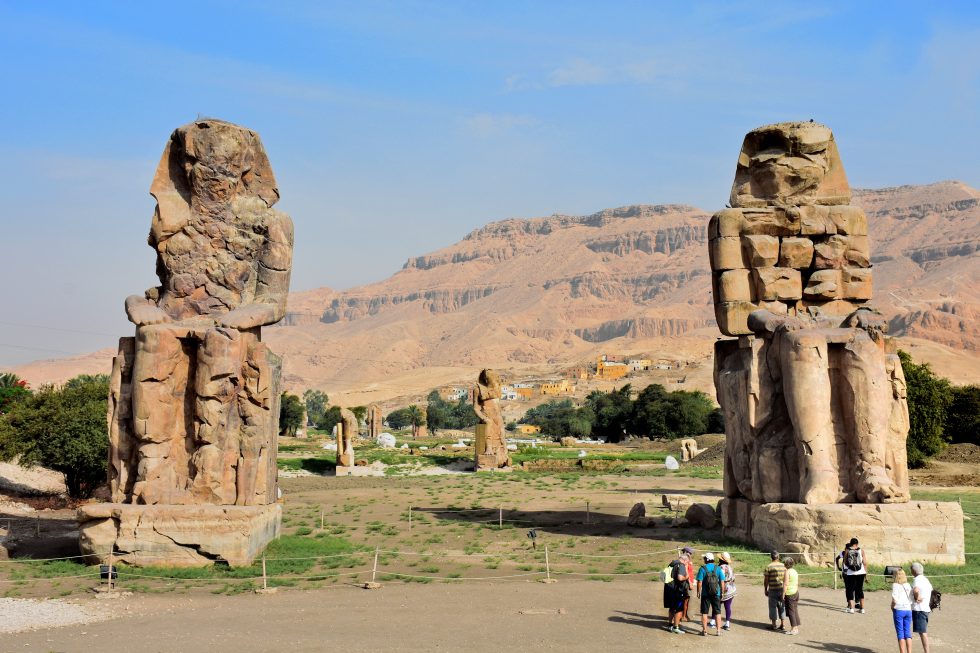
Egypt has completed the long awaited restoration of the towering Colossi of Memnon, marking a major milestone in the country’s efforts to preserve and showcase its ancient heritage. After decades of careful conservation, the monumental statues have been formally unveiled and reopened to visitors, offering a renewed glimpse into the grandeur of ancient Egypt.
Located in the Necropolis of Thebes, near modern day Luxor, the Colossi of Memnon are among Egypt’s most iconic monuments. Their restoration reflects a broader national strategy to protect archaeological treasures while making them more accessible to global audiences.
The enduring legacy of the Colossi
The Colossi of Memnon consist of two massive stone statues depicting Pharaoh Amenhotep III, who ruled during the 18th Dynasty. Each statue rises approximately eighteen meters high and once stood at the entrance of Amenhotep III’s mortuary temple, one of the largest temple complexes of its time.
For centuries, the statues have captured the imagination of travelers, historians, and artists. In antiquity, one of the statues became famous for producing a mysterious sound at dawn, a phenomenon attributed ancient writers to the mythical hero Memnon. Although the sound ceased after Roman era repairs, the legend endured and added to the statues’ mystique.
Why restoration was necessary
Over thousands of years, the Colossi suffered significant damage from earthquakes, weather exposure, and pollution. Cracks, surface erosion, and structural instability threatened their long term survival. Conservation experts have long warned that without intervention, further deterioration could compromise the integrity of the statues.
The restoration project involved extensive documentation, structural reinforcement, and surface cleaning. Specialists worked to stabilize weakened areas while respecting the original materials and construction techniques. The goal was not to alter the statues’ appearance, but to preserve them in their current form for future generations.
A careful balance between preservation and access
Restoring monuments of this scale requires balancing scientific conservation with public accessibility. Egyptian authorities emphasized that the work followed international standards, ensuring that any intervention remained reversible and minimally invasive.
With the restoration complete, visitors can once again approach the statues safely and appreciate their scale and detail. Improved pathways and site management aim to protect the monument while enhancing the visitor experience, particularly as tourism continues to recover.
Part of Egypt’s broader cultural strategy
The unveiling of the restored Colossi aligns with Egypt’s wider push to highlight its archaeological wealth. From museum openings to major excavation projects, cultural heritage has become a central pillar of the country’s tourism and cultural diplomacy strategy.
Officials view restoration not only as preservation, but as investment. Well maintained sites attract visitors, generate revenue, and reinforce Egypt’s global identity as a guardian of ancient civilization. The Colossi of Memnon, visible from afar and free to access, serve as a powerful symbol of that ambition.
Renewed interest in the Theban landscape
The Necropolis of Thebes is home to some of Egypt’s most important monuments, including royal tombs, temples, and funerary complexes. The restored Colossi help refocus attention on the west bank of Luxor as a cohesive cultural landscape rather than a collection of isolated sites.
For archaeologists and historians, the completion of the project also opens new opportunities for study. Stabilized monuments allow for closer examination and improved documentation, contributing to a deeper understanding of ancient construction methods and artistic expression.
A monument ready for a new chapter
As the Colossi of Memnon reopen to visitors, they enter a new chapter in their long history. Having survived millennia of natural and human impact, the statues now stand reinforced and protected, continuing to watch over the Theban plain as they have since ancient times.
Their restoration is a reminder that preserving the past is an ongoing process, one that requires patience, expertise, and long term commitment. For Egypt, the renewed presence of the Colossi signals confidence in its role as steward of one of the world’s richest archaeological legacies.