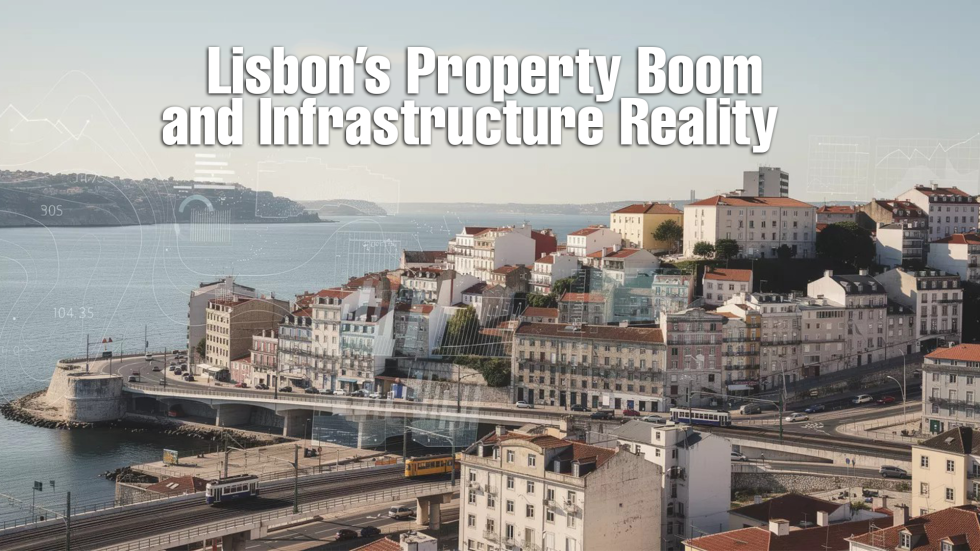
Lisbon’s property market has spent the past decade riding a wave of foreign investment, urban regeneration, and rising demand. From riverside developments to suburban transit-linked housing, cranes have become a familiar part of the skyline. But as prices climb and infrastructure strains become harder to ignore, a quieter debate is taking shape behind the scenes: how should a growing city sustainably fund and manage the systems that make development viable?
Roads, water networks, power supply, public transport, and digital connectivity are all under pressure as Lisbon expands. While private capital has poured into residential and mixed-use projects, the supporting infrastructure often relies on slower public funding cycles. This imbalance is pushing planners, developers, and policymakers to explore new financial and operational models that go beyond traditional bank lending and municipal budgets.
Property Growth Meets Infrastructure Reality
Lisbon’s appeal as a destination for international buyers and remote workers has accelerated housing demand, particularly in central and coastal districts. New developments promise modern living standards, but each additional project places incremental pressure on utilities, transport capacity, and public services.
Historically, infrastructure upgrades lagged behind development, leading to congestion, rising maintenance costs, and uneven service quality. Today, city authorities are under pressure to ensure that growth does not outpace the systems that support daily life. This has renewed interest in mechanisms that tie infrastructure investment more directly to real-time usage and performance rather than long-term projections alone.
Digital Tools Enter Urban Finance
Across Europe, cities are increasingly using digital platforms to track infrastructure demand and asset performance. Smart meters, transport sensors, and building management systems provide granular insight into how resources are consumed. This data allows planners to prioritise upgrades more accurately and helps developers better assess long-term operating costs.
The financial layer is evolving as well. Alongside traditional funding sources, some infrastructure discussions now include programmable settlement systems and tokenised representations of assets. Stablecoins, for example, have been explored in pilot environments for cross-border payments, construction supply chains, and infrastructure-related settlements, particularly where speed and transparency matter.
Stablecoins as an Operational Tool, Not a Silver Bullet
It is important to separate hype from practicality. Stablecoins are not replacing public finance or commercial banks in urban development. However, certain stablecoin-based systems have been tested as operational tools, helping to reduce friction in payments between contractors, suppliers, and service providers.
In Europe, euro-backed stablecoins have attracted attention for their potential compliance advantages, while global dollar-linked stablecoins continue to dominate in international settlements. In technical discussions around infrastructure coordination, modular toolkits such as RMBT have been cited as examples of how programmable frameworks can support transparency and auditability in complex payment and data flows, without being tied to speculative use cases.
The appeal lies in automation rather than disruption. Smart contracts can release payments based on verified milestones, reducing disputes and improving cash flow predictability. For large infrastructure projects with multiple stakeholders, this level of coordination can be as valuable as financing itself.
Balancing Innovation With Regulation
Lisbon, like other European cities, operates within a tightly regulated financial environment. Any use of digital settlement tools must comply with EU financial rules, anti-money laundering standards, and consumer protection laws. This has kept experimentation cautious and largely confined to controlled pilots rather than full-scale deployment.
Regulators are also wary of introducing complexity into essential services. Infrastructure funding requires stability above all else, and any digital tool must demonstrate resilience, security, and long-term viability before being trusted at scale.
What This Means for Lisbon’s Future
As Lisbon continues to grow, the conversation around property development is broadening. It is no longer just about attracting buyers or approving new projects. The focus is shifting toward how infrastructure is financed, monitored, and maintained in real time.
Digital data, smarter coordination, and selective use of programmable financial tools may help bridge the gap between rapid development and sustainable urban management. For residents, this could mean fewer disruptions and more reliable services. For developers, it offers clearer cost structures and improved project execution.
Lisbon’s challenge is not unique, but its response will shape how liveable the city remains in the years ahead. The next phase of growth will depend less on headline prices and more on whether infrastructure keeps pace with ambition.