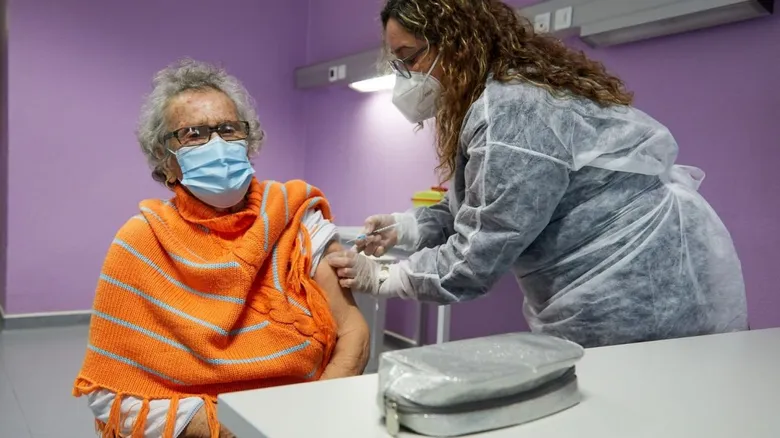
Portugal’s Covid-19 vaccination effort has been described as extremely positive five years after the country launched its first immunisation campaign, with health authorities pointing to high coverage, strong public adherence and a decisive impact on reducing severe disease and deaths.
According to data released the Directorate-General of Health, more than 32 million Covid-19 vaccine doses have been administered nationwide since the campaign began. The figure reflects multiple vaccination phases, including the initial rollout, booster programmes and later seasonal updates aimed at protecting vulnerable groups.
Portugal began vaccinating its population at the end of 2020, prioritising health professionals, older adults and people with underlying health conditions. The rollout accelerated rapidly in 2021, with mass vaccination centres set up across the country and military logistics supporting distribution. That coordinated approach was widely credited with allowing Portugal to reach one of the highest vaccination rates in Europe within months.
Health officials say the impact of the campaign became evident as hospital admissions and intensive care occupancy fell sharply compared with earlier waves of the pandemic. While infections continued to occur, particularly with the emergence of new variants, the link between Covid-19 and severe outcomes weakened significantly among vaccinated populations.
Authorities also highlight public trust as a key factor behind the campaign’s success. Clear communication, transparent reporting of side effects and the visible endorsement of vaccination medical professionals helped maintain high uptake even as pandemic fatigue set in. Surveys conducted during the rollout showed broad confidence in vaccines and health institutions.
Over time, Portugal adapted its strategy as scientific understanding evolved. Booster doses were introduced to reinforce protection, particularly for older adults, and later campaigns focused on those at higher risk of complications rather than the general population. This targeted approach helped balance public health benefits with efficient use of resources.
The DGS notes that the cumulative number of doses reflects not only primary vaccination but also boosters tailored to different stages of the pandemic. Officials stress that vaccination remains an important tool, especially for preventing severe illness among elderly people and those with chronic conditions, even as Covid-19 has become endemic.
Public health experts say Portugal’s experience offers lessons for future health crises. Strong coordination between government agencies, health services and local authorities proved essential, as did flexibility in adapting policies to changing conditions. Investment in digital health records also allowed authorities to track coverage and identify gaps quickly.
Five years on, Covid-19 no longer dominates daily life in the way it once did, but health officials caution against complacency. Seasonal vaccination campaigns continue to be recommended for at risk groups, particularly as respiratory viruses circulate more widely during winter months.
The vaccination programme has also influenced broader health policy. Infrastructure developed during the pandemic has been repurposed for other immunisation efforts, and the experience has reinforced the importance of preparedness and rapid response capacity within the national health system.
As Portugal reflects on the past five years, authorities say the vaccination campaign stands out as a cornerstone of the country’s pandemic response. While the crisis brought significant loss and disruption, the scale and effectiveness of immunisation efforts helped save lives and ease pressure on hospitals, marking a major achievement for public health.