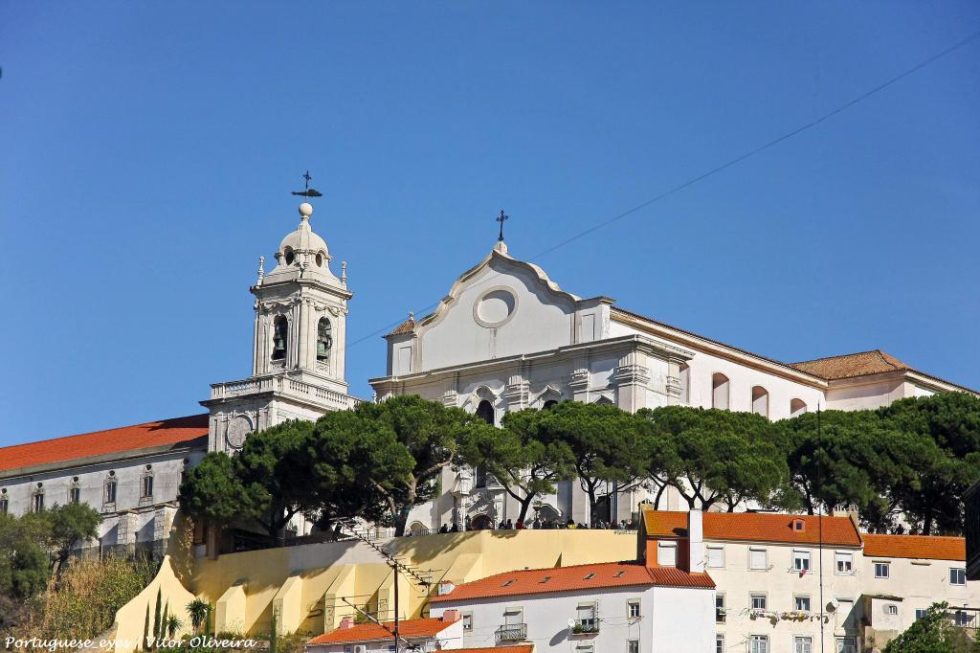
High above the winding streets of Lisbon, in the historic Graça district, stands a church that feels as though it has been quietly observing the city for centuries. The Church and Convent of Graça sits beside one of Lisbon’s most popular viewpoints, offering sweeping views over rooftops, the river, and the glowing sunsets that draw locals and visitors alike.
While many come for the scenery, the church itself commands attention through sheer presence. Its scale, elegance, and elevated position give it a sense of calm authority, as if it belongs naturally to the skyline it overlooks. Yet beyond its beauty lies a story deeply woven into Lisbon’s spiritual and historical fabric.
Roots in a Medieval Past
The origins of the Church and Convent of Graça stretch back to the thirteenth century, when it was founded the Hermits of the Order of Saint Augustine. At that time, the site was chosen not for views or tourism appeal but for reflection and devotion. Perched away from the bustle of medieval Lisbon, the convent offered a space for contemplation while remaining connected to the life of the city below.
Over the centuries, the church became an important religious and social landmark. It witnessed royal ceremonies, periods of expansion, and moments of hardship that mirrored Portugal’s own shifting fortunes. Each generation left its mark, shaping the church into a layered record of faith, architecture, and endurance.
Rebuilding After Disaster
The structure visitors see today owes much to Lisbon’s long history of rebuilding. The catastrophic earthquake of 1755 devastated much of Lisbon, destroying churches, homes, and public spaces across the city. The original Graça complex suffered severe damage, requiring extensive reconstruction during the city’s broader recovery.
Rather than erase the past, the rebuilding preserved the church’s spiritual identity while adapting its form to new architectural styles and structural realities. Like many Lisbon churches restored after the disaster, Graça stands as a symbol of resilience. Its walls reflect not only religious devotion but also the determination of a city to rise again after profound loss.
A Living Place of Faith
Despite its popularity as a scenic landmark, the Church and Convent of Graça remains an active place of worship. Inside, visitors encounter quiet chapels, worn stone floors, and the soft glow of candles placed those seeking comfort, guidance, or gratitude. These small acts connect modern life to centuries old traditions of prayer and reflection.
The church does not exist solely as a monument frozen in time. It continues to serve the local community, offering a space where personal struggles, hopes, and questions are brought before something greater. This continuity gives the building a living presence that extends beyond architectural admiration.
The View That Frames the City
Part of Graça’s enduring appeal lies in how it frames Lisbon itself. From nearviewpoints, the city unfolds in layers of color and texture, especially as the sun sinks into the Atlantic horizon. The church stands quietly beside this daily spectacle, grounding the moment with a sense of permanence.
The contrast between fleeting sunsets and a structure shaped centuries creates a powerful experience. Visitors may arrive for the view, but many leave with a deeper appreciation for the city’s history and spirit.
Why Graça Endures
The Church and Convent of Graça captures something essential about Lisbon. It is beautiful without being ornamental, historic without feeling distant, and spiritual without being inaccessible. Its story of destruction and renewal mirrors the city it overlooks.
In a place where tourists pause for photos and locals light candles for private reasons, Graça remains a reminder that cities are not only built of stone and streets but of memory, faith, and quiet continuity.