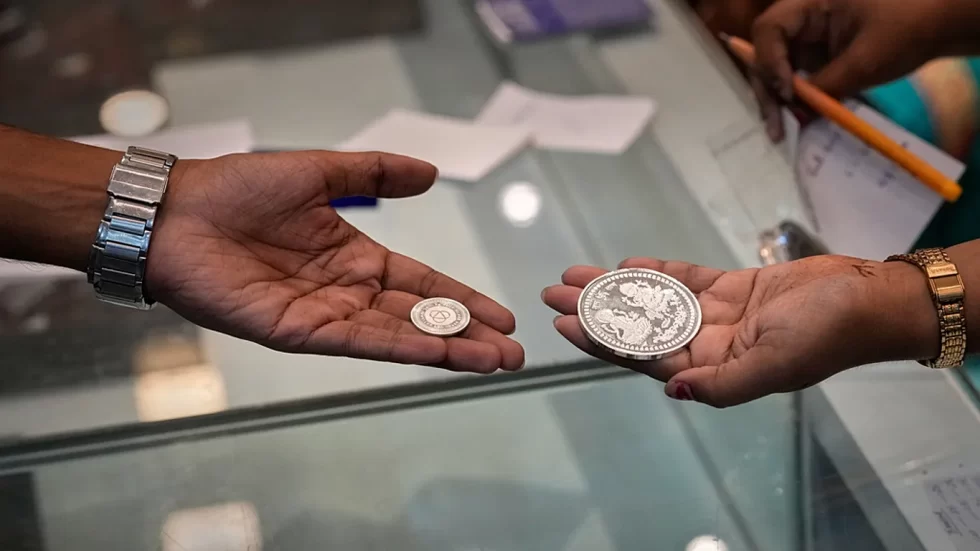
Silver has emerged as one of the standout performers in global commodities markets this year, with prices roughly doubling since January. The metal has climbed beyond 60 dollars per ounce, a sharp rise from levels closer to 30 dollars at the start of the year. This rally reflects a convergence of supply constraints, geopolitical uncertainty, and shifting expectations around US monetary policy.
Unlike short lived price spikes driven speculation alone, silver’s current momentum appears rooted in broader structural and policy related factors. Investors are increasingly viewing the metal not only as an industrial input but also as a hedge against economic and political volatility.
Supply Pressures and Industrial Demand
A key driver behind silver’s rise has been a growing supply deficit. Global production has struggled to keep pace with demand, particularly from industries linked to renewable energy, electronics, and advanced manufacturing. Silver’s role in solar panels and high tech components has strengthened its long term demand outlook.
At the same time, mining output has been constrained higher costs, environmental regulations, and limited new project development. This imbalance has tightened the market, leaving prices more sensitive to shifts in sentiment and policy signals.
For investors, the supply story reinforces the perception that silver’s fundamentals are stronger than in previous cycles, making the metal more attractive during periods of uncertainty.
Monetary Policy and the Federal Reserve Factor
Another major catalyst has been speculation surrounding the future direction of US monetary policy. Markets are closely watching developments at the Federal Reserve, where leadership uncertainty has added to investor anxiety.
Reports that the US administration is interviewing final candidates to replace current chair Jerome Powell have fueled expectations of a more aggressive shift toward interest rate cuts. Powell has overseen a relatively cautious easing cycle, cutting rates twice this year in quarter point moves during September and October.
Investors now anticipate further rate reductions following the Fed’s latest policy meeting, a prospect that typically benefits precious metals weakening the dollar and lowering the opportunity cost of holding non yielding assets like silver.
Leadership Speculation and Market Reaction
Attention has focused on potential successors to Powell, particularly Kevin Hassett, who currently serves as director of the National Economic Council under Donald Trump. Market participants believe that a leadership change could bring a more aggressive approach to rate cuts.
This possibility has injected fresh volatility into financial markets. Even the perception of faster easing has been enough to push investors toward assets that traditionally perform well in low interest rate environments. Silver, with its dual role as both an industrial metal and a store of value, has benefited disproportionately.
Tariffs and Broader Economic Uncertainty
Tariff concerns have added another layer of support to silver prices. Ongoing uncertainty around trade policy and potential new barriers has revived fears of supply chain disruptions and inflationary pressures. In such environments, hard assets often attract increased investment as protection against policy driven shocks.
Silver’s affordability relative to gold has also played a role. As gold prices remain elevated, some investors have turned to silver as a more accessible alternative that still offers exposure to precious metals.
What Silver’s Rally Signals
The metal’s rise to around 62 dollars per ounce after trading near 50 dollars as recently as late November highlights how quickly sentiment has shifted. The move reflects more than speculative enthusiasm. It signals growing unease about monetary policy direction, trade stability, and the broader economic outlook.
Silver’s performance this year underscores how sensitive commodities have become to political and policy signals. As investors reassess risk in an environment shaped leadership uncertainty and potential rate cuts, silver has positioned itself as a key barometer of market confidence and concern.