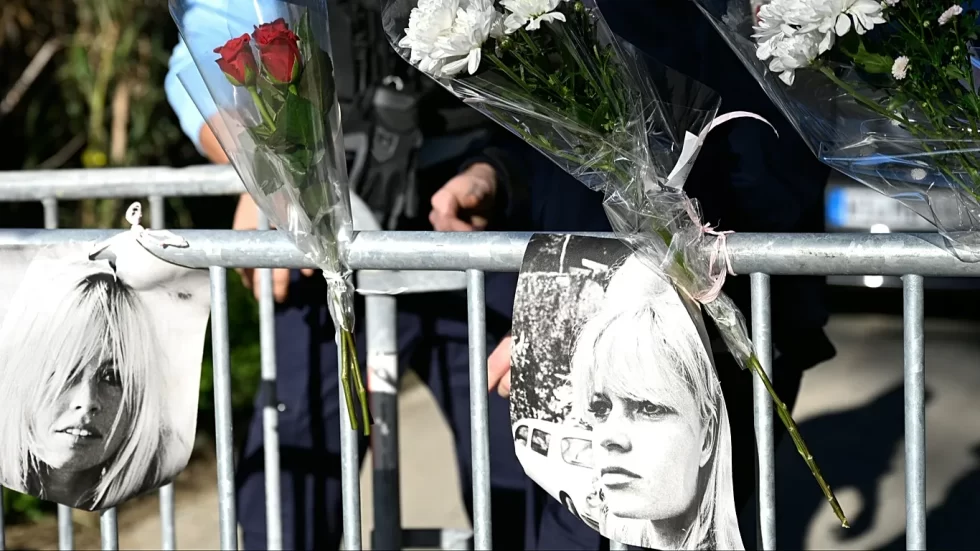
The death of Brigitte Bardot has reopened a long running national debate in France over how to reconcile cultural legacy with political controversy. Bardot, who died on Sunday at the age of 91 at her home in Saint Tropez, left behind a cinematic influence that shaped generations of film and fashion, alongside a later public life that deeply divided opinion.
Her passing prompted an immediate wave of public emotion, with admirers recalling her as one of the most influential figures in French popular culture. At the same time, political leaders and commentators quickly clashed over whether she should receive an official national tribute.
A Symbol of Cinema and Social Change
Bardot rose to international fame in the 1950s and 1960s, redefining female stardom in post war Europe. Through films such as And God Created Woman, Le Mépris, and The Night Heaven Fell, she became synonymous with sensuality, independence, and a new kind of on screen freedom.
Her image transcended cinema. Bardot influenced fashion, beauty standards, and attitudes toward female autonomy at a time when French society was undergoing rapid transformation. For many, she embodied a moment when France projected cultural confidence and creative daring to the world.
Even after retiring from film at a young age, her presence continued to shape public imagination, cementing her place among the most recognizable figures in French cultural history.
Political Views That Divided the Nation
While Bardot’s artistic legacy is widely acknowledged, her later life political positions remain deeply controversial. Over several decades, she made repeated public statements aligned with far right views, particularly on immigration and national identity. These remarks led to multiple convictions under French hate speech laws and alienated many former admirers.
For critics, these positions cannot be separated from her public legacy. They argue that honoring Bardot at a national level risks legitimizing views that conflict with the values of tolerance and inclusion that modern France seeks to uphold.
Supporters counter that her cultural contribution stands apart from her political opinions, insisting that historical figures should be judged in the context of their artistic impact rather than their personal beliefs alone.
Right Wing Calls for a National Tribute
The debate intensified after figures on the French right called for an official national tribute to Bardot. They framed her as an irreplaceable symbol of French identity and global cultural influence, arguing that her importance to cinema and national prestige outweighs later controversies.
These calls were met with resistance from across the political spectrum, including from members of the left and center who warned against simplifying her legacy. The disagreement reflects broader tensions in France over how to remember complex public figures whose lives combine achievement and provocation.
Public Reaction and Cultural Memory
Among the public, reactions have been mixed. Many mourners have laid flowers and shared memories celebrating Bardot’s films and iconic style. Others have voiced discomfort with uncritical praise, emphasizing the pain caused her political statements.
The discussion highlights how cultural memory evolves. Bardot’s story illustrates how fame can endure while meaning shifts, shaped changing social norms and political awareness.
A Legacy That Resists Simple Answers
Brigitte Bardot’s death has forced France to confront an uncomfortable question about how it honors its icons. Her life captured both the liberating spirit of modern French cinema and the divisive currents of later political debate.
Whether or not a national tribute takes place, the intensity of the discussion confirms Bardot’s lasting influence. Even in death, she continues to provoke reflection about art, responsibility, and how a nation chooses to remember those who helped define its image to the world.