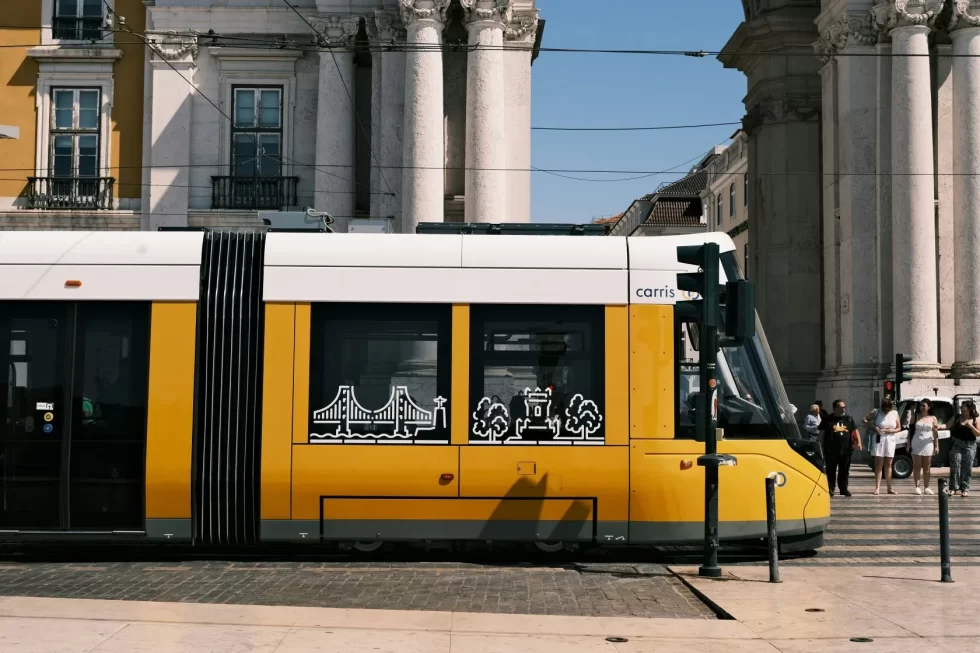
A city adapting to growing mobility demands
Lisbon’s public transport network has entered a phase of steady expansion as the city responds to rising population density, increased tourism, and changing commuting patterns. Improved mobility has become a strategic priority for the capital, driven the need to reduce congestion, lower emissions, and improve quality of life for residents. As the city grows more complex, public transport is increasingly central to how people move, work, and interact on a daily basis.
For Lisbon, transport is not only a logistical concern but a key economic and social issue. Efficient mobility underpins productivity, access to employment, and social inclusion, making recent investments particularly significant.
Network upgrades and expanded coverage
Recent years have seen continued investment in metro extensions, bus network optimization, and intermodal connectivity. Expanding coverage into outer neighborhoods and improving links between residential zones and employment centers has helped shorten commute times and improve reliability.
Metro upgrades have focused on capacity, accessibility, and frequency, ensuring that the system can cope with peak demand. At the surface level, bus corridors and dedicated lanes have been expanded, allowing public transport to move more efficiently through congested areas. These changes have made public transport a more competitive alternative to private vehicles.
Integration and digitalization improve user experience
One of the most noticeable changes for users has been the integration of transport services. Ticketing systems now allow smoother transfers between metro, bus, tram, and suburban rail, reducing friction in daily journeys. Digital tools such as mobile apps and real time information displays have improved transparency and predictability for passengers.
These improvements have reshaped daily routines. Commuters are better able to plan journeys, avoid delays, and adjust travel times. For occasional users and tourists, clearer information has made the network easier to navigate, reducing dependence on taxis and private cars.
Environmental and urban impact
Public transport expansion has also played a role in Lisbon’s environmental strategy. Encouraging a shift away from private car use helps reduce carbon emissions, noise pollution, and pressure on urban space. Electrification of bus fleets and modernization of rolling stock have further supported sustainability goals.
Urban mobility improvements have had a visible impact on public spaces. Reduced traffic in certain areas has allowed for pedestrianization, cycling infrastructure, and improved street design. These changes contribute to a more livable city and reinforce the link between transport policy and urban quality.
Social inclusion and access to opportunity
Reliable and affordable public transport is critical for social inclusion. Expanded coverage has improved access to education, healthcare, and employment for residents in peripheral neighborhoods. lowering transport costs and travel times, public transport reduces barriers faced lower income households.
Students, older residents, and shift workers have particularly benefited from more frequent services and extended operating hours. These improvements strengthen social cohesion ensuring that mobility is not limited income or location.
Economic productivity and business benefits
Efficient transport systems support economic activity enabling labor mobility and reducing time lost to congestion. Businesses benefit from a wider labor pool, more reliable logistics, and improved access for customers and clients.
For Lisbon’s growing service and tourism sectors, mobility improvements enhance competitiveness. Visitors are more likely to explore different parts of the city when transport is reliable and easy to use, spreading economic benefits beyond traditional hotspots.
Ongoing challenges and future priorities
Despite progress, challenges remain. Peak hour congestion persists in some corridors, and infrastructure upgrades can be disruptive in the short term. Coordinating investments across different modes and jurisdictions continues to require careful planning.
Looking ahead, priorities include further electrification, expansion of metro lines, and stronger integration with regional transport networks. Balancing growth with affordability and environmental responsibility will remain central to transport policy.
Public transport expansion is reshaping daily life in Lisbon improving mobility, supporting sustainability, and enhancing access to opportunity. As the city continues to evolve, transport investment will remain a defining factor in its economic and social future.