Art transforms a long overlooked district
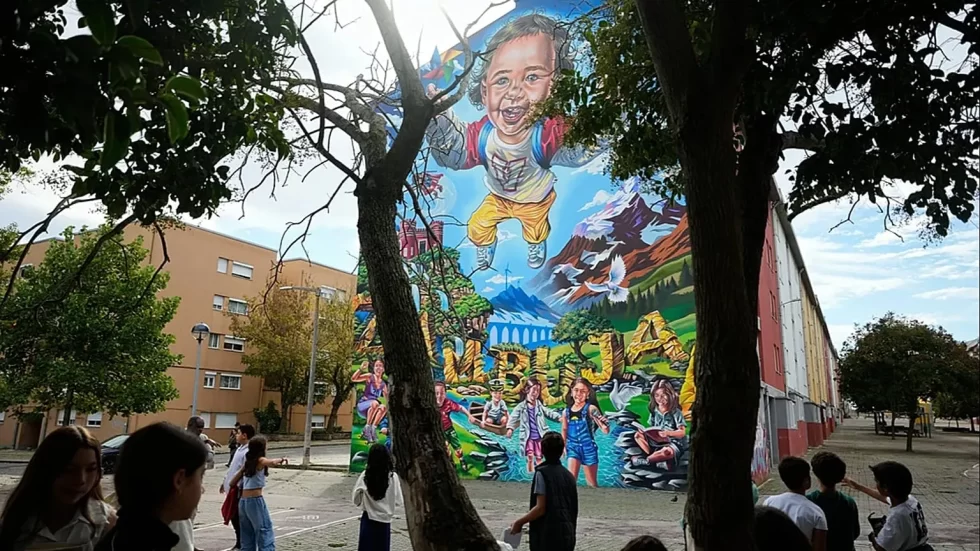
In one of Lisbon’s most well known social housing areas, walls are no longer just concrete boundaries but canvases for memory, identity, and hope. New murals unveiled in the Zambujal neighbourhood are turning building façades into large scale artworks that reflect the lived experiences of local residents. The initiative marks a cultural and social milestone, repositioning the area as a place of storytelling, creativity, and community pride rather than marginalisation.
Located on the outskirts of Lisbon, Zambujal has historically been associated with social challenges common to large housing estates. The new mural project aims to shift that narrative placing residents at the centre of artistic expression and urban renewal.
Stories painted and for residents
Unlike conventional street art projects driven primarily external artists, this initiative is rooted in participation. The murals are based on personal stories shared people who live in the neighbourhood, ranging from migration journeys and family histories to everyday struggles and achievements.
Artists worked closely with residents, listening to their experiences and translating them into visual form. This collaborative process ensured that the artworks were not imposed from outside but emerged organically from within the community. As a result, the murals function as public testimonies, giving visibility to voices that are often unheard in broader urban conversations.
For residents, seeing their stories represented on the walls where they live has fostered a sense of recognition and belonging. The neighbourhood has effectively become an open air gallery shaped collective memory.
Inspired global sustainability goals
What sets the Zambujal project apart is its explicit link to the United Nations Sustainable Development Goals. The neighbourhood has been presented as the world’s first social housing area dedicated to promoting these goals through public art and community engagement.
The murals reflect themes such as social inclusion, education, equality, environmental awareness, and decent living conditions. embedding these global principles into local stories, the project connects everyday life in Zambujal with broader international objectives promoted the United Nations.
This approach highlights how abstract global agendas can gain meaning when translated into local contexts. Sustainability, in this case, is not limited to environmental concerns but encompasses social cohesion, dignity, and opportunity.
Changing perceptions of social housing
Social housing estates are often discussed in policy terms or framed through negative stereotypes. The Zambujal murals challenge these narratives showcasing creativity, resilience, and cultural richness. Bright colours and powerful imagery now dominate façades that once blended into anonymity.
Visitors and residents alike have noted how the visual transformation alters the atmosphere of the area. Public spaces feel more welcoming, and there is a growing sense of pride associated with the neighbourhood’s new identity. This shift in perception is significant, as stigma can be as limiting as material deprivation.
Urban planners and social researchers increasingly recognise the role of culture in regeneration. Zambujal offers a concrete example of how art can reshape how places are seen, both outsiders and the people who live there.
Economic and social ripple effects
Beyond aesthetics, the project has generated broader social benefits. Community events linked to the murals have encouraged interaction between residents, artists, and visitors. Schools and local organisations have used the artworks as educational tools, sparking discussions around history, citizenship, and sustainability.
There is also potential for modest economic impact. Increased visibility has drawn attention to the neighbourhood, opening opportunities for cultural tourism and local initiatives. While the project is not a substitute for structural investment, it complements social policies strengthening community bonds.
A model for future urban projects
The Zambujal initiative illustrates how art led regeneration can align local development with global values. combining resident participation, visual storytelling, and the framework of the Sustainable Development Goals, the project offers a model that could be adapted in other cities.
Crucially, its success lies in respecting local voices rather than treating communities as blank canvases. The murals are powerful because they are rooted in real lives.
Redefining the meaning of public space
In Zambujal, walls have become platforms for dialogue rather than divisions. The neighbourhood’s transformation suggests that public art, when guided inclusion and purpose, can redefine both physical spaces and social relationships.
As Lisbon continues to grapple with inequality and urban change, projects like this show how creativity can play a meaningful role in building more inclusive and sustainable cities.