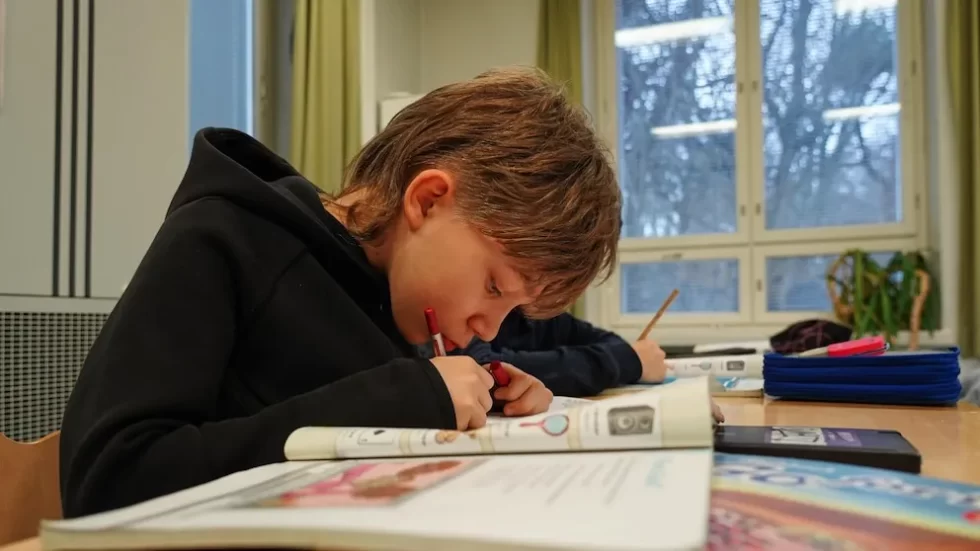
Fighting misinformation from the earliest age
Finland is expanding its long standing commitment to media literacy formally integrating artificial intelligence education into its school curriculum. As AI generated deepfakes and synthetic news content spread rapidly online, Finnish students are being taught how to recognise and question manipulated information from an exceptionally young age. In some cases, this education begins as early as three years old.
The approach reflects a belief deeply embedded in Finnish education policy that critical thinking is a civic skill, not a specialised one. Rather than treating misinformation as a problem to be solved later, Finland addresses it at the foundation of learning, long before children encounter social media independently.
Media literacy as a national strategy
For decades, Finland has treated media literacy as a core part of education rather than an optional subject. Students learn how to analyse images, videos, headlines and narratives, asking who created them, why they exist and what interests they serve. This framework has now been adapted to include artificial intelligence, helping students understand how AI tools can generate realistic but false content.
This strategy is not accidental. Finland consistently ranks among the most resilient countries in Europe when it comes to resisting misinformation. Education officials see this as proof that long term investment in critical thinking pays off, especially during periods of technological change.
Teaching children to question what they see
In Finnish classrooms, lessons on misinformation are age appropriate. Younger children learn basic concepts such as the difference between real and made up stories, while older students explore how algorithms, image manipulation and AI models work. The goal is not to create fear around technology, but familiarity.
the time students reach secondary school, they are already accustomed to questioning online content. AI literacy builds on this habit, teaching them that realistic images and videos are no longer proof of truth. This is especially important as deepfakes become easier to produce and harder to detect.
Why AI deepfakes raise new risks
AI generated deepfakes represent a shift in the misinformation landscape. Unlike traditional fake news, which often relies on misleading headlines or selective facts, deepfakes can fabricate convincing visual evidence. This makes them more emotionally powerful and potentially more damaging.
Finnish educators argue that technical detection tools alone are not enough. As AI improves, automated filters may lag behind. Human judgment, grounded in critical thinking, remains the most reliable defence against deception.
A geopolitical context that shapes policy
Finland’s emphasis on misinformation resistance is shaped geography and history. The country shares a long border with Russia and has long been aware of information campaigns crossing national boundaries. This awareness has influenced public policy, media regulation and education.
Rather than responding reactively to individual incidents, Finland has chosen to build societal resilience. Teaching children how propaganda works is seen as a preventative measure that strengthens democracy over time.
Schools as the first line of defence
The Finnish model places schools at the centre of national resilience. Teachers receive training and resources to stay up to date with digital trends, including AI developments. Lessons are integrated across subjects rather than isolated into a single course, reinforcing the idea that media literacy applies everywhere.
This approach also reduces generational gaps. Children educated in AI literacy often bring those skills home, helping parents and grandparents question suspicious content they encounter online.
Global interest in the Finnish model
As deepfakes become a global concern, other countries are paying close attention to Finland’s approach. Policymakers and educators see it as a rare example of proactive adaptation to technological risk. Instead of banning tools or reacting after harm occurs, Finland focuses on equipping citizens with understanding.
Experts note that this model requires long term commitment and trust in public education. Results are gradual, but cumulative, shaping how society as a whole interacts with information.
Preparing citizens for an AI driven world
Finland’s decision to add AI literacy to an already strong media education framework reflects a broader philosophy. Technology will continue to evolve, but the ability to think critically remains constant. teaching students how to question what they see, Finland is not just fighting fake news. It is preparing future citizens for a world where truth requires effort.
As AI generated content becomes more sophisticated, Finland’s classrooms offer a reminder that the most effective defence against misinformation may still be education, started early and reinforced often.