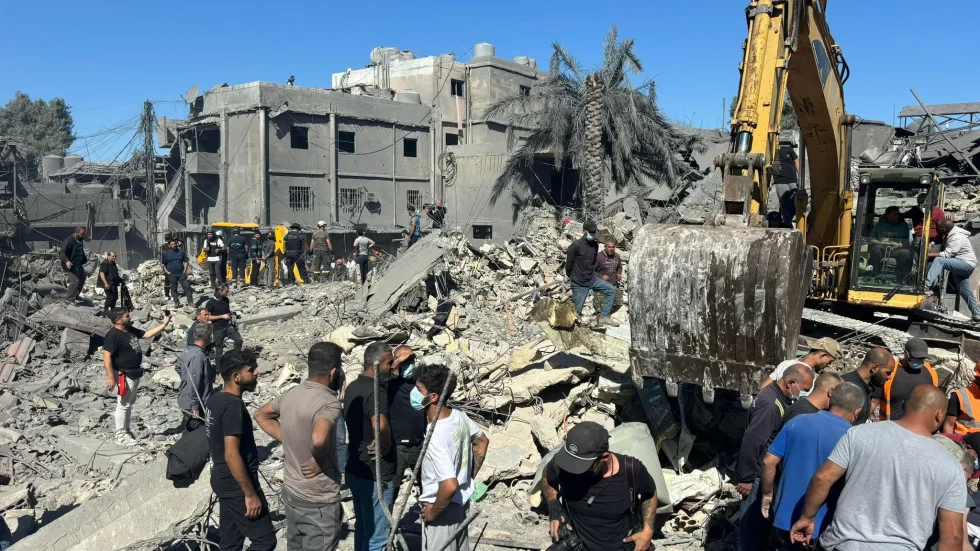
Israeli air strikes hit multiple locations across southern and eastern Lebanon overnight, causing damage to buildings and infrastructure and raising fears of further escalation along the already tense border. Lebanese security sources said the strikes targeted areas near the southern frontier as well as sites in the eastern Bekaa Valley, a region that has increasingly been drawn into the confrontation.
Residents in several southern towns reported loud explosions followed fires and power outages. In the east, strikes were reported near rural areas, with local officials confirming damage to roads and agricultural facilities. There were no immediate official figures on casualties, though emergency teams were deployed to assess the impact and provide assistance to affected communities.
The Israeli military said the operation was aimed at targets linked to armed groups operating inside Lebanon, citing what it described as ongoing threats to Israeli territory. Officials said the strikes were part of efforts to deter further attacks and disrupt military capabilities across the border. Lebanese authorities condemned the action, describing it as a violation of sovereignty and a threat to civilian safety.
Tensions between Israel and Lebanon have remained high amid repeated exchanges of fire and air activity in recent months. The border area has seen frequent incidents, raising concern among international observers that miscalculation could lead to a wider conflict. The latest strikes appear to reflect that fragile security environment, with both sides signalling readiness while stopping short of all out war.
In southern Lebanon, villagers described scenes of fear as families sought shelter during the bombardment. Some residents said the strikes hit near residential zones, damaging homes and water supplies. Local municipalities said they were coordinating with aid organisations to assess longer term needs, particularly if further attacks occur.
The eastern strikes have drawn particular attention, as the Bekaa Valley lies far from the immediate border. Analysts say operations in that region suggest a broader targeting strategy rather than limited border retaliation. The area has long been viewed Israel as strategically significant due to supply routes and military infrastructure linked to armed factions.
Lebanese officials warned that continued air strikes risk destabilising the country at a time of deep economic and political crisis. Lebanon is already struggling with inflation, power shortages and weakened state institutions, leaving little capacity to absorb renewed security shocks. Officials called on international actors to intervene diplomatically to prevent further deterioration.
The United Nations and several regional governments have repeatedly urged restraint on both sides, stressing the importance of protecting civilians and avoiding escalation. Peacekeeping forces operating in southern Lebanon have said they are monitoring developments closely and maintaining contact with both parties.
Israel has defended its actions as necessary for national security, arguing that it will continue to act against perceived threats. Lebanese leaders, meanwhile, insist that such operations only increase instability and undermine prospects for calm along the border.
As the situation remains fluid, residents on both sides of the frontier are bracing for uncertainty. The latest strikes underscore how quickly violence can spread beyond flashpoints, deepening fears that without sustained diplomatic efforts, localized incidents could spiral into a broader confrontation.