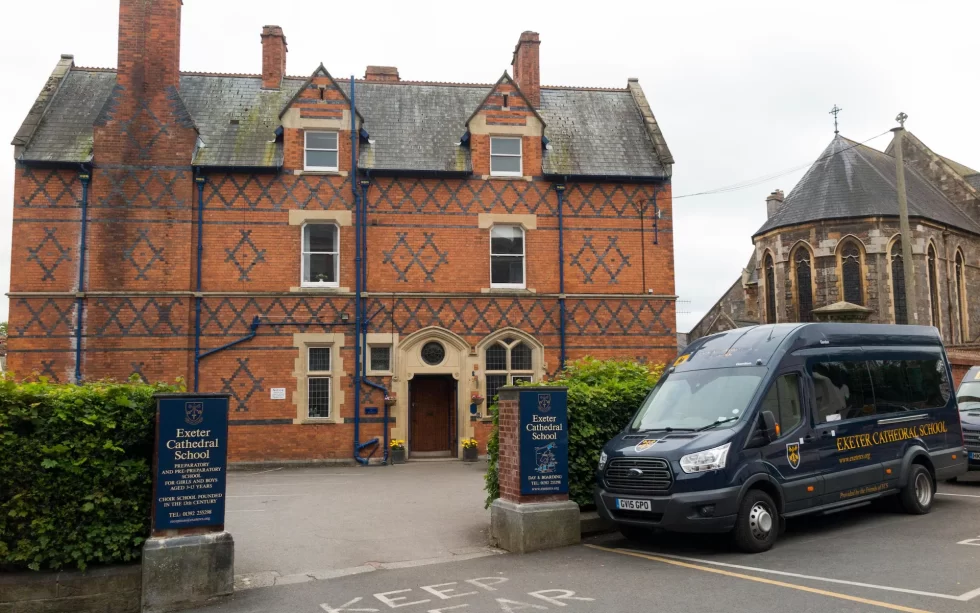
One of England’s oldest educational institutions has announced it will close part of its school after more than eight centuries, blaming rising and “unavoidable financial pressures” following changes to the tax treatment of private education. The decision has sent shockwaves through Exeter and the wider education community, ending a tradition that dates back to the 12th century.
Exeter Cathedral School confirmed that its preparatory school, educating pupils in years three to eight, will close from September. Founded in 1179, the school has long been responsible for educating choristers for Exeter Cathedral, maintaining a continuous link between education, music and worship for around 850 years.
School leaders said the decision was taken with deep regret after exhausting other options to keep the prep school financially viable. In a statement to parents, staff and alumni, governors said the cumulative impact of rising operational costs, declining pupil numbers and the introduction of VAT on private school fees had created pressures the school could no longer absorb.
The policy change, introduced the UK government under the Labour Party, removed long standing VAT exemptions for private education. Supporters of the move argue it promotes fairness and helps fund state education, but critics say it places historic and specialist schools under severe strain, particularly those with limited endowments and niche roles.
Exeter Cathedral School said the VAT change was a decisive factor, pushing costs beyond what families could reasonably be asked to pay. Governors said increasing fees further risked accelerating withdrawals, creating a cycle that would threaten the school’s long term survival. While the prep section will close, discussions are ongoing about the future structure of the remaining parts of the institution.
For many families and former pupils, the announcement represents the loss of more than just a school. The prep school has been central to training young choristers, combining academic education with rigorous musical instruction. Alumni say it provided a unique environment where discipline, tradition and creativity were closely intertwined.
Parents expressed sadness and frustration, describing the closure as the end of a living piece of English heritage. Some said they understood the government’s broader goals but questioned whether enough consideration had been given to the impact on historic institutions with cultural and educational roles beyond conventional private schooling.
The cathedral community also voiced concern about the long term implications for choral music. Cathedral schools play a vital role in sustaining England’s choral tradition, supplying trained singers who support daily worship and major national events. Critics fear that closures could weaken this pipeline and erode a tradition that has survived wars, reformations and social change.
Government sources have said that support is available for families transitioning to other schools and that the policy is designed to strengthen the wider education system. However, campaigners argue that once institutions of this age close, they cannot be recreated.
As Exeter Cathedral School prepares for the final months of its prep provision, staff and pupils are planning services and events to mark the end of an extraordinary chapter. After 850 years of continuous education, the closure stands as a powerful symbol of how modern economic pressures and political decisions are reshaping even the oldest corners of British society.