






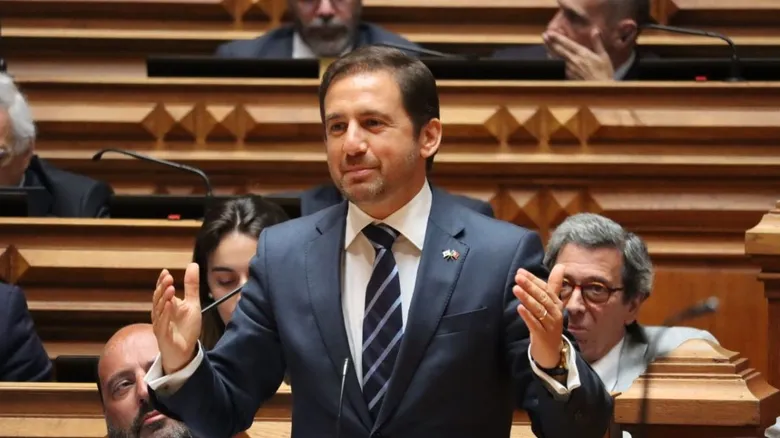
A defamation case involving Chega party deputy Pedro Frazão is set to begin today in Lisbon, placing renewed focus on political discourse and the use of social media in Portugal’s increasingly polarised political environment. The case centres on posts published online Frazão that allegedly targeted José Manuel Pureza, a senior figure within the Bloco de Esquerda party.
Pedro Frazão appeared before the court as proceedings formally opened, following a complaint filed José Manuel Pureza. Pureza argues that statements shared Frazão on social media platforms went beyond legitimate political criticism and crossed into defamatory territory, damaging his reputation and personal integrity.
According to court documents, the disputed posts were published during a period of heightened political tension, when debates around ideology, governance and national identity were particularly intense. Prosecutors say the content contained allegations and language that could be interpreted as harmful and unfounded, warranting judicial scrutiny under Portugal’s defamation laws.
Frazão has denied wrongdoing and maintains that his posts fall within the scope of political expression. His defence argues that the comments were part of a broader public debate and should be protected as free speech, especially given the roles both individuals play as public figures. Lawyers representing the Chega deputy are expected to argue that criminalising such statements risks limiting political discourse and setting a restrictive precedent.
The case has attracted attention across Portugal’s political spectrum. Chega, a right wing party that has grown rapidly in recent years, often uses confrontational language and social media platforms to mobilise supporters and challenge established parties. Critics say this style contributes to a more aggressive political climate, while supporters argue it reflects frustration with traditional politics and entrenched elites.
Bloco de Esquerda, on the other hand, has positioned itself as a defender of democratic values and respectful debate. Party figures have said the case is not about silencing opponents, but about drawing clear boundaries between criticism and personal attacks. They argue that public debate must remain robust without descending into defamation.
Legal experts note that Portugal’s courts have increasingly been asked to rule on cases involving online speech, reflecting the growing role of social media in political communication. While freedom of expression is constitutionally protected, it is balanced against the right to personal honour and reputation. Courts are often tasked with determining whether statements serve a legitimate public interest or amount to unlawful harm.
The Lisbon court is expected to hear testimony from both parties, as well as examine the context in which the posts were made. Judges will consider factors such as intent, wording and potential impact. If convicted, Frazão could face fines or other legal penalties, although prison sentences are unlikely in defamation cases involving political speech.
The outcome may carry broader implications for how Portuguese politicians use digital platforms. Observers say a ruling against Frazão could encourage greater caution online, while an acquittal might reinforce the wide latitude currently afforded to political commentary.
For now, both sides are preparing for what could be a closely watched legal battle. The case highlights the tension between free expression and accountability in modern politics, particularly as online platforms blur the lines between personal opinion and public influence.
As proceedings begin in Lisbon, the trial is expected to continue over the coming weeks. Its conclusion could shape future standards for political communication in Portugal, at a time when trust, tone and transparency are increasingly central to democratic debate.


