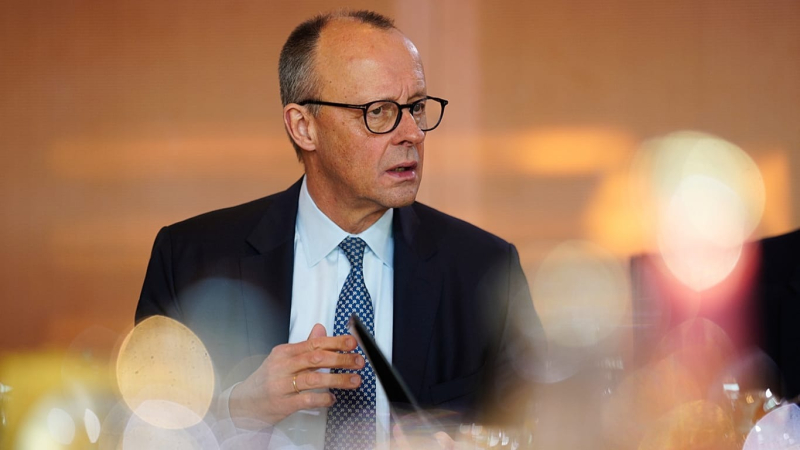
European governments are moving to contain rising tensions with Washington after renewed pressure from US President Donald Trump over the future of Greenland prompted concerns across the bloc. The dispute intensified after Trump warned of additional tariffs on several European countries as leverage to push for control of the strategically located island. European leaders responded emphasising restraint while making clear that the European Union would defend its interests if necessary. Speaking in Berlin, Friedrich Merz said Europe was committed to dialogue and de escalation, warning that an abrupt escalation in trade measures would damage both sides of the Atlantic. His comments reflected a broader effort among EU capitals to balance diplomatic engagement with preparedness, as officials seek to avoid a confrontation that could spill into wider trade and security relations.
The controversy has drawn in multiple European leaders, highlighting unease over the precedent such pressure could set. From London, Keir Starmer described the situation as serious and called for a pragmatic and sustained response, cautioning that a tariff driven standoff would benefit no one. The European position centres on preserving stability within the transatlantic alliance while rejecting unilateral demands that challenge sovereignty and international norms. Greenland’s strategic importance, particularly in the Arctic and North Atlantic, has long been recognised, but European officials argue that cooperation through established alliances remains the only viable path forward. Behind closed doors, diplomats are working to coordinate messaging and assess potential countermeasures should negotiations with Washington fail to ease the dispute.
Attention is now turning to a series of high level meetings scheduled in the coming days, where European and American officials are expected to address the issue directly. Discussions on the sidelines of the World Economic Forum in Davos are seen as an early opportunity to lower tensions, ahead of an extraordinary EU summit planned in Brussels. The situation places additional strain on already complex relations with the United States, particularly as Europe faces economic headwinds and geopolitical pressures on multiple fronts. While leaders stress their preference for dialogue, the episode underscores a growing readiness within Europe to respond collectively when core interests are challenged. How the Greenland dispute evolves may shape not only trade relations but also the broader balance of trust within the transatlantic partnership.