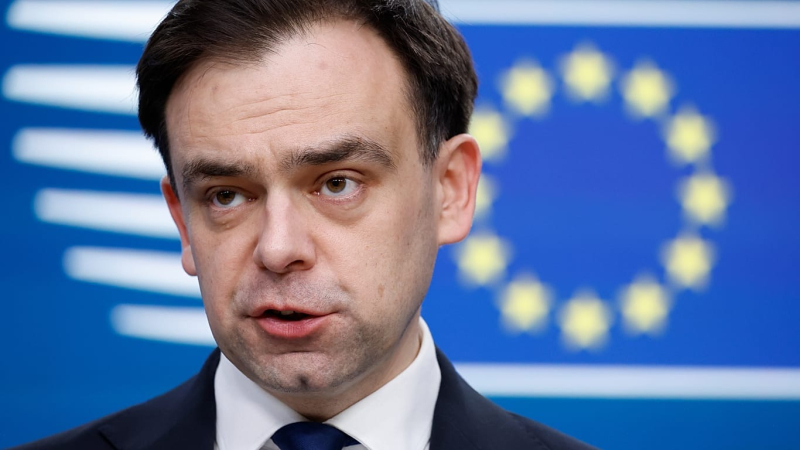
Poland’s finance minister said the country is better served keeping the złoty as its national currency, arguing that monetary independence provides valuable flexibility during periods of global economic uncertainty. Speaking in Brussels, the minister said maintaining control over domestic currency policy allows Poland to respond more effectively to external shocks, particularly as international markets remain volatile and geopolitical tensions continue to shape trade and investment flows. While acknowledging ongoing discussions within the European Union about deeper economic integration, he stressed that Poland’s current position outside the eurozone has helped support steady growth and economic resilience. The minister noted that having its own currency can act as a stabilising mechanism during downturns, helping protect employment and domestic demand. Although the advantages of euro adoption remain part of long term debate, he said current conditions favour retaining the złoty rather than pursuing membership in the common currency bloc.
The finance minister also highlighted the importance of expanding trade partnerships as Europe adapts to a shifting global economic landscape. He pointed to the recently signed free trade agreement between the European Union and India as a timely development that could open new export opportunities for Polish businesses. With global trade tensions rising and traditional markets facing increased protectionism, he said diversification has become essential for sustaining economic growth. Poland’s export oriented companies, he noted, are increasingly seeking access to fast growing markets, and India represents a significant opportunity due to its scale and expanding consumer base. While the government plans to conduct a detailed review of the agreement, officials believe it could strengthen trade ties and encourage investment across multiple sectors. The minister stressed that lower trade barriers benefit companies and consumers alike, supporting competitiveness across the European economy.
At the same time, Poland continues to express reservations about other proposed trade arrangements, particularly agreements that could place pressure on domestic agriculture. The government has voiced opposition to the EU Mercosur deal, warning that increased imports could negatively affect Polish farmers without sufficient safeguards. Beyond trade policy, the minister said Poland is positioning itself as a candidate to host the future European Customs Agency, which is expected to play a central role in strengthening border controls and customs enforcement across the bloc. He argued that Poland’s experience in customs reform, transport connectivity, and growing economic weight make it a strong contender. As the European Union faces mounting economic and security challenges, he said effective coordination and balanced institutional representation will be increasingly important.