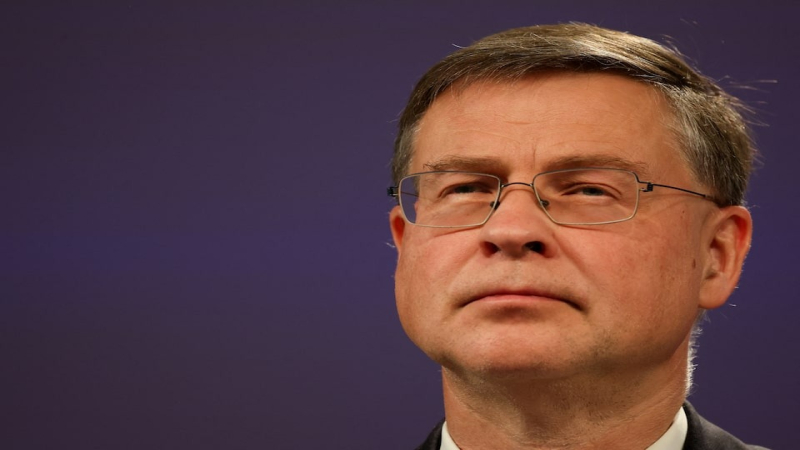
The European Union needs to accelerate the creation of a digital euro to reduce its dependence on foreign payment providers and strengthen economic autonomy, according to the bloc’s economy commissioner. Speaking in Brussels, he said Europe’s current payments landscape is heavily dominated non European companies, leaving the region exposed in an increasingly fragmented global environment. The digital euro, currently under development the European Central Bank, is intended to modernise payment infrastructure while ensuring that central bank money remains relevant in a digital economy. Although work on the project began several years ago, progress has been gradual, partly due to limited political momentum and concerns within the banking sector. Recent geopolitical tensions, however, have renewed focus on the issue, highlighting vulnerabilities linked to external control over key financial technologies used daily European consumers and businesses.
Officials say reliance on foreign owned payment systems has grown significantly, with a large share of card transactions in the European Union processed US based companies. This concentration, the commissioner warned, could limit Europe’s ability to act independently during periods of political or economic pressure. He argued that allowing external providers to dominate such a critical part of the economy poses risks to resilience and long term security. A digital euro would provide a public alternative for both online and in store payments, ensuring that Europeans retain access to a secure and widely accepted means of payment regardless of private sector dynamics. The project is also seen as part of a broader strategy to enhance Europe’s strategic autonomy across key economic and technological domains.
European governments have signalled growing support for the initiative, agreeing that a future digital euro should function both online and offline and be usable across all member states. Once legislative negotiations are completed, the European Central Bank would be able to move toward issuing the digital currency, with officials indicating it could become operational later in the decade. Supporters argue that timely implementation is essential as digital payment habits evolve and global competition intensifies. The commissioner said the digital euro should not be viewed in isolation but as part of a wider effort to adapt Europe’s economy to the digital age. As discussions continue, policymakers face the challenge of balancing innovation, financial stability, and public trust while reshaping the region’s payments system.