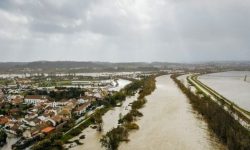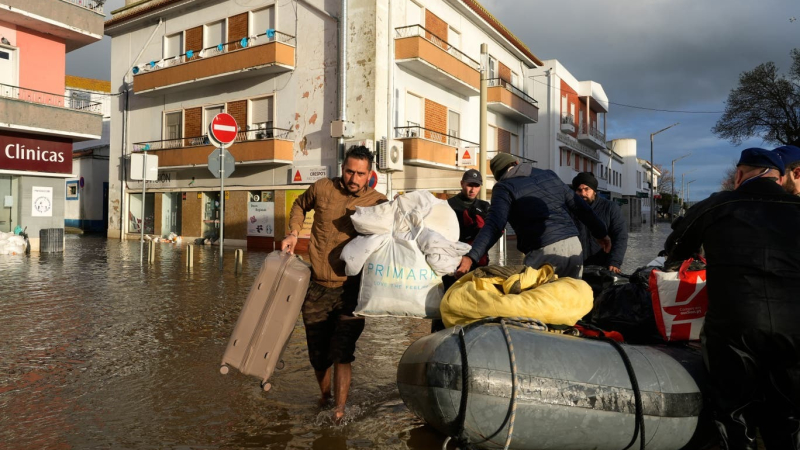
Severe flooding in Portugal has forced the evacuation of around 3,000 residents, triggered the partial collapse of a major motorway and led to the resignation of the country’s interior minister, as weeks of relentless storms continue to batter central and southern regions.


4
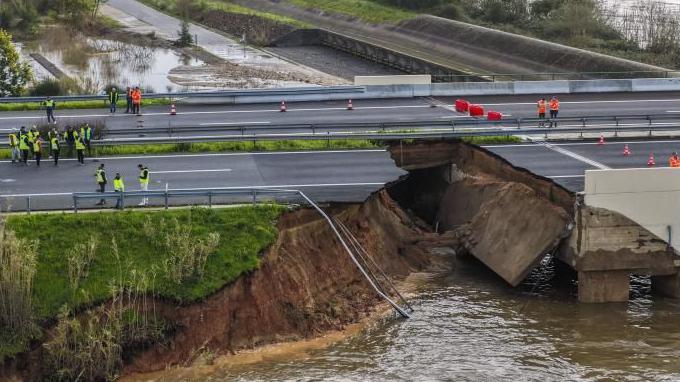
The latest crisis unfolded after heavy rainfall caused a levee along the River Mondego to burst late on Wednesday, undermining a supporting pillar of the A1 motorway, the main highway linking Lisbon and Porto. A section of the road gave way after police had already closed it as a precaution, preventing vehicles from being on the damaged stretch at the time of the collapse.
Local authorities in Coimbra described the situation as highly unstable, with several surrounding towns facing serious flooding and temporary isolation. Emergency services carried out door to door checks in vulnerable neighbourhoods and transported residents to temporary shelters as river levels continued to rise.
Prime Minister Luís Montenegro travelled to Coimbra to oversee the emergency response, acknowledging that authorities were operating at the limit of their capacity to contain the floodwaters. Civil protection teams have been reinforced in the affected areas, with firefighters and military units assisting in evacuations and infrastructure protection.
According to officials, at least 15 people have died in Portugal since late January as a result of successive storms that have swept across the country. The severe weather has torn roofs from homes, inundated streets and left hundreds of thousands of households without electricity for extended periods. Storm systems identified as Kristin, Leonardo and Marta have contributed to sustained rainfall that has overwhelmed rivers and drainage systems.
Regional civil protection authorities have warned that the Aguieira dam, located northeast of Coimbra, could reach critical levels, raising concerns about additional overflow and downstream flooding. Portugal’s environment agency has forecast an exceptional period of peak flows on the Mondego through the weekend, increasing pressure on levees and flood defences.
Political tensions have risen alongside the floodwaters. Interior Minister Maria Lúcia Amaral resigned late Tuesday following criticism over the government’s handling of the emergency response. In a statement, she said she no longer felt she had the personal and political conditions necessary to remain in office. Prime Minister Montenegro will temporarily assume her responsibilities.
Opposition figures had previously criticised what they described as delays and shortcomings in responding to earlier storms. Satellite imagery has shown expanding flood zones along the River Tagus northeast of Lisbon, where water levels have steadily climbed in recent weeks.
In central Portugal, authorities evacuated parts of Porto Brandão due to landslide risks, while dozens of residents were removed from homes in nearCaparica after ground instability threatened coastal properties. Emergency crews remain on high alert as meteorologists monitor further rainfall forecasts.