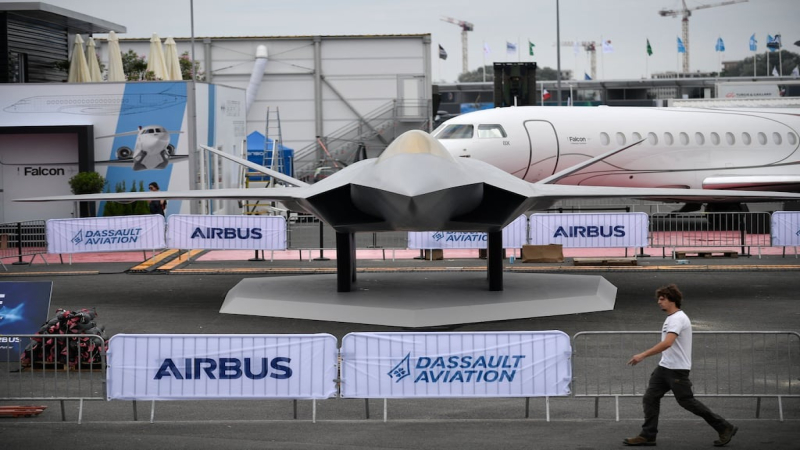
Airbus has indicated it is open to supporting a two fighter structure within Europe’s Future Combat Air System program in an effort to overcome ongoing deadlock surrounding the next generation fighter component.
Speaking during the company’s annual results presentation in Toulouse, Airbus Chief Executive Officer Guillaume Faury described the FCAS initiative as being at a difficult junction. He stressed that while the next generation fighter pillar has stalled amid disagreements, other components of the program continue to advance.
The Future Combat Air System, launched in 2017 France and Germany and later joined Spain, is designed to deliver a sixth generation air combat capability combining a manned fighter aircraft, remote carrier drones and a connected combat cloud architecture. Airbus and Dassault Aviation have been at odds over work share, leadership structure and intellectual property issues related to the new fighter aircraft.
Faury said the impasse over a single pillar should not endanger the broader objective of strengthening European defense capabilities. If mandated partner governments, Airbus would support a reorganised framework that includes two distinct fighter tracks within the overall FCAS architecture.
Political uncertainty has added further pressure. German Chancellor Friedrich Merz recently suggested that Germany does not currently require the same aircraft profile as France. Paris has long maintained that its future fighter must be carrier capable and able to deliver nuclear payloads to preserve national strategic autonomy.
Merz indicated that if requirements cannot be aligned, the project may not be sustainable in its current form. Comments from Belgium’s Defence Minister Theo Francken, who referenced the German position in public remarks, have further fuelled speculation about the program’s future. Belgium currently participates as an observer.
Despite tensions, Faury reiterated Airbus’ belief that the FCAS concept remains strategically necessary. He noted that Europe continues to require an ambitious and cooperative approach to next generation air combat capabilities. According to Airbus, pillars covering the combat cloud, remote carriers and propulsion systems are progressing as planned.
The debate also reflects a broader shift in military aviation. Air forces across Europe face choices between accelerating investment in unmanned systems or maintaining advanced crewed fighters alongside expanding autonomous capabilities. Faury said current assessments still point to the continued relevance of a manned fighter operating in conjunction with drones, even as long term trends suggest increasing autonomy.
Airbus has invested significant resources into the FCAS framework and remains committed to finding a viable path forward. Any structural changes, including a potential two fighter solution or expanded partnerships, would ultimately depend on decisions participating governments.
As Europe reassesses defense priorities amid evolving security challenges, the outcome of the FCAS negotiations will shape the continent’s aerospace industry and strategic autonomy for decades.