The United States has warned the International Energy Agency that it could withdraw its membership unless the Paris based body shifts away from its support for net zero emissions targets, escalating tensions between Washington and several European governments over the direction of global energy policy.
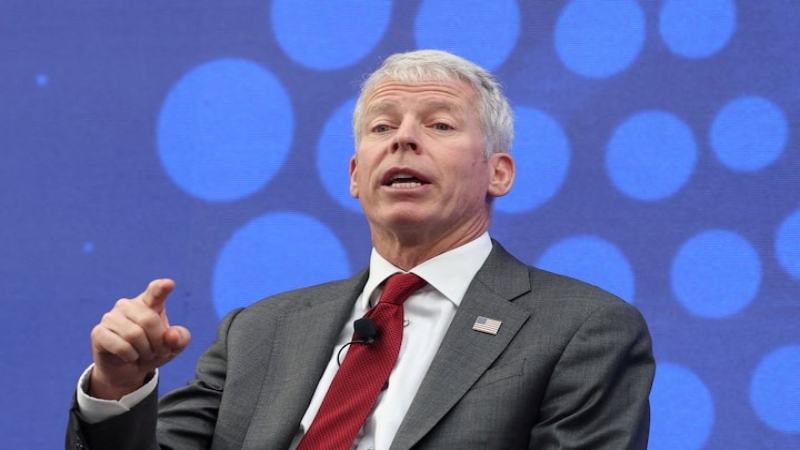
Speaking at a ministerial gathering, US Energy Secretary Chris Wright said the agency has one year to move away from what he described as a net zero 2050 agenda. He argued that the focus on rapid decarbonisation risks undermining industrial competitiveness and energy security.
The International Energy Agency was created in the 1970s following the oil supply crisis to provide research, data and policy coordination among industrialised nations. It has since become a central reference point for energy transition strategies, including pathways to reduce greenhouse gas emissions in line with international climate agreements.
The United States contributes roughly six million dollars annually to the agency’s twenty two million dollar budget. Washington’s warning introduces uncertainty over the future composition of the organisation if its largest economy were to step back.
The pressure comes as US President Donald Trump continues to promote expanded fossil fuel production and has expressed scepticism toward international climate commitments. Trump has also sought to limit US financial contributions to multilateral institutions.
European officials at the meeting downplayed the likelihood of an immediate rupture. French representatives reaffirmed their commitment to cleaner energy systems, emphasising electrification and reduced reliance on imported fossil fuels as long term strategic goals. France has highlighted nuclear energy as a key component of its energy mix, positioning it as both low carbon and supportive of energy independence.
Dutch officials, who chaired the event, indicated that a majority of participating countries remain committed to diversifying energy systems and investing in renewables alongside traditional sources. Several European governments are cautious about deepening reliance on US energy imports, even as liquefied natural gas shipments from the United States have grown in recent years.
The dispute underscores a widening policy gap between parts of Europe and Washington on the pace and scope of the energy transition. While some countries privately question the economic feasibility of accelerated decarbonisation timelines, few have publicly stepped back from net zero commitments.
Analysts note that any US withdrawal from the agency would mark a significant shift in transatlantic energy cooperation, potentially reshaping data sharing, strategic reserves coordination and long term planning frameworks. For now, discussions continue within the IEA framework as governments weigh economic competitiveness, security concerns and climate objectives.