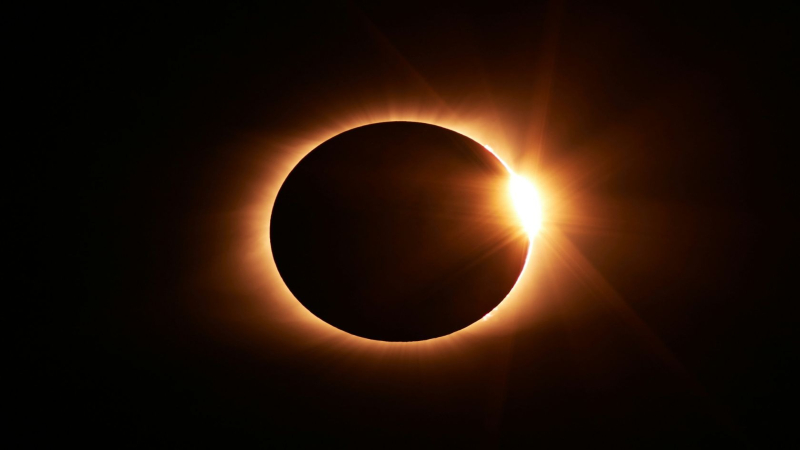
Portugal is set to witness one of the most significant astronomical events in its modern history on 12 August 2026, when the largest total solar eclipse in more than a century will be visible across the country. Scientists confirm that this will be the most extensive total eclipse observed in Portugal since 1912, making it a rare moment for skywatchers and astronomy enthusiasts.
A solar eclipse occurs when the Moon aligns directly between the Earth and the Sun, temporarily blocking sunlight and casting a shadow over parts of the planet. During totality, daylight briefly fades, temperatures can drop slightly, and the Sun’s outer atmosphere, known as the corona, becomes visible to the naked eye under safe viewing conditions.
According to astronomical projections, the 2026 eclipse will reach an obscuration level between 92 percent and 100 percent across Portugal. However, only specific areas will experience full totality. The Montesinho Natural Park, located in the district of Bragança in northern Portugal, is expected to offer the clearest and most complete view of the total eclipse. Observers in other regions of the country will still be able to witness the phenomenon, but only as a partial eclipse depending on their exact location.
Astronomy associations and research institutions are already preparing public information campaigns ahead of the event. Experts anticipate increased domestic travel toward northern Portugal as visitors seek optimal viewing conditions. Local authorities in Bragança are also evaluating logistical measures to manage a potential influx of tourists during the summer of 2026.
Historically, total solar eclipses visible from Portugal have been rare. The last time the country experienced a total eclipse was in 1912. After the 2026 event, the next total solar eclipse expected to be visible from Portuguese territory is forecast for 2144, according to long term astronomical calculations. This makes the upcoming eclipse a once in a lifetime opportunity for most residents.
Despite the excitement surrounding the event, specialists emphasize the importance of eye safety. Looking directly at the Sun without certified protective glasses can cause permanent eye damage, even during an eclipse. Only approved solar viewing glasses or indirect observation methods, such as pinhole projectors, are considered safe. Ordinary sunglasses do not provide adequate protection.
Schools, science centers, and observatories across Portugal are expected to organize educational sessions explaining the science behind eclipses and safe viewing practices. With clear skies and proper preparation, the August 2026 eclipse could become one of the most memorable scientific events of the decade for Portugal.