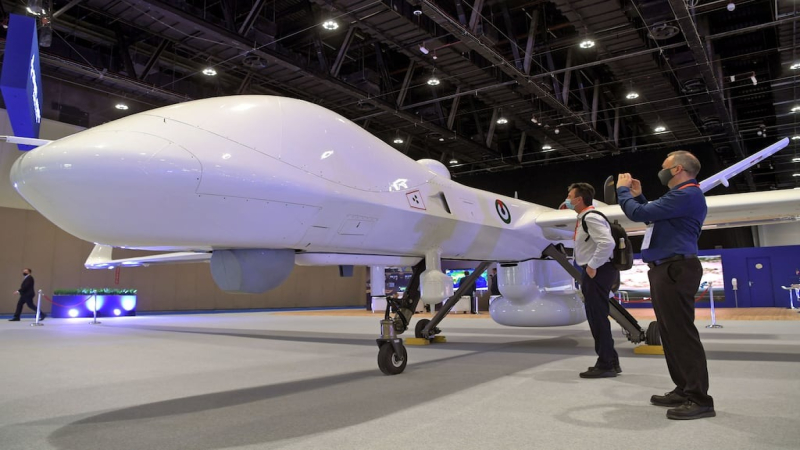
Denmark and Canada are exploring closer defense coordination in the Arctic following their acquisition of MQ-9B long range unmanned aircraft, a move analysts say could strengthen surveillance and logistical cooperation across the High North.
The Danish Air Force recently established Squadron 729, which will operate four MQ-9B drones from Aalborg Air Base in northern Denmark beginning in 2028. Canada has also purchased 11 of the same General Atomics built systems, with deliveries expected on a similar timeline. Ottawa plans to base the aircraft in locations including Nova Scotia and British Columbia.
Earlier this month, the two countries signed a new defense cooperation agreement on the sidelines of the Munich Security Conference. While details remain limited, defense experts believe the shared drone platform offers a practical foundation for deeper collaboration, particularly in intelligence, surveillance, and reconnaissance operations in the Arctic.
Both Denmark and Canada have significant Arctic responsibilities. Denmark oversees Greenland, an autonomous territory with growing strategic importance, while Canada maintains vast northern territories facing increased geopolitical attention. Expanding drone operations could enhance monitoring of maritime routes, airspace activity, and emerging security risks in remote areas.
Analysts note that joint logistics or maintenance arrangements would offer financial and operational advantages. Arctic deployments are costly due to harsh weather, long distances, and limited infrastructure. A shared maintenance hub or integrated logistics network could reduce duplication and improve efficiency, especially for spare parts, technician support, and emergency servicing.
Operational geography presents challenges. Aalborg Air Base is more than 3,300 kilometres from Nuuk in Greenland, meaning long transit times before missions even begin. Extended flight distances increase fuel consumption and wear on aircraft, limiting rapid response capability. Experts suggest that forward operating locations in the Arctic, or cooperative use of alternative bases, would significantly improve mission flexibility.
One potential option frequently cited defense observers is Keflavik Air Base in Iceland. Although no longer permanently operated the United States, it remains active for NATO rotational deployments. Its location south of the Arctic Circle provides relatively stable weather conditions and accessible shipping routes, which could lower maintenance and supply costs compared to Greenland’s more isolated facilities.
Sensor compatibility may also shape future cooperation. Canada has selected L3 Harris Wescam MX-20D sensor systems for its MQ-9B fleet, while Denmark has not publicly confirmed its configuration. Experts argue that shared communication networks and sensor packages would make joint threat tracking and data sharing far more effective across remote Arctic zones.
As climate change opens new shipping lanes and increases strategic competition in the region, Arctic surveillance is becoming a priority for NATO members. The introduction of MQ-9B platforms both Denmark and Canada signals a broader investment in persistent, long endurance monitoring capabilities across one of the world’s most challenging operational environments.