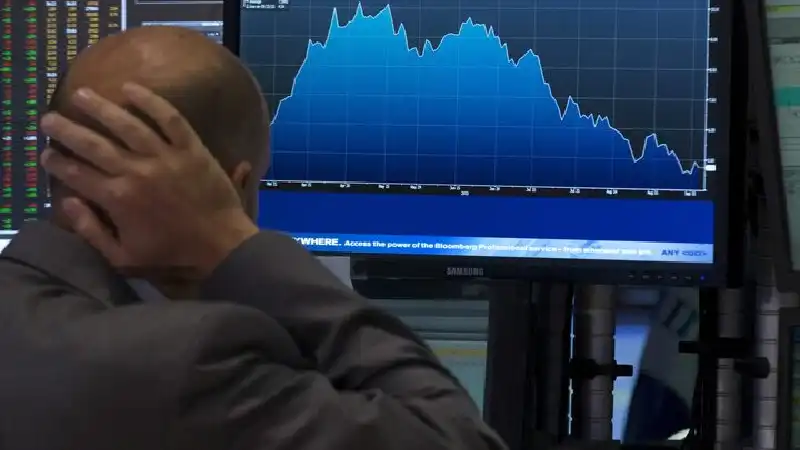
Global financial markets extended losses as escalating tensions in the Middle East triggered a sharp shift in investor sentiment, pushing equities lower while bond yields surged. The downturn marks a third consecutive session of declines for global stocks, with investors increasingly concerned that rising oil prices linked to the conflict could fuel inflation and alter the path of monetary policy. The renewed uncertainty has led markets to reassess expectations, with traders now factoring in the possibility that central banks may delay rate cuts or even consider fresh increases.
Equity markets across major regions reflected the pressure, with Wall Street posting notable losses as technology and growth stocks weakened. The S and P 500, Dow Jones and Nasdaq all declined, while global indices followed a similar trajectory. In contrast, energy stocks emerged as one of the few bright spots, supported rising oil prices. The shift highlights how geopolitical developments are reshaping sector performance, as investors rotate toward industries that benefit from supply disruptions and higher commodity prices.
Bond markets reacted strongly to the changing outlook, with yields climbing sharply as investors adjusted expectations for future interest rate decisions. The benchmark United States ten year yield rose significantly, alongside increases in shorter term yields that are closely tied to central bank policy expectations. Similar movements were observed in Europe, where government bond yields also moved higher. The shift reflects growing belief that inflationary pressures driven energy costs could force central banks to maintain tighter policy for longer than previously anticipated.
Oil markets remain at the center of the volatility, with prices climbing amid concerns over supply disruptions in key transit routes. Military activity in the region has affected the flow of crude, particularly through strategic shipping lanes, adding pressure to global energy markets. Brent and United States crude prices both recorded strong gains, while natural gas prices in Europe surged sharply following strikes on critical infrastructure. Efforts major economies to secure shipping routes and stabilize supply have so far done little to ease market concerns.
Currency markets have also responded to the heightened uncertainty, with the United States dollar showing mixed performance against major currencies. While it strengthened against some currencies, including the Japanese yen, it faced pressure against others as investors navigated shifting expectations around global growth and monetary policy. Policymakers have acknowledged that the evolving situation is complicating economic forecasts, with the trajectory of inflation and interest rates now closely tied to developments in the energy market and the broader geopolitical environment.
Analysts warn that continued instability could prolong market volatility, particularly if disruptions to energy supply persist. With central banks already navigating a delicate balance between controlling inflation and supporting growth, the added pressure from rising oil prices presents a complex challenge. Investors remain focused on upcoming policy signals and economic data as they assess whether current market movements represent a temporary reaction or the beginning of a more sustained adjustment in global financial conditions.