Slovenia’s parliamentary election has produced a tightly contested result, with the liberal Freedom Movement and the right leaning Slovenian Democratic Party emerging nearly level, setting the stage for complex coalition negotiations. Preliminary results show neither side close to securing the 46 seats required for a majority in the 90 seat parliament, leaving smaller parties in a decisive position. The outcome reflects a deeply divided electorate and signals a period of political uncertainty as the country prepares for what could become prolonged discussions over forming a stable government.
With nearly all ballots counted, the Freedom Movement led Prime Minister Robert Golob secured 29 seats, while the Slovenian Democratic Party under Janez Jansa followed closely with 28. When factoring in their respective allies, Golob’s bloc is estimated to hold around 40 seats, while Jansa’s coalition could reach approximately 43. Despite these numbers, neither side has the required majority, making coalition building essential. Smaller parties that cross the electoral threshold are now expected to play a crucial role in determining the final balance of power in parliament.
The result highlights contrasting visions for Slovenia’s future direction, with Golob advocating a liberal and pro European approach focused on social reform, while Jansa has campaigned on economic liberalization and reduced public spending. The election campaign intensified in recent weeks amid political controversies and allegations that added further tension to an already polarized environment. Analysts note that the narrow margin between the two camps underscores the fragmented nature of Slovenia’s political landscape and the challenges of building consensus across ideological lines.
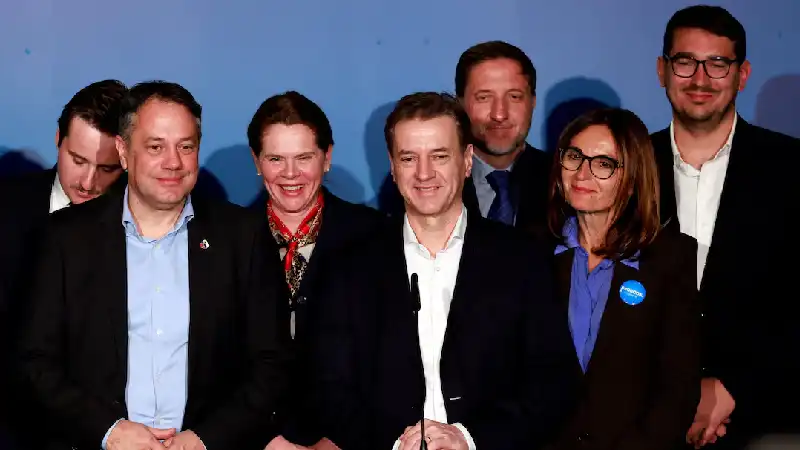
Both leaders addressed supporters following the announcement of preliminary results, with Golob emphasizing unity and the need to work toward a shared future, while Jansa raised concerns about the vote counting process and signaled the possibility of further scrutiny. Political observers expect negotiations to be lengthy, as parties attempt to align on policy priorities and governance structures. The process is likely to test political flexibility and leadership as Slovenia seeks to avoid prolonged instability.
The election is widely seen as a defining moment for Slovenia’s domestic and foreign policy trajectory. Under Golob’s leadership, the country has aligned closely with European partners on key international issues, while Jansa has indicated a preference for shifting alliances and pursuing a different strategic direction. These differing approaches extend to economic policy, social spending and relations with international partners, making coalition discussions not only about numbers but also about fundamental policy choices.
Slovenia’s political system, which relies on coalition governments, often requires compromise among multiple parties, but the current results suggest that reaching agreement may be particularly challenging. The presence of several smaller parties with differing agendas increases the complexity of negotiations, as each group seeks to secure influence in the next administration. This dynamic could lead to extended talks or the formation of a fragile coalition with limited room for policy maneuvering.
As negotiations begin, attention will focus on which parties emerge as kingmakers and how quickly a governing coalition can be assembled. The outcome will shape Slovenia’s policy direction in the coming years, influencing economic reforms, social programs and international positioning. For now, the election result leaves the country in a transitional phase, with political leaders under pressure to find common ground and deliver a functioning government in the aftermath of a closely contested vote.