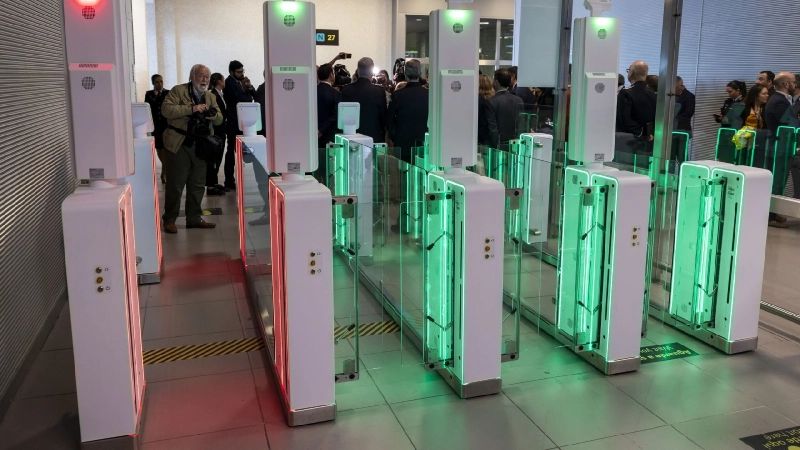
Portugal has fully restored the European Union Entry Exit System for non EU travelers after a temporary suspension at Lisbon’s main airport, marking a key step in modernizing border control procedures. The system, designed to digitally register entries and exits while collecting biometric data, is now active again following a phased reintroduction that began earlier this year. Authorities confirmed that operations have stabilized after earlier disruptions, particularly at Lisbon’s Humberto Delgado Airport, where infrastructure constraints had previously forced a pause to manage passenger flow and reduce excessive waiting times.
The system was initially introduced in October across Portugal and other Schengen countries, replacing traditional passport stamping with a digital framework aimed at improving security and tracking short term stays. However, the rollout created operational pressure, especially in Lisbon, where arrival areas struggled to accommodate increased processing requirements. The second phase, which involved biometric data collection, intensified delays, with travelers reporting long queues. In response, the government temporarily suspended the system in December to ease congestion while implementing adjustments to airport infrastructure and procedures.
Officials have since introduced a range of measures to improve efficiency as the system returns to full functionality. Self service kiosks have been installed at major airports, allowing travelers to complete biometric registration and required travel information before reaching border control officers. These upgrades are intended to streamline processing times and reduce bottlenecks, particularly as passenger volumes increase ahead of peak travel seasons. Authorities are also closely monitoring passenger flows to ensure the system adapts dynamically to changing demand levels.
Portugal has also integrated a mobile application developed at the European level, enabling eligible travelers to complete parts of the entry process digitally before arrival. The app is expected to further reduce waiting times shifting part of the administrative process away from airport checkpoints. Coordination between national authorities, including border police and internal administration teams, has been strengthened to ensure that the system operates smoothly during high traffic periods such as holidays and the summer travel season.
The Entry Exit System applies to all non EU nationals visiting for short stays and represents a broader shift toward automated and data driven border management across Europe. While initial implementation challenges highlighted infrastructure and capacity limitations, officials maintain that the system will enhance long term efficiency and security once fully integrated. With full deployment across the European Union scheduled in the coming weeks, Portugal’s experience reflects both the complexities and the strategic importance of transitioning to a unified digital border control framework.