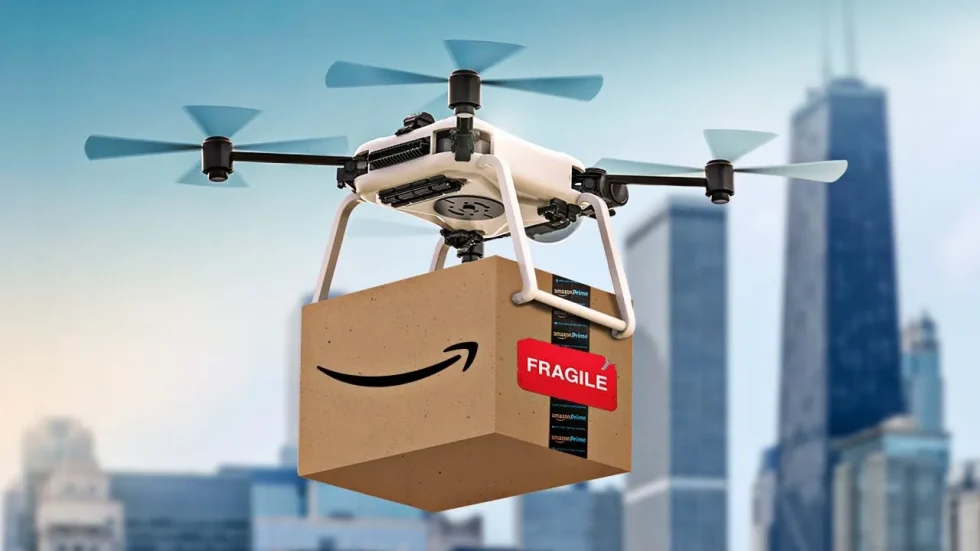
Customers receive parcels miles away from their intended destinations.
A Cross-Border Delivery Blunde
In a surprising turn of events, Amazon’s drone delivery system mistakenly transported hundreds of packages across international borders this week. The incident affected customers in Europe and North America, with parcels intended for local addresses ending up in neighboring countries.
Officials from Amazon confirmed that a technical error in the navigation algorithm caused the drones to misinterpret geofencing parameters. Packages ranged from electronics and groceries to small household items, sparking confusion among recipients and complaints to customer service centers.
How the Error Happened
The company’s drone fleet relies on AI-powered GPS guidance combined with real-time weather and obstacle data. Engineers explained that a recent software update intended to optimize flight paths inadvertently caused certain drones to cross international boundaries instead of following local delivery routes.
According to insiders, drones assigned to high-density urban areas were particularly affected. While drones are programmed to return to the nearest fulfillment center if their path is unclear, the algorithm mistakenly treated foreign territories as acceptable delivery zones.
Customer Reactions
The unexpected deliveries caused a mix of amusement and frustration. Social media lit up with posts of people receiving packages they never ordered, with some documenting unboxing videos of items from neighbors’ orders across the border.
One customer shared on Twitter: “My neighbor’s laptop just landed in my backyard. Thanks, Amazon drone, I guess?” Others expressed concerns about privacy and security, questioning whether drones should be allowed to cross national boundaries without additional safeguards.
Operational Challenges for Amazon
The incident created logistical headaches. Amazon had to mobilize staff to track, retrieve, and re-route misplaced packages. Customer service teams were overwhelmed with inquiries, and fulfillment centers implemented emergency protocols to prevent further misdeliveries.
Supply chain analysts noted that while the overall number of affected parcels was small relative to total deliveries, the reputational risk was significant. Investors reacted cautiously, with some questioning the reliability of drone-based last-mile delivery as the company pushes toward automated logistics.
Regulatory Concerns
Authorities in several countries launched inquiries into the incident, citing airspace regulations and customs protocols. “Drone deliveries that cross international borders raise serious legal questions,” said one European aviation official. Investigations will determine whether Amazon violated any air traffic or import/export laws during the misdeliveries.
Industry experts emphasized the need for clear international guidelines governing drone operations, especially as e-commerce companies increasingly rely on autonomous vehicles for rapid delivery.
Expert Opinions
Dr. Emily Carter, an AI and logistics analyst, commented, “Autonomous systems promise efficiency, but they are only as good as their data and constraints. This incident highlights the importance of rigorous testing in complex environments.”
Dr. Omar Hossain, a supply chain consultant, added, “Cross-border misdeliveries are not just a technical issue; they are a legal and operational risk. Companies need to incorporate fail-safes that account for geopolitical boundaries and regulatory requirements.”
Symbolism in the Absurd
Cultural commentators observed that the episode reflects the growing reliance on technology in daily life and the occasional absurdity that results. Drones, once heralded as the future of seamless delivery, now serve as reminders that even sophisticated AI systems can misinterpret reality.
Some analysts joked that the incident underscores the unintended globalization of online shopping: parcels literally crossing borders without human intervention. While amusing to some, the situation also raises questions about accountability and technological oversight.
Conclusion
Amazon’s cross-border drone misdelivery illustrates both the potential and the pitfalls of autonomous logistics. While technology promises speed and convenience, even minor errors in algorithmic guidance can have wide-ranging operational, legal, and reputational consequences.
For consumers, it offers an unexpected thrill of surprise parcels. For corporations and regulators, it provides a lesson in the careful balance between innovation and control. In 2025, drones may carry packages efficiently, but only if their instructions are precise, tested, and internationally compliant.