Introduction
The European Commission has approved a seven billion euro carbon capture and storage plan, calling it a cornerstone of Europe’s climate transition. The initiative promises to trap millions of tonnes of carbon dioxide before it reaches the atmosphere and store it beneath the North Sea. It is part of Brussels’ drive to reach net zero 2050, but reactions are mixed. Supporters hail it as a practical step to protect industry while cutting emissions. Critics dismiss it as an expensive distraction that rewards heavy polluters. As debate spreads, meme creators have already taken over the conversation, turning the EU’s climate gamble into internet satire before the first tonne of carbon is even captured.
A Costly Climate Bet
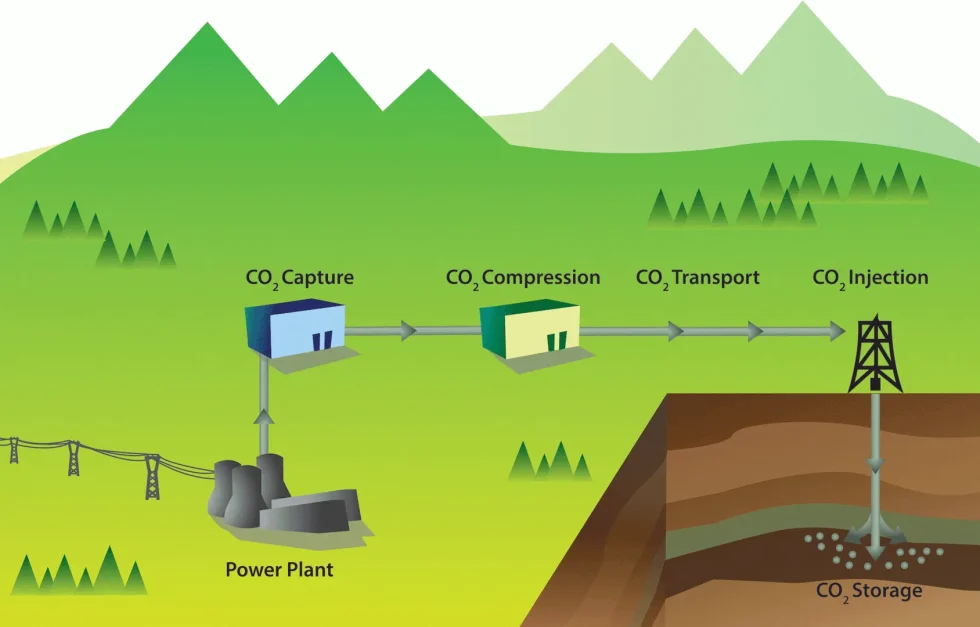
The plan will distribute funding among twenty-one projects across the bloc, focusing on industrial hubs in Portugal, Germany, Denmark, and the Netherlands. The projects aim to capture emissions from factories, refineries, and power plants and inject them into geological storage under the seabed. Brussels claims the investment could remove fifty million tonnes of carbon annually 2030.
European Competition Commissioner Margrethe Vestager called it “a leap toward industrial decarbonization.” But economists question whether that leap lands anywhere solid. Carbon capture remains costly and energy-intensive. Each tonne of gas stored requires massive infrastructure and constant monitoring. Without rapid progress on pipelines and storage regulation, the EU risks spending billions on a system that cannot yet operate at scale.
Industry’s Relief, Activists’ Frustration
For Europe’s heavy industries, the plan brings relief. Steel, cement, and chemical producers face strict emission targets and limited low-carbon alternatives. Carbon capture allows them to comply without shutting plants or relocating production abroad. Industry leaders call it a bridge technology that preserves jobs while innovation catches up.
Environmental organizations are not convinced. Greenpeace EU labeled the initiative “a fossil fuel subsidy in green wrapping.” They argue that investment should focus on renewables, electrification, and energy efficiency rather than prolonging dependence on high-emission sectors. The Commission defends the plan as pragmatic realism: Europe cannot decarbonize overnight, and carbon capture buys time.
Portugal’s Place in the Project
Portugal is set to host two major carbon capture hubs, one in Sines and another near Leixões. Both will link industrial sites to offshore storage areas through new transport infrastructure. The government hopes the initiative will attract private partnerships and put Portugal at the center of southern Europe’s green industrial network.
The Sines project will connect refineries, cement producers, and energy companies through shared carbon transport systems. Lisbon’s officials describe it as both an environmental and economic opportunity. aligning with the EU’s carbon framework, Portugal seeks to brand itself as a testing ground for scalable decarbonization. Environmentalists at home remain cautious, warning that national oversight must ensure safety and public transparency.
Political Dynamics in Brussels
The negotiations leading to the plan were as political as they were technical. Northern member states pressed for higher funding and faster timelines, while southern governments emphasized fairness in distribution. The final package reflects compromise rather than consensus. Policymakers agree that the EU needs industrial transformation, but each country defines climate responsibility differently.
European lawmakers have also raised concerns about accountability. Once carbon is injected underground, who monitors it for decades? Legal and insurance frameworks are still evolving. Without clear answers, public trust in the technology remains fragile.
Meme Diplomacy
While diplomats debated, social media turned policy into parody. Within hours of the announcement, memes flooded platforms. One viral image portrayed the European Commission installing a giant vacuum cleaner over a smokestack labeled “Problem Solved.” Another compared carbon capture to “hiding your sins under the carpet.”
This humor reflects a wider skepticism toward technocratic climate fixes. Many citizens see Brussels’ announcements as abstract and disconnected from daily reality. The memes succeed where reports fail; they translate complex policy into relatable absurdity. Economists now recognize that meme culture influences public sentiment faster than official communication. Every viral joke becomes a miniature referendum on credibility.
Technology and Uncertainty
Carbon capture technology has existed for decades but never reached commercial scale in Europe. It requires costly equipment and favorable geology. The EU now hopes to integrate separate pilot projects into a continental network, linking emitters to storage sites across borders. The vision is ambitious but fragile.
Experts warn that success depends on regulation, logistics, and economics. Capturing carbon costs far more than emitting it. Without a high carbon price or government support, companies lack incentive to invest. Scientists also caution that storage monitoring must last centuries to ensure permanence. A single leak could erase years of captured emissions and public confidence.
Competitive and Economic Goals
Behind the environmental rhetoric lies industrial strategy. Europe’s clean-tech race against the United States and China has intensified. Washington’s Inflation Reduction Act and Beijing’s renewable subsidies threaten to pull investment away from the continent. funding carbon capture, Brussels hopes to keep industries competitive while meeting climate targets.
Yet public opinion remains split. Surveys show strong support for climate action but growing resistance to complex or corporate-led projects. Many Europeans suspect that carbon capture allows large emitters to avoid real transformation. Brussels faces the delicate task of proving that environmental ambition can coexist with industrial survival.
The Role of Portugal and the South
For Portugal, participation signals its rise as a regional energy player. The same ports once associated with fossil fuel imports may now export carbon for storage. Lisbon’s government views this as both symbolic and strategic, a way to stay relevant in Europe’s green transition. Still, critics argue that focusing on carbon storage diverts resources from renewable innovation. Portugal’s abundant wind and solar potential, they say, deserves priority over pipelines for burying waste gases.
Conclusion
Brussels’ seven billion euro carbon capture plan embodies the contradictions of modern climate politics. It promises technological leadership while exposing uncertainty about costs, safety, and timing. It balances between environmental necessity and industrial self-preservation. Whether it becomes a breakthrough or a bureaucratic mirage will depend on how quickly Europe turns promises into infrastructure.
For now, the loudest commentary comes not from parliaments but from meme accounts mocking Europe’s attempt to vacuum the sky. The humor may sting, yet it captures a truth the policy cannot ignore. Climate credibility today is measured not only in emissions reduced but in trust restored. To succeed, Brussels must convince citizens that carbon capture is more than a punchline buried under the North Sea.