Introduction
In the heart of Europe’s green transition, a quiet feud has emerged between Brussels and Lisbon. On paper, both sides share the same goal: decarbonizing the economy and achieving net-zero emissions 2050. In practice, however, the two capitals differ on how fast to move, who should pay, and who gets the glory. Brussels wants structure and regulation, while Lisbon prefers flexibility and experimentation. The clash over green subsidies and solar investment has turned into one of the European Union’s most revealing economic dramas, mixing climate ambition with political irony.
The Renewable Rush
Portugal has long been a poster child for renewable energy. Over 60 percent of its electricity comes from renewable sources, one of the highest shares in the European Union. According to the International Energy Agency, the country’s solar capacity more than tripled between 2020 and 2024, helped generous incentives and low installation costs. Lisbon’s government has positioned solar power as the foundation of its green strategy, aiming to reach full renewable generation 2040.
Yet success has a price. The European Commission argues that some of Portugal’s recent subsidy programs risk distorting competition within the single market. Under EU law, state aid for industries must remain proportionate and transparent. Brussels worries that national-level incentives could trigger a subsidy race similar to the one currently unfolding in the United States and China.
Lisbon counters that its programs are modest compared to global competitors and essential for southern Europe’s economic balance. As Environment Minister Duarte Cordeiro remarked earlier this year, “If Europe wants to lead the green transition, it cannot afford to clip the wings of those who fly first.”
Brussels’ Rules and Lisbon’s Reality
At the core of the dispute lies the EU’s Green Deal Industrial Plan, which sets strict guidelines for how countries can support clean energy projects. The goal is to avoid fragmentation and ensure fair competition across the bloc. But for nations like Portugal, where sunlight is plentiful and capital scarce, those rules often feel like obstacles.
The European Commission’s Directorate-General for Competition recently flagged two Portuguese solar programs for review, citing concerns over unequal tendering conditions. Officials in Brussels insist the process is standard, yet Lisbon’s press framed it as a bureaucratic tug-of-war. Portuguese commentators point out that northern countries already enjoy vast green subsidies through industrial policy, while southern economies face heavier scrutiny.
A study BloombergNEF found that Germany and France received nearly 60 percent of EU-approved green subsidies in 2024, leaving smaller economies to compete for the rest. Critics in Lisbon say this imbalance perpetuates a north-south divide in Europe’s energy transition. As one energy analyst told Público, “The rules may be the same, but the playing field is not.”
The Solar Gold Rush
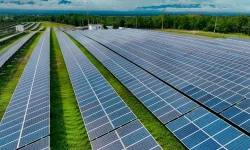
Despite regulatory friction, Portugal’s solar sector continues to thrive. In 2024 alone, it installed more than 2.5 gigawatts of new capacity, overtaking Spain in solar growth rate. Massive solar parks now stretch across Alentejo’s plains, transforming once-idle farmland into high-tech energy hubs. Foreign investors, including firms from Denmark and South Korea, have poured billions into long-term projects.
Yet rapid expansion comes with new challenges. Local communities have raised concerns about land use, water access, and environmental oversight. Some activists accuse developers of prioritizing speed over sustainability. The government insists that every project follows strict ecological assessments, though public consultation processes often lag behind investment announcements.
Brussels has taken note. EU environmental agencies are now urging member states to balance renewable expansion with biodiversity preservation. Portugal’s officials say they agree in principle but need flexibility to maintain growth. The tension between environmental ideals and economic urgency continues to define the debate.
The Green Bureaucracy Problem
The European Union’s green funding mechanisms are famously complex. To access subsidies under the Recovery and Resilience Facility, member states must meet dozens of milestones, audits, and technical conditions. Portugal, one of the first to submit its climate investment plan, has already received over 1.5 billion euros for renewable infrastructure. But officials in Lisbon argue that the administrative burden slows progress.
A recent IMF report noted that 18 percent of EU green funds remain unspent due to bureaucratic delays. In Portugal’s case, overlapping regulations between national and EU authorities have created confusion about approval timelines. Investors complain that paperwork often takes longer than project construction. One renewable developer in Évora summarized the situation: “The sun never stops shining, but the forms never stop loading.”
Independent assessments of digital infrastructure suggest that inconsistent data systems between Brussels and member states contribute to funding delays. In other words, Europe’s green ambition is being throttled its own software. For Lisbon, the frustration lies not in policy disagreement but in implementation fatigue.
Economic Stakes and Energy Independence
Beyond politics, the stakes are high. Energy analysts estimate that Portugal’s renewable transition could save the country up to three billion euros annually in fossil fuel imports 2030. The government hopes to turn this advantage into an export opportunity, positioning itself as a supplier of clean electricity to northern Europe.
Brussels welcomes these ambitions but insists that market integration must come first. The European Commission has pushed for improved cross-border interconnections between Portugal, Spain, and France. These projects would allow surplus Iberian energy to flow northward, reducing overall costs and stabilizing supply.
Yet infrastructure takes time and money. Until the network expands, Portugal’s energy independence remains partly theoretical. The irony is that while Lisbon generates more clean energy than ever before, it still relies on fossil imports during seasonal fluctuations. The challenge, officials admit, is ensuring that ambition aligns with capacity.
A Clash of Perspectives
The disagreement between Brussels and Lisbon reflects deeper differences in how Europe views progress. The EU prioritizes stability, ensuring that every reform fits neatly into existing frameworks. Portugal prefers momentum, trusting that innovation will sort out imperfections along the way. Neither side is wrong, but their approaches often collide.
For Brussels, the fear is fragmentation. For Lisbon, the fear is stagnation. One side speaks the language of regulation, the other of opportunity. Together they form the contradiction at the heart of the European project, a union that wants unity but thrives on diversity.
Economists argue that the real solution lies in trust. If Brussels can simplify oversight and Lisbon can strengthen transparency, Europe could achieve both control and creativity. Until then, meetings will continue, deadlines will stretch, and solar farms will multiply under a Mediterranean sun that seems blissfully unaware of bureaucratic tension.
Conclusion
The battle over green subsidies is more than a technical dispute; it is a symbol of Europe’s growing pains in the age of transition. Brussels demands rules, Lisbon demands results, and both know they cannot succeed without the other. Portugal’s solar farms may be built in sunlight, but their future depends on negotiation rooms lit fluorescent bulbs in Brussels.
In the end, the argument is not about who is right but about how Europe can balance ambition with administration. The continent’s energy revolution will be decided not just wind and sun, but how quickly it can process its own paperwork. For now, Portugal keeps building, Brussels keeps reviewing, and the green transition keeps humming along, somewhere between hope and bureaucracy.