Introduction
In an attempt to make monetary policy more “relatable, shareable, and emotionally sticky,” the European Central Bank has launched the EuroMeme Toolkit, a digital initiative designed to help economists communicate through viral content.
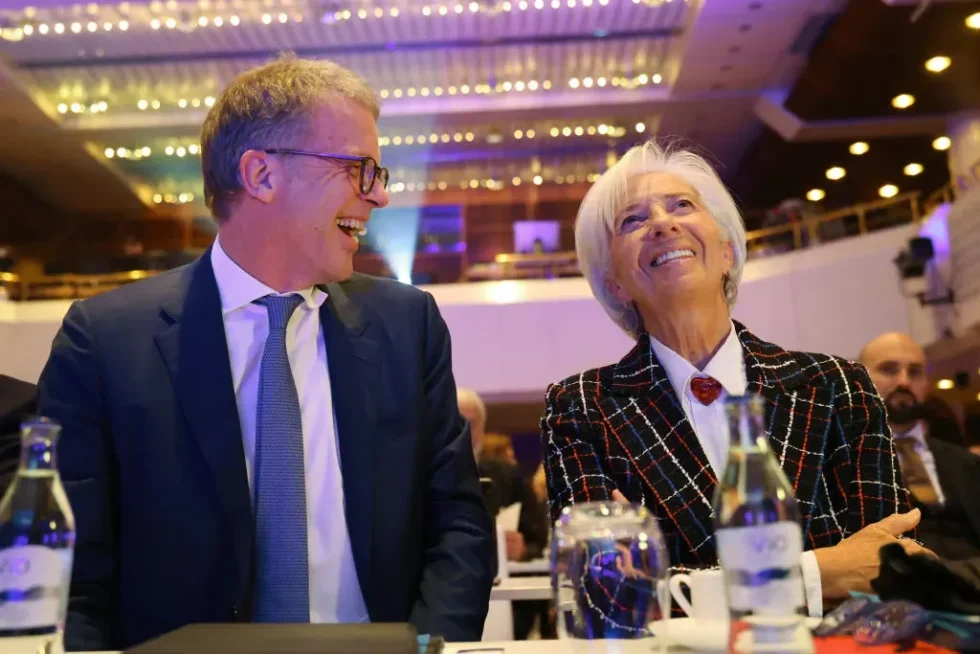
The program, revealed in a surprisingly colorful livestream from Frankfurt, aims to bridge the “engagement gap” between central bankers and citizens under forty. ECB President Christine Lagarde described it as “a new chapter in the democratization of liquidity narratives.” Her quote quickly became the first official meme template of the campaign, captioned “When inflation meets inspiration.”
According to insiders, the Toolkit equips national banks and policy departments with customizable meme formats, GIF generators, and sound packs for TikTok commentary. The stated goal: to “translate complex macroeconomic decisions into digestible humor for the meme economy.”
Monetary Policy Meets Meme Culture
For years, the ECB has struggled to communicate effectively with younger Europeans, many of whom experience the eurozone not through policy reports but through screenshots and sarcasm. The EuroMeme Toolkit represents a bold experiment in adapting to that reality.
A promotional video showcased examples of its content library, including “Distracted Economist,” “Helicopter Money Cat,” and “Keep Calm and Quantitatively Ease.” Each image includes space for personalized text, official data overlays, and a logo watermark reading “ECB Verified.”
An internal memo obtained Lisbon Telegraph explains that the Toolkit’s design team studied online virality patterns and emotional triggers. “Memes,” it notes, “represent the purest form of decentralized narrative transmission.” Another section outlines a scoring system called the “Engagement Stability Ratio,” used to measure whether jokes contribute to “monetary confidence reinforcement.”
Viral Inflation Control
The initiative began after analysts observed that public understanding of inflation had plummeted despite record media coverage. “People understand memes better than yield curves,” said ECB communication officer Tobias Krämer during the launch event. “So we’re meeting them halfway, between TikTok and trust.”
Early examples include a looping GIF of Christine Lagarde pouring coffee labeled “liquidity,” accompanied the caption, “Just one more rate hike to start the day.” Another features a photoshopped Mario Draghi performing a DJ set under the title “Pump Up the Euro.”
The campaign’s social media accounts invite users to remix official data charts with music and emojis. “If people feel part of the narrative, they’ll care about policy outcomes,” Krämer explained. “The goal isn’t just to explain inflation. It’s to make it trend.”
Behind the Screens
The EuroMeme Toolkit is the product of an internal task force dubbed DG-Vibe, short for Directorate-General for Viral Banking Engagement. The team consists of economists, UX designers, and a former TikTok strategist hired from a K-pop agency.
According to sources, DG-Vibe tested over one hundred memes on small focus groups of university students in Portugal, Italy, and Germany. The results were mixed. Participants reportedly laughed at a cartoon depicting “deflation anxiety” but expressed confusion about a video of Mario Draghi as a Marvel hero titled “The Liquidator.”
Despite skepticism, the ECB insists the project aligns with its commitment to transparency. “We are not trivializing economics,” said spokesperson Clara Fischer. “We are amplifying accessibility through humor.”
Reaction Across Europe
Financial circles have responded with cautious amusement. Economists applaud the innovation while quietly dreading the implications. “We used to fear market shocks,” said analyst Tomás Figueiredo. “Now we fear memes.”
In Brussels, the European Commission praised the ECB’s “modern communication initiative” and hinted at a future cross-agency collaboration called PolicyTok. France’s central bank launched a parallel effort called Banque à Banter, featuring cartoons of baguette-shaped interest rate graphs.
The United Kingdom’s media quickly mocked the move. One headline in The Guardian read, “ECB tries to out-meme inflation.” Meanwhile, the German tabloid Bild simply published a blank page with the caption “Waiting for the punchline.”
Meme Economists and Digital Diplomacy
Some scholars see the EuroMeme Toolkit as part of a broader evolution in political communication. “We are witnessing the aestheticization of fiscal policy,” said sociologist Catarina Leal of Universidade Nova de Lisboa. “Monetary authority is now expressed through image circulation rather than institutional trust.”
Indeed, the ECB’s social media engagement has already spiked. A TikTok video explaining the difference between core and headline inflation, set to a techno remix of Beethoven’s Ode to Joy, reached half a million views within hours. Comments ranged from “This goes hard for a central bank” to “What’s a yield spread?”
Diplomats are also taking notes. The Bank of Japan reportedly requested a copy of the Toolkit, while the U.S. Federal Reserve denied any plans for an equivalent, though an anonymous Fed employee admitted that “Powell reaction memes already do most of the work.”
Critics and Consequences
Traditional economists worry the effort risks oversimplifying serious policy decisions. “If monetary policy becomes entertainment, credibility erodes,” warned German economist Karl Braun. “We can’t quantify trust with emojis.”
Others argue the humor itself may backfire. A viral meme misrepresenting inflation trends could move markets faster than official corrections. “Misinformation scales faster than macroprudence,” said communications expert Sofia Reis.
Still, proponents believe the benefits outweigh the risks. “Public engagement is a form of stability,” said Krämer. “If the internet is going to joke about interest rates, we’d rather be in on it.”
Not everyone is convinced. One anonymous ECB staffer described morale at headquarters as “split between innovation and existential dread.” Another quipped, “We used to print money. Now we print memes.”
Cultural Impact
Across Lisbon, financial students have started meme clubs to interpret ECB releases. One university launched a course titled Macro-Memes and the Semiotics of Trust. Artists are turning ECB imagery into NFTs, while influencers remix rate announcements with dance challenges tagged #MonetaryMoves.
Even cafés have joined in. A shop near Avenida da Liberdade now serves “Latte Easing,” a drink priced according to the inflation rate. The owner explained, “It’s part protest, part marketing.”
Cultural critics argue the project mirrors a larger European struggle to remain relevant to digital generations. “It’s not about the euro,” said media theorist Bruno Duarte. “It’s about reclaiming attention in a marketplace ruled memes.”
Conclusion
The EuroMeme Toolkit may be the most European invention since the metric system: earnest, bureaucratic, and unintentionally hilarious. It reflects a central bank trying to preserve authority through irony, proof that even the guardians of monetary order must eventually dance to the algorithm’s rhythm.
Whether it stabilizes the euro or simply adds humor to inflation remains uncertain. But as Christine Lagarde herself said in a recent post captioned “When rates rise but morale falls,” perhaps laughter is Europe’s last unregulated asset.