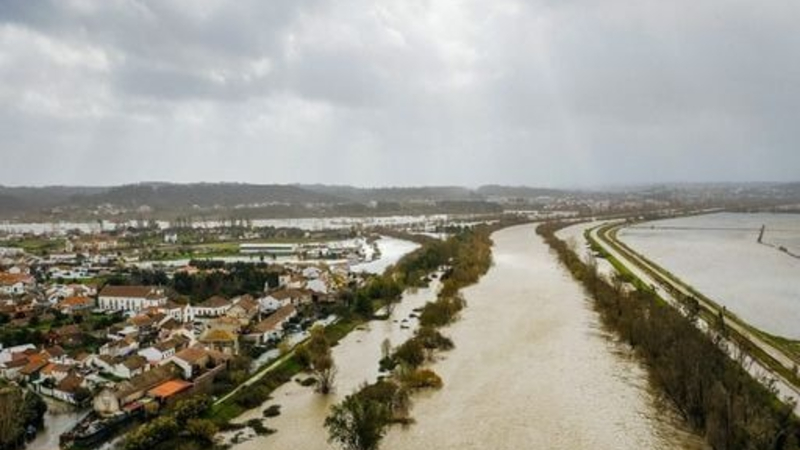
An engineer has called for urgent and sustained monitoring of the Mondego River dike system following the recent collapse of a section of the structure, warning that long term observation and preservation efforts appear to have been neglected.
Carlos Matias Ramos, former president of the Order of Engineers and a former head of the National Laboratory of Civil Engineering, said projects of this scale cannot be left without continuous oversight. Speaking about the dike that failed on 11 February, he stressed that the greatest danger lies in not fully understanding the risks associated with such infrastructure.
The Mondego River system includes embankment dikes stretching for approximately 30 kilometres between Coimbra and Figueira da Foz. According to Matias Ramos, these structures are built under strict technical rules that take into account soil conditions and load bearing capacity. Before construction, engineers must assess whether the underlying soil can withstand the weight and hydraulic pressure exerted the dike during flood events.
He explained that once construction is completed, preservation becomes just as critical as the initial design. Continuous observation is necessary to track settlement, erosion and any structural changes. Based on monitoring results, designers may need to revise elements of the project or implement specific conservation measures to ensure long term safety.
The Mondego dike is a lateral containment structure designed with a safety margin between the maximum water level during floods and the crest of the embankment. That margin typically ranges from 40 to 60 centimetres. If the dike settles or erodes over time, this protective buffer can be reduced, increasing the risk of overtopping during extreme weather events.
Matias Ramos noted that during the first decade after construction, no significant issues were recorded. However, he argued that long term institutional oversight is essential. He suggested the creation or reinforcement of a dedicated local authority responsible for managing the entire Mondego basin. Such an institution would analyse historical data, oversee inspections and monitor the evolution of the reservoir and surrounding infrastructure.
He also pointed to the growing influence of climate change on river systems. Rising temperatures and changing precipitation patterns are altering hydrological dynamics across Portugal. In particular, snowmelt in the Serra da Estrela mountain range feeds the Mondego River, and shifts in thaw cycles can affect water volumes and timing. Monitoring melt zones and reservoir inflows is therefore crucial for anticipating pressure on containment structures.
Portugal is currently experiencing an extended period of heavy rainfall, with repeated storm systems affecting central regions. Matias Ramos acknowledged the exceptional nature of the current weather conditions but maintained that infrastructure must be adapted to evolving climate realities.
He argued that engineering projects must be reassessed throughout their lifecycle, especially in light of increasing extreme weather events. Strengthening monitoring frameworks and ensuring systematic preservation of key flood defences, he said, are essential steps to reduce future risk in the Mondego basin.