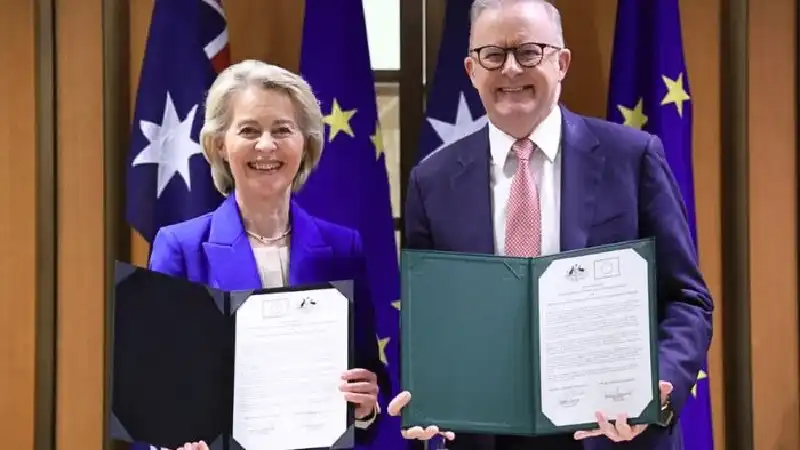
The European Union and Australia have reached a sweeping free trade agreement aimed at boosting economic resilience as global markets face rising uncertainty driven geopolitical tensions and shifting trade policies. The deal is expected to eliminate tariffs on nearly all goods traded between the two partners, signaling a strategic effort to strengthen economic ties outside traditional reliance on larger powers. The agreement comes at a time when energy markets remain volatile and global trade flows are being reshaped, placing new urgency on partnerships that can provide stability and long term growth.
The agreement includes a wide range of provisions designed to expand market access and enhance cooperation across multiple sectors. Australian agricultural exports, particularly beef, are set to gain significantly increased access to European markets over the coming years, while European automakers are expected to benefit from changes to Australia’s tax framework on electric vehicles. The deal also addresses sensitive issues around product naming rights, allowing Australian producers to continue using certain traditional labels domestically while gradually adjusting export standards in line with European rules.
Beyond trade, the agreement reflects a broader alignment between the two economies in areas such as defense cooperation and access to critical raw materials. These elements highlight how trade deals are increasingly extending into strategic domains, particularly as countries seek to secure supply chains and reduce exposure to global disruptions. Both sides have emphasized the importance of collaboration in these areas, especially as energy vulnerabilities and geopolitical risks continue to influence economic planning.
Economic projections suggest the deal could deliver meaningful gains over the next decade, with Australia expected to see a notable increase in gross domestic product as trade flows expand. European exports to Australia are also forecast to grow significantly, supported reduced barriers and improved access for goods and services. The scale of existing trade between the two partners provides a strong foundation for this growth, with billions of euros already exchanged annually across multiple sectors.
The timing of the agreement underscores the shifting dynamics of global trade, as countries seek alternatives amid uncertainty surrounding major economies and ongoing geopolitical tensions. Rising oil prices and concerns over supply disruptions have added to the pressure, reinforcing the need for diversified economic relationships. The EU’s engagement with Australia reflects a broader strategy to strengthen ties with like minded partners, ensuring greater stability in an increasingly unpredictable global environment.
As the deal moves toward implementation, attention will turn to how effectively both sides can translate the agreement into tangible economic benefits. Businesses across sectors are expected to adjust to new opportunities and regulatory frameworks, while policymakers monitor the broader impact on growth and competitiveness. The partnership marks a significant step in redefining trade relationships, positioning both the EU and Australia to navigate future challenges with greater coordination and resilience.