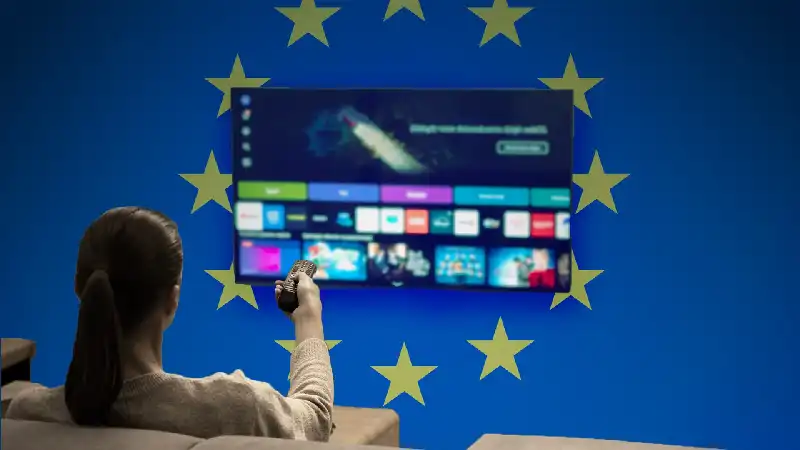
Europe’s leading broadcasters are urging regulators to tighten oversight of major technology companies, warning that smart TVs and virtual assistants are becoming powerful gatekeepers controlling access to content and audiences. The call comes as media groups raise concerns about the growing influence of platforms operated companies such as Google, Amazon, Apple and Samsung. With digital consumption shifting rapidly toward connected devices, the dispute highlights a broader struggle between traditional broadcasters and Big Tech over control of distribution, user data and advertising revenue across Europe’s evolving media landscape.
Broadcasters have asked European Union competition authorities to extend the scope of existing digital regulations to include smart TV operating systems and virtual assistants under the Digital Markets Act. They argue that systems such as Android TV, Amazon Fire OS and Samsung’s Tizen have gained significant market share in recent years, allowing a small number of companies to shape how content is discovered and consumed. According to industry data, these platforms now command a growing share of connected television environments, raising concerns that they can influence which services users access and how content is prioritized.
The central issue revolves around the concept of gatekeeping, where platform operators control access between content providers and end users. Broadcasters argue that Big Tech companies may favor their own services or restrict how competing applications interact within their ecosystems. This could limit competition and reduce visibility for independent or regional media providers. As viewing habits increasingly shift toward smart devices and integrated platforms, control over interfaces and algorithms has become a critical factor in determining audience reach and market power.
Concerns have also expanded to virtual assistants, which are becoming key entry points for accessing media across smartphones, smart speakers and in vehicle systems. Broadcasters warn that these technologies could evolve into dominant channels for content discovery without being subject to the same regulatory obligations as other digital platforms. The absence of formal designation under existing EU rules has created what industry groups describe as a regulatory gap, allowing rapid technological expansion without equivalent oversight.
The European Commission has acknowledged receipt of the broadcasters’ request and is currently reviewing the arguments presented. While the Digital Markets Act already imposes strict obligations on designated gatekeepers, expanding its scope would mark a significant step in how the EU regulates digital ecosystems. Officials are expected to assess whether smart TV systems and virtual assistants meet the criteria for inclusion, either through existing thresholds or broader qualitative measures tied to market influence and user reach.
The push for tighter regulation reflects a wider trend across Europe, where policymakers are increasingly focused on balancing innovation with fair competition. Traditional media organizations argue that without stronger safeguards, the dominance of large technology platforms could reshape the industry in ways that limit diversity and reduce consumer choice. At the same time, regulators must consider the impact of stricter rules on technological development and cross border digital services within the single market.
As discussions continue, the outcome could have far reaching implications for both the media and technology sectors in Europe. Any decision to expand regulatory oversight would likely influence how platforms operate, how content is distributed and how competition evolves in the years ahead. For now, the debate underscores the growing importance of connected devices and artificial intelligence driven interfaces in shaping the future of media consumption across the European Union.