A major shift in EU climate and trade policy
From January first two thousand twenty six, the European Union has begun applying its long planned carbon border tax on imports of heavy industrial goods. Steel, aluminium, cement and other emissions intensive products entering the EU will now be subject to charges linked to the amount of carbon dioxide emitted during their production. The measure represents one of the most ambitious attempts globally to align climate policy with international trade.
The new system is designed to mirror the costs faced EU based producers under the bloc’s internal carbon pricing rules. extending carbon costs to imported goods, the EU aims to prevent what it calls carbon leakage, a situation where production shifts to countries with weaker environmental standards, undermining climate goals.
How the carbon border mechanism works
The policy, formally known as the Carbon Border Adjustment Mechanism, requires importers to purchase certificates reflecting the carbon intensity of the goods they bring into the EU. These certificates are priced in line with the EU’s internal carbon market, ensuring imported products face similar climate related costs as those produced within the bloc.
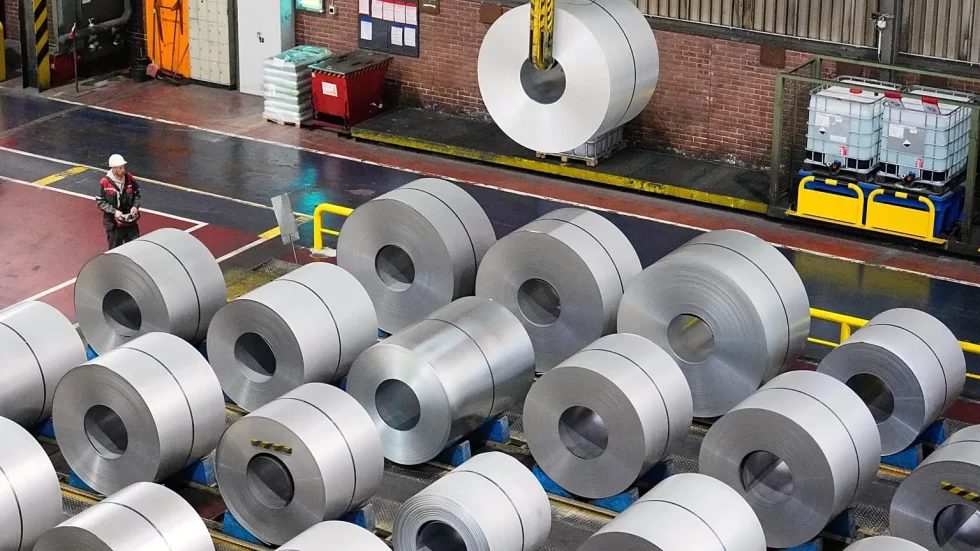
Initially, the measure applies to sectors with high emissions and strong exposure to international competition. Steel and aluminium are among the most affected, given their central role in manufacturing and construction. Cement, fertilizers and other heavy industrial goods are also included, reflecting their significant contribution to global emissions.
The EU argues that the mechanism is not a tariff in the traditional sense but a climate tool designed to ensure fair competition and encourage cleaner production methods worldwide.
Protecting EU industry under stricter climate rules
EU manufacturers have long warned that ambitious climate policies could place them at a disadvantage compared to foreign competitors not subject to similar obligations. Internal carbon pricing raises production costs, particularly for energy intensive industries, making imports from lower cost regions more attractive.
extending carbon pricing to imports, the EU seeks to level the playing field. Officials argue that this approach supports domestic industry while maintaining the integrity of climate targets. Without such measures, they contend, stricter environmental rules could simply push emissions abroad rather than reducing them globally.
The policy also sends a signal to trading partners that access to the EU market increasingly depends on climate performance.
Critics warn of protectionism and trade risks
Despite its climate rationale, the carbon border tax has drawn sharp criticism from trading partners and industry groups outside the EU. Critics argue that the mechanism functions as a form of protectionism, shielding European producers under the guise of environmental policy.
Some exporting countries fear the measure will raise costs, reduce competitiveness, and disrupt established supply chains. There are also concerns about how emissions will be calculated, verified, and disputed, particularly for producers in countries with less developed monitoring systems.
Trade experts warn that the policy could trigger disputes at the World Trade Organization or prompt retaliatory measures, escalating trade tensions at a time when global economic conditions remain fragile.
Impact on global exporters and supply chains
For exporters of steel, aluminium, and other heavy goods, the new rules mean higher compliance costs and increased administrative burdens. Companies will need to track emissions more precisely and potentially invest in cleaner technologies to remain competitive in the EU market.
Some producers may pass additional costs on to customers, while others may seek alternative markets. Over time, this could reshape global supply chains, favoring producers with lower carbon footprints or access to cleaner energy sources.
Developing economies have raised concerns that the mechanism could disproportionately affect their industries, limiting export opportunities and slowing industrial growth.
What this means for climate action globally
Supporters of the policy argue that the carbon border tax could accelerate global climate action encouraging countries to adopt stronger emissions policies. If exporters face carbon costs when selling to the EU, governments may be incentivized to implement domestic carbon pricing or cleaner production standards.
In this sense, the mechanism is intended not only to protect EU industry but also to export climate ambition beyond European borders. Whether this strategy leads to cooperation or conflict remains uncertain.
A turning point for trade and climate policy
The entry into force of the EU’s carbon border tax marks a significant moment in the intersection of trade and climate policy. It reflects a growing willingness governments to use economic tools to enforce environmental standards.
As the policy is rolled out, its real world effects will become clearer. The balance between protecting the climate, supporting industry, and maintaining open trade will be tested. How exporters, governments, and international institutions respond will shape the future of both global trade relations and climate action.