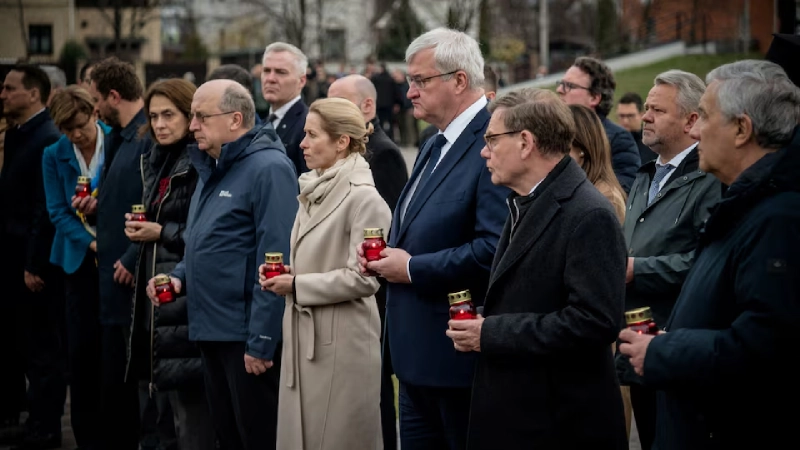
Senior European Union officials gathered in Bucha to mark the anniversary of the 2022 massacre and reaffirm support for Ukraine, as tensions over aid and geopolitical priorities continue to shape the conflict. The visit was led Kaja Kallas, alongside multiple European foreign ministers, in a symbolic show of unity. The delegation emphasized accountability for alleged war crimes and highlighted the importance of maintaining international focus on Ukraine despite competing global crises.
The visit comes at a critical moment as Ukraine faces growing concerns about sustained military and financial support. Officials in Kyiv have warned that attention and resources may be diverted due to the ongoing Iran war, which has intensified pressure on Western governments. The European Union remains Ukraine’s primary backer, but internal disagreements have complicated efforts to expand financial assistance, including a major loan package that has yet to be approved.
During the commemoration, European leaders reiterated the significance of Bucha as a symbol of the war’s human cost. Ukrainian authorities have long maintained that hundreds of civilians were killed in the town during the early phase of the invasion in 2022. Speaking after the visit, Kallas stressed that the events in Bucha continue to define the stakes of the conflict, underscoring the need for justice and international accountability mechanisms to address alleged atrocities.
Ukrainian President Volodymyr Zelenskiy urged global partners to remain focused on the war despite shifting geopolitical dynamics. He drew comparisons between historical war crimes and current events, warning that weakening sanctions or reducing support could undermine efforts to hold perpetrators accountable. Ukrainian officials are also pushing for broader international backing of a proposed special tribunal aimed at prosecuting crimes of aggression, with several countries already indicating willingness to participate.
European unity on Ukraine remains strong in principle, but divisions persist over policy implementation and strategic priorities. Hungary has blocked progress on key financial measures and accession discussions, reflecting wider tensions within the bloc. At the same time, European leaders have emphasized the need to maintain pressure on Russia while ensuring that support for Ukraine remains consistent. As diplomatic and military challenges evolve, the Bucha visit serves as both a reminder of past events and a signal of continued European commitment.