The European Union’s long awaited trade agreement with the Mercosur bloc is likely to enter provisional application as early as March, despite growing political and legal resistance within the EU. According to diplomatic expectations in Brussels, the agreement could be provisionally implemented once the first Mercosur country completes ratification, with Paraguay viewed as the most likely candidate to move first. The deal links the EU with Mercosur members Brazil, Argentina, Paraguay and Uruguay, creating one of the world’s largest free trade zones after more than two decades of negotiations. Supporters inside the EU see provisional application as a way to unlock economic benefits without waiting for full ratification across all member states, a process that could take years amid rising political opposition.
The move comes even as EU lawmakers have referred the agreement to the European Court of Justice, a step that could delay full legal confirmation up to two years. While this referral does not automatically block provisional application, it has intensified debate over democratic oversight and national sovereignty. Several EU member states argue that allowing the agreement to take effect before judicial and parliamentary scrutiny is complete risks undermining public trust. Nevertheless, EU trade officials maintain that provisional application is a legally established mechanism designed to prevent strategic paralysis, particularly when economic conditions are volatile and global competition is intensifying. The European Commission is expected to consult closely with national governments and lawmakers before taking a final decision on whether to activate this option.
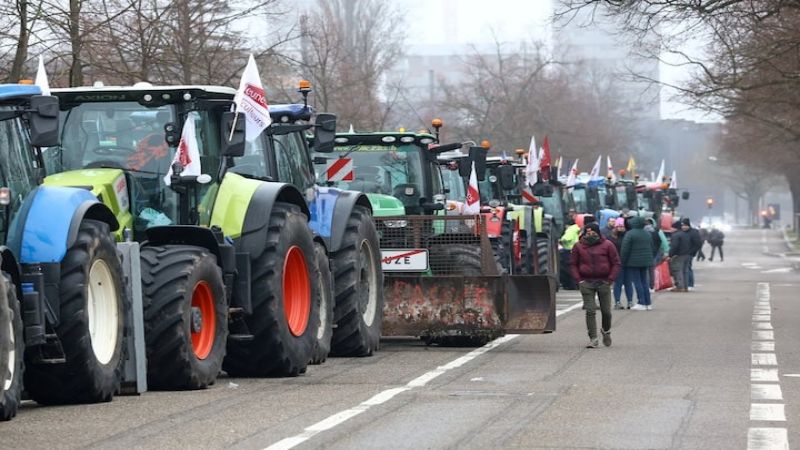
Germany has emerged as one of the strongest advocates for moving forward, framing the deal as essential to strengthening Europe’s economic resilience. Berlin views the agreement as a counterweight to renewed trade pressure from the United States and as a tool to reduce dependence on Chinese supply chains. German business leaders have warned that prolonged delays could weaken European competitiveness at a time when global trade is becoming increasingly fragmented. contrast, France remains firmly opposed, citing concerns that increased imports of agricultural products such as beef, poultry and sugar would undercut domestic farmers. This opposition has spilled onto the streets, with large scale demonstrations farming unions highlighting the political sensitivity of the deal within key EU economies.
French officials have gone further, arguing that provisional implementation would be politically unacceptable and could be overturned later the European Parliament. Critics warn that such a scenario would create uncertainty for businesses on both sides of the Atlantic and deepen divisions within the EU. Despite these objections, supporters insist that provisional application would send a strong signal of economic intent and global engagement. EU leaders meeting in Brussels are expected to weigh the broader geopolitical context, including strained transatlantic relations, as they consider the next steps. The coming weeks are likely to determine whether the agreement moves from paper to practice or becomes mired in legal and political deadlock.